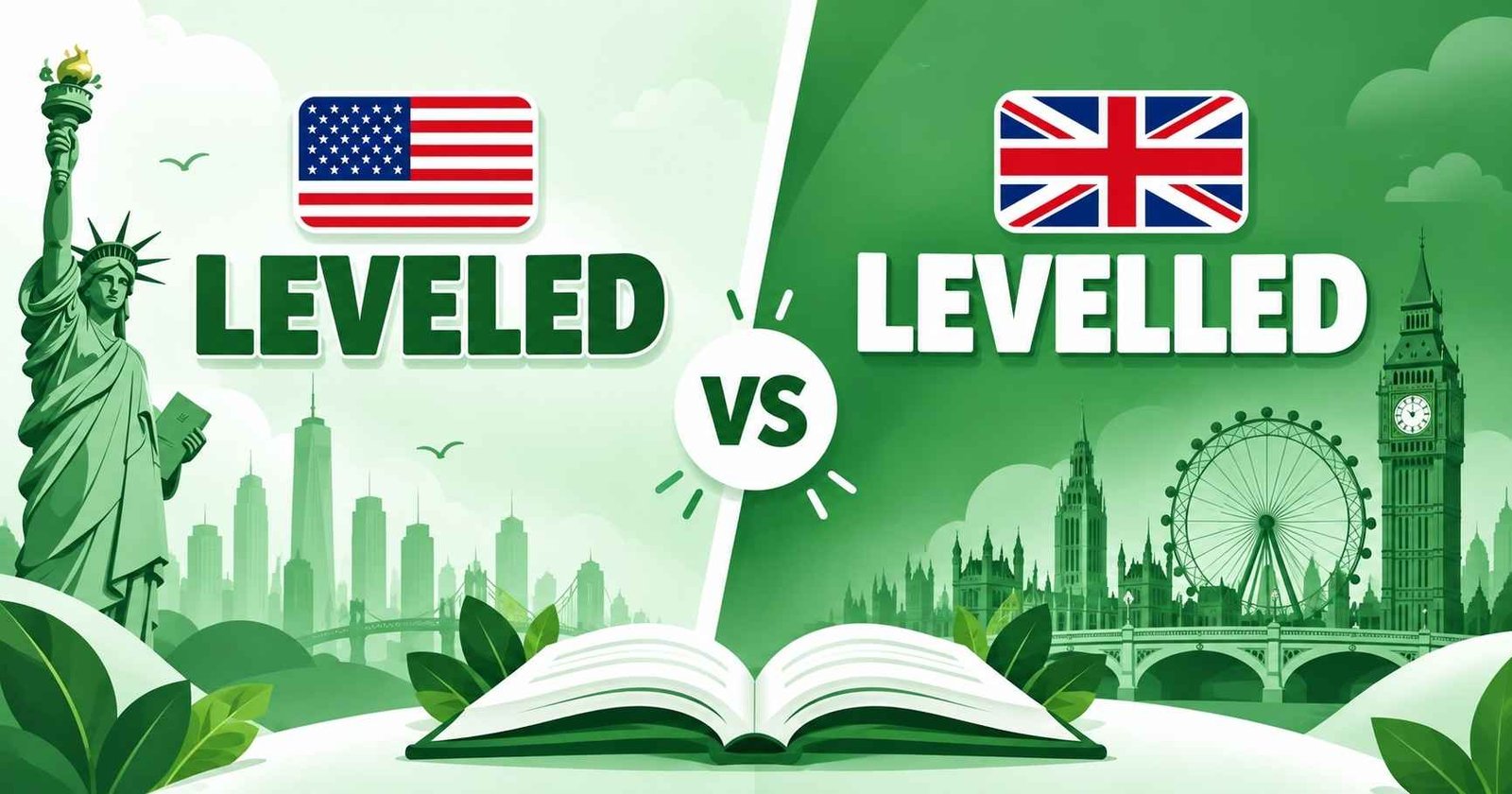
If you’ve typed “leveled” and then watched your spellchecker flag it, only to see “levelled” get accepted somewhere else, you’re not imagining things. Both spellings show up constantly online, in emails, and in published writing and both are correct. The version you should use just depends on which English you’re writing in.
This guide breaks down where the two spellings come from, how British and American rules differ, and how to keep your writing consistent no matter which one you pick.
Leveled or Levelled – Quick Answer
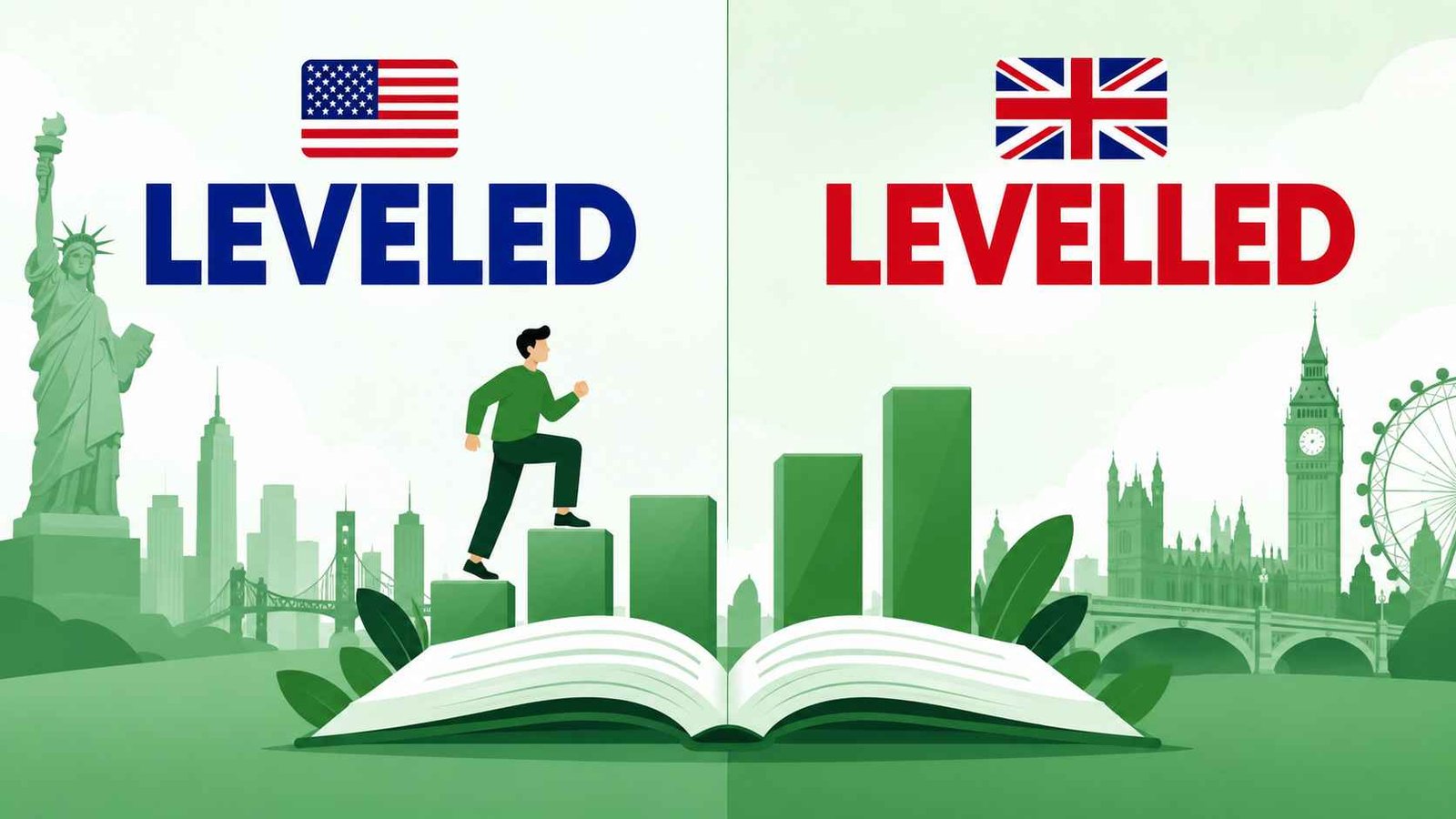
Both words are correct and mean exactly the same thing: made flat, even, or equal.
- Leveled American English spelling The contractor leveled the yard before laying the patio.
- Levelled British English spelling The contractor levelled the yard before laying the patio.
The only difference is regional. Pick the spelling that matches your audience and use it consistently throughout your writing.
The Origin of Leveled or Levelled
The root word “level” traces back through French to the Latin libella, a small balance or measuring instrument. Once “level” became an English verb, writers needed a past-tense form, and that’s where the two traditions split.
English has a long-standing spelling convention: when a short verb ends in a single vowel followed by a single consonant, that consonant often gets doubled before adding an ending like -ed or -ing (think stop → stopped). British English extended this rule to verbs ending in L, even when the stress falls on the first syllable a quirk that doesn’t apply to most other final consonants.
American English, largely shaped by Noah Webster’s push toward simpler, more phonetic spelling in the 19th century, dropped the doubled L in these cases. That’s why the same word split into two accepted forms that are still both in everyday use today.
British English vs American English Spelling
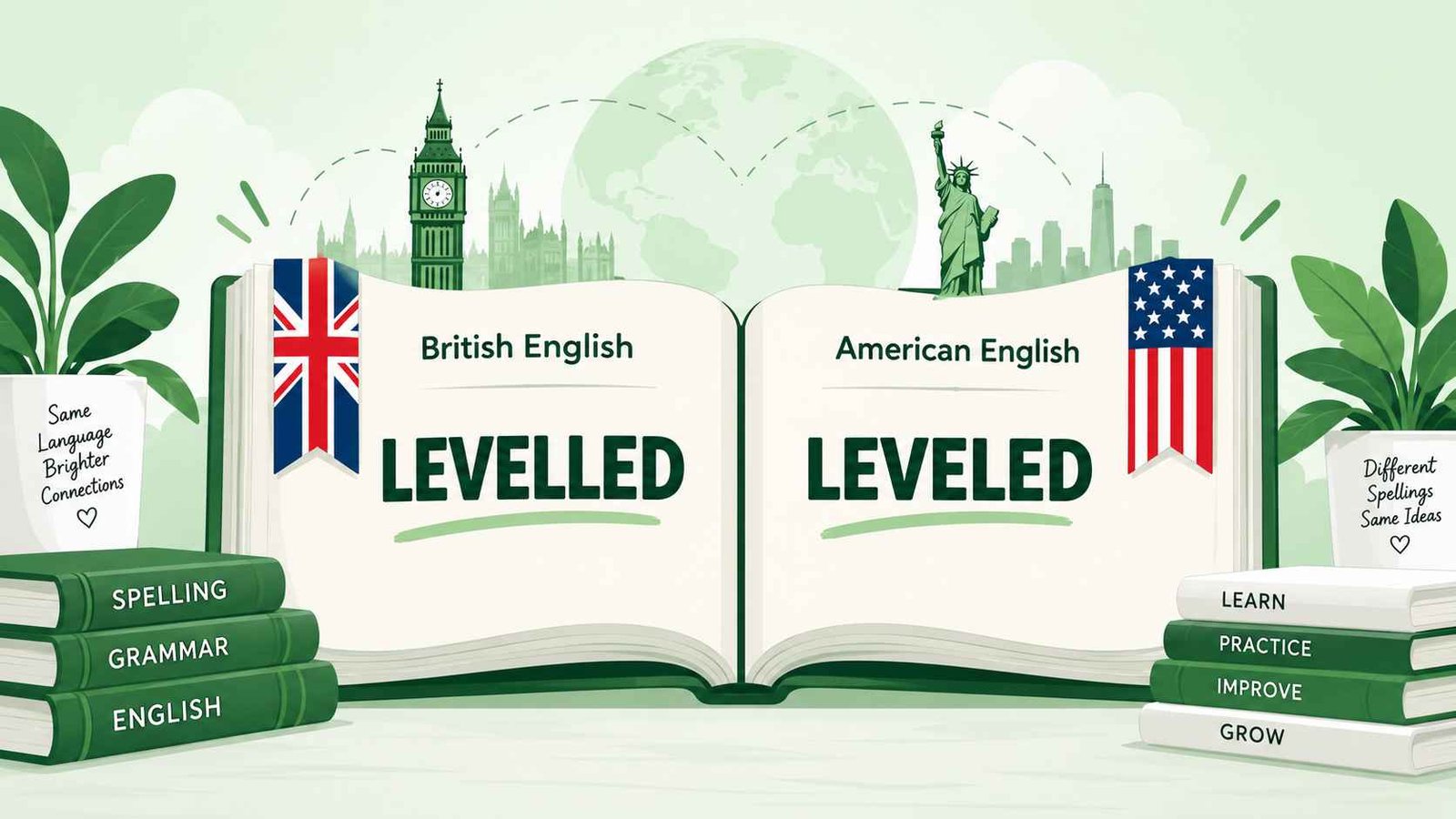
This isn’t a one-off exception it’s part of a consistent pattern that shows up across dozens of similar verbs.
British English Rules
British English doubles the final L before adding -ed or -ing, regardless of where the stress falls in the word. Common examples include:
- travel → travelled
- cancel → cancelled
- model → modelled
- level → levelled
American English Rules
American English keeps a single L in these same verbs, following the more general modern rule that only stressed final syllables get doubled consonants:
- travel → traveled
- cancel → canceled
- model → modeled
- level → leveled
Comparison Table
| Base Verb | British Spelling | American Spelling |
| level | levelled | leveled |
| travel | travelled | traveled |
| cancel | cancelled | canceled |
| model | modelled | modeled |
Which Spelling Should You Use?
The right choice comes down to your audience and, where relevant, your style guide.
- Writing for a US audience use leveled
- Writing for a UK audience use levelled
- Writing for Canada or Australia levelled is generally the safer, more familiar choice, though American spelling shows up often in casual and digital writing
- Writing for a mixed or global audience either spelling works; the key is picking one and sticking with it
If you’re writing for a specific publication, company, or client, check whether they follow a house style guide (like AP for US outlets or the Oxford style for UK ones) before defaulting to your own preference.
Common Mistakes with Leveled or Levelled
- Switching spellings mid-document. Using leveled in one paragraph and levelled in another looks like an oversight, even though both are technically correct.
- Assuming one version is a typo. Neither spelling is wrong they’re regional variants, not errors.
- Trusting spellcheck without checking your language settings. Word processors flag whichever spelling doesn’t match their set region, which can mislead writers into “correcting” a perfectly valid word.
- Chasing both spellings for SEO in the same piece. Search engines can handle either spelling; readers notice inconsistency more than search algorithms do.
Leveled or Levelled in Everyday Examples

Emails
- We’ve leveled the pricing across all our US plans. (American)
- We’ve levelled the pricing across all our UK plans. (British)
News & Media
- Officials leveled new sanctions against the company. (American outlet)
- Fresh criticism was levelled at the government today. (British outlet)
Social Media
- Finally leveled up my whole setup this weekend 🎮 (American)
- Serious accusations levelled online are sparking backlash. (British)
Formal Writing
- The foundation was leveled prior to construction. (American report)
- The site was levelled ahead of the build. (British report)
Leveled or Levelled – Google Trends & Usage
Search behavior tends to mirror the regional split fairly closely. Searches for “leveled” cluster heavily in the United States, while “levelled” is far more common across the UK, Ireland, Australia, and other Commonwealth countries. A smaller share of searches look up both spellings together usually from writers or students trying to confirm which one fits their audience, rather than anyone questioning what the word means.
The takeaway: people generally understand the word just fine. What they’re really checking is which regional spelling convention applies to their writing.
Comparison Table: Leveled vs Levelled
| Spelling | Region | Correct? |
| Leveled | American English | Yes |
| Levelled | British English | Yes |
Final Thoughts
Leveled and levelled aren’t a case of right versus wrong they’re a case of American versus British spelling conventions, both fully valid and widely used. The real skill isn’t memorizing which one is “correct,” but recognizing your audience and staying consistent once you’ve made your choice. Do that, and you’ll never have to second-guess this spelling again.
“Curious about other tricky English spellings? Check out our guide on sugar vs. suger to clear up another common mix-up.”

Daniel Parker is an English language writer sharing clear grammar lessons, practical tips, and helpful examples for learners.









2 thoughts on “Leveled or Levelled: Which Spelling Is Correct?”