
You’re typing a caption, and suddenly you freeze. Is it Halloween or Hallowe’en? One small apostrophe can make anyone doubt every letter. It happens to confident writers all the time, and a typo in a holiday post costs you trust fast.
This guide settles it. You’ll get the spelling of Halloween most readers expect, the story behind Hallowe’en, and capitalization rules with examples you can copy. Stay with me and the doubt disappears.
Origin of Halloween Spelling
Ever wonder why the spelling of Halloween looks so odd? The older form, Hallowe’en, hides a tiny story, and once you hear it, the letters finally start to make sense.
The word began as a phrase. People called November 1 All Hallows’ Day, using an Old English word, hālig, that means holy. Big feast days started with a vigil the night before, so October 31 earned its own name: All Hallows’ Even, later All Hallows’ Eve.
By the 16th century, speakers had shortened that phrase to Hallow-e’en. Merriam-Webster points out that the apostrophe is original to the word. Writers did not add it by accident. It started to fade in the 18th century, and the plain form took over in most American writing.
That history matters when you edit. Many writers see the apostrophe version, assume it’s a typo, and delete it. Doing that removes a spelling with real roots, and it can change the tone of a historical or British piece.
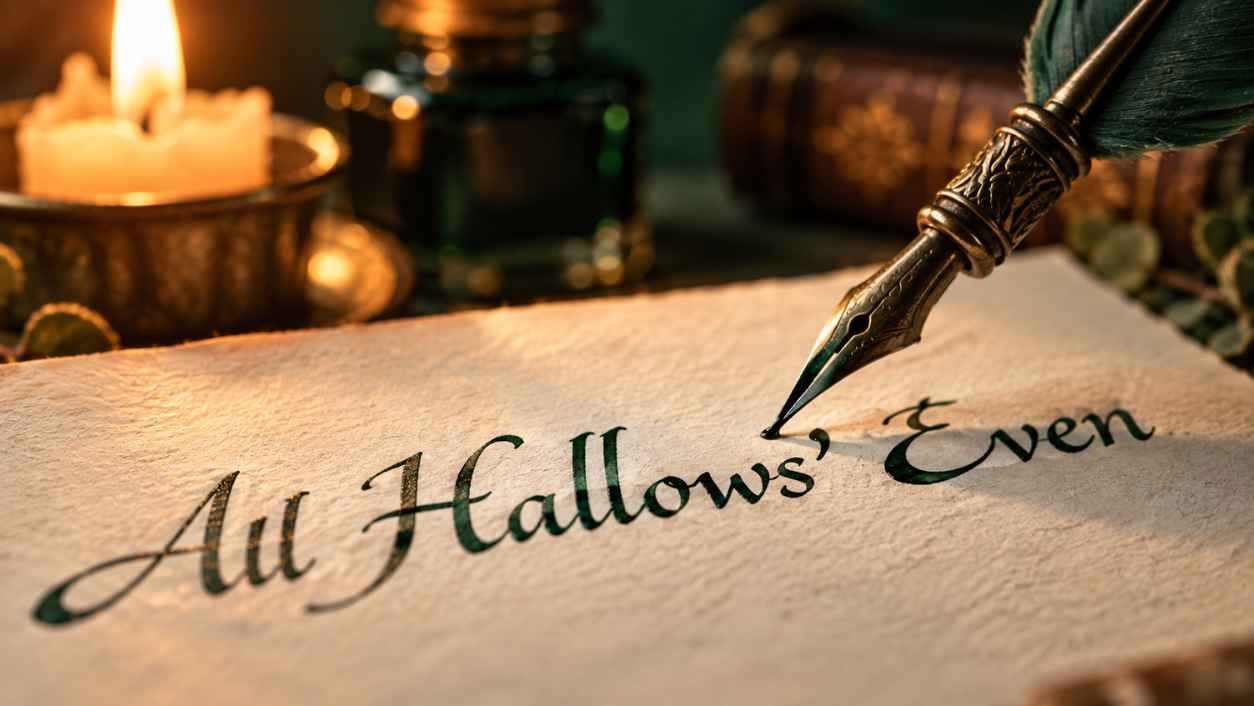
How did Hallowe’en become Halloween?
The change happened in small steps over several centuries. Here is the path from feast day to the spelling you type today.
| Stage | Form | What it meant |
| Before the 16th century | All Hallows’ Day | The feast on November 1, now All Saints’ Day |
| The evening before | All Hallows’ Even | The vigil night, October 31 |
| By the 16th century | Hallow-e’en | A shortened form with an apostrophe |
| From the 18th century | Hallowe’en, then Halloween | The apostrophe slowly drops away |
- Hallow comes from Old English hālig, meaning holy.
- Even is an old word for evening.
- All Hallows’ Even named the night before All Saints’ Day.
- Hallow-e’en appeared by the 16th century as a short form.
- The apostrophe started fading in the 18th century.
- Halloween is the form most American readers expect today.
Example in texting:
Friend 1: Why did my teacher write Hallowe’en with an apostrophe?
Friend 2: It’s the original spelling. The apostrophe replaces the v in even.
Origins of Halloween Traditions: Costumes and Candy
Costumes and candy come to mind first, and their roots run much deeper. Once you spell Halloween or Hallowe’en correctly, the old traditions behind it become far easier to follow.
The western church first placed All Saints’ Day in spring. Pope Gregory IV moved it to November 1 in 835. That date landed on Samhain, a Celtic festival that marked the end of the year and honored the dead. People believed the line between the living and the dead grew thin that night.
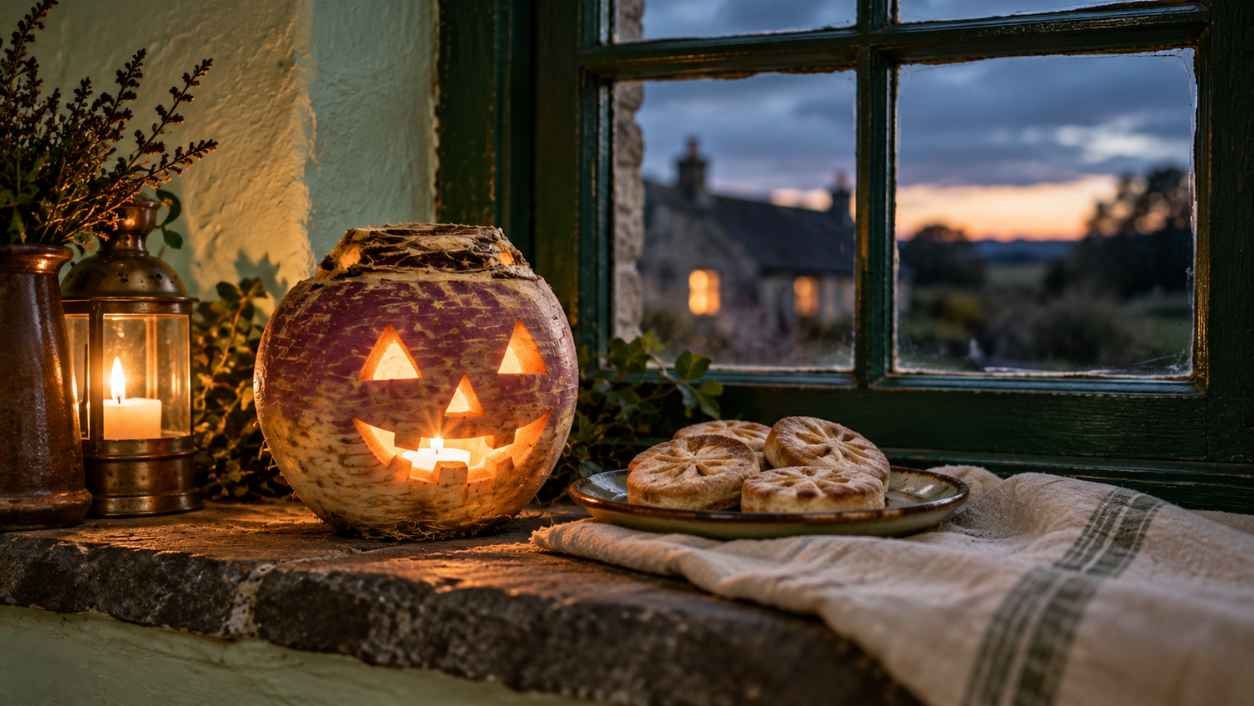
Masks, ghost stories, and carved vegetable lanterns all trace back to Samhain. A letter to The Telegraph, quoted by Grammarist, remembers scooping out turnips for lanterns in the 1940s and 1950s, then using swedes for the writer’s own children. Pumpkins came to the party later in many places, but the carving habit is old.
The church added its own custom in the Middle Ages. Souling meant going house to house and asking for cakes in return for prayers for the souls of the household. That habit may have inspired modern trick-or-treating.
Kids in tiny costumes get plenty of “aw” reactions on October 31, and a truly spooky haunted house earns real awe. If you ever mix those two words up, this breakdown of how aw and awe differ will fix it fast.
Where do Halloween costumes and trick-or-treating come from?
The short answer is a blend of Celtic and medieval Christian customs. Neither one produced the holiday alone.
- Samhain fires, masks, and stories shaped early costume customs.
- Souling meant asking for cakes in return for prayers.
- Jack-o’-lanterns grew from carving vegetables into lanterns.
- Ghost stories told during Samhain still shape the season.
- All Saints’ Day moved to November 1 in 835.
- Soul cakes may be the ancestor of today’s trick-or-treat treats.
Example in texting:
Friend 1: Did people really go door to door for cakes before candy?
Friend 2: Yes! It was called souling, and it may be where trick-or-treating started.
History
Why do two spellings exist? Both come from All Hallows’ Evening, and you can spell Halloween with or without the apostrophe, because major dictionaries accept the older Hallowe’en form too.
Most people know Hallowe’en is a contraction of All Hallows’ Evening. Fewer know the day began with the Celtic calendar, which treated November 1 as the first day of the year. A festival that closes one year and opens the next naturally gets attention.
When the Catholic Church named November 1 All Saints’ Day, also called All Hallows, October 31 became All Hallows’ Eve. The naming works the way Christmas Eve does: the night before the main day gets its own label. All Saints’ Day can also be called Hallowmas, which mirrors how Christmas is shortened to a single day name.
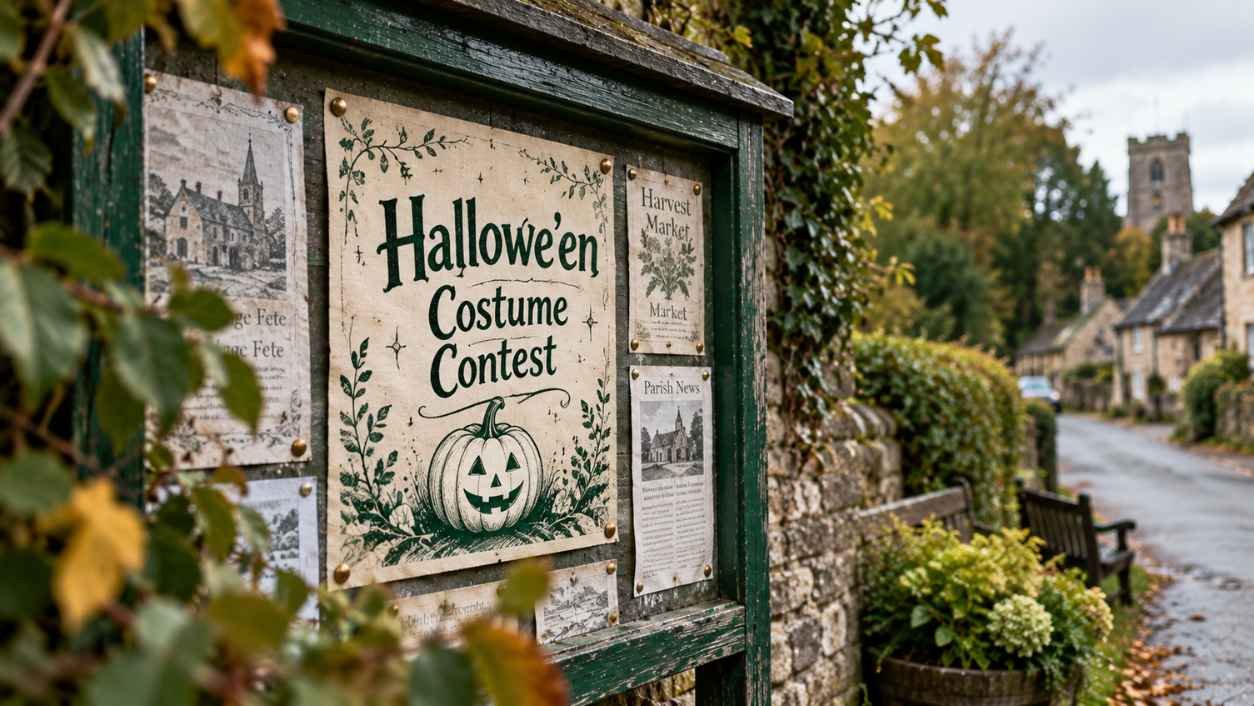
Grammarist adds that the apostrophe form is more common outside the United States. That detail explains why you’ll spot Hallowe’en in a Scottish costume-contest announcement but rarely on an American candy aisle sign.
What is the history of All Hallows’ Eve?
The names changed as calendars and customs overlapped. This table shows who called the same stretch of days what.
| Name | Calendar | Meaning |
| Celtic new year | Celtic calendar | November 1 as the first day of the year |
| Samhain | Celtic festival | End of the year and honoring the dead |
| All Saints’ Day | Church calendar | November 1, also called All Hallows |
| All Hallows’ Eve | Church calendar | October 31, the evening before |
- Celtic calendar began the year on November 1.
- All Saints’ Day fell on November 1 in the western church.
- All Hallows’ Eve is October 31, the evening before.
- Hallowmas is another name for All Saints’ Day.
- Samhain honored the dead at the end of the year.
- Hallowe’en shortens All Hallows’ Evening.
Example in texting:
Friend 1: Is Hallowmas a real word?
Friend 2: Yes, it’s another name for All Saints’ Day on November 1.
Hallowe’en vs Halloween in American and British English
Does your location change the spelling of Halloween? Slightly. Hallowe’en appears more often outside the United States, and seeing it in print abroad doesn’t mean that anyone made a mistake.
Grammarist lists both forms as dictionary accepted. Its examples show how the split plays out. A British newspaper letter about turnip lanterns uses the apostrophe, and so does a Scottish local paper announcing prizes for the best costumes. A Sydney newspaper and an American business outlet use the plain form.
For an American audience, Halloween is the safe default. For a UK audience, or a piece with a historical flavor, Hallowe’en fits well. Pick one form per article and keep it. Switching halfway through looks careless even when both spellings are valid.
If your site has a style guide, check it first. A guide that names Halloween as the standard saves every contributor the same debate.
Is Hallowe’en correct in American English?
Yes, it’s a recognized variant, though most American writers use the plain form. Choose by audience, not by rule.
| Form | Where you’ll see it | Best use |
| Halloween | American writing and general audiences | Default for most readers |
| Hallowe’en | UK and other non-US sources | British audiences, historical or literary tone |
- Halloween is the safe default for American readers.
- Hallowe’en is accepted by dictionaries as a valid variant.
- British writers use the apostrophe form more often.
- Consistency matters more than which valid form you choose.
- Capital H stays in both spellings.
- Style guides for your site decide which form to use.
Example in texting:
Friend 1: My British cousin wrote Hallowe’en. Is that wrong?
Friend 2: Nope, it’s a valid older spelling, just more common in the UK.
How to spell Halloween correctly every time
Want to know how to spell Halloween without second guessing yourself? A simple letter check works every time you write it, and it covers Hallowe’en too, with almost no effort.
Halloween has 9 letters: H-A-L-L-O-W-E-E-N. Split it into hallow plus een. Hallow takes two L’s and one W. The ending takes two E’s and one N.
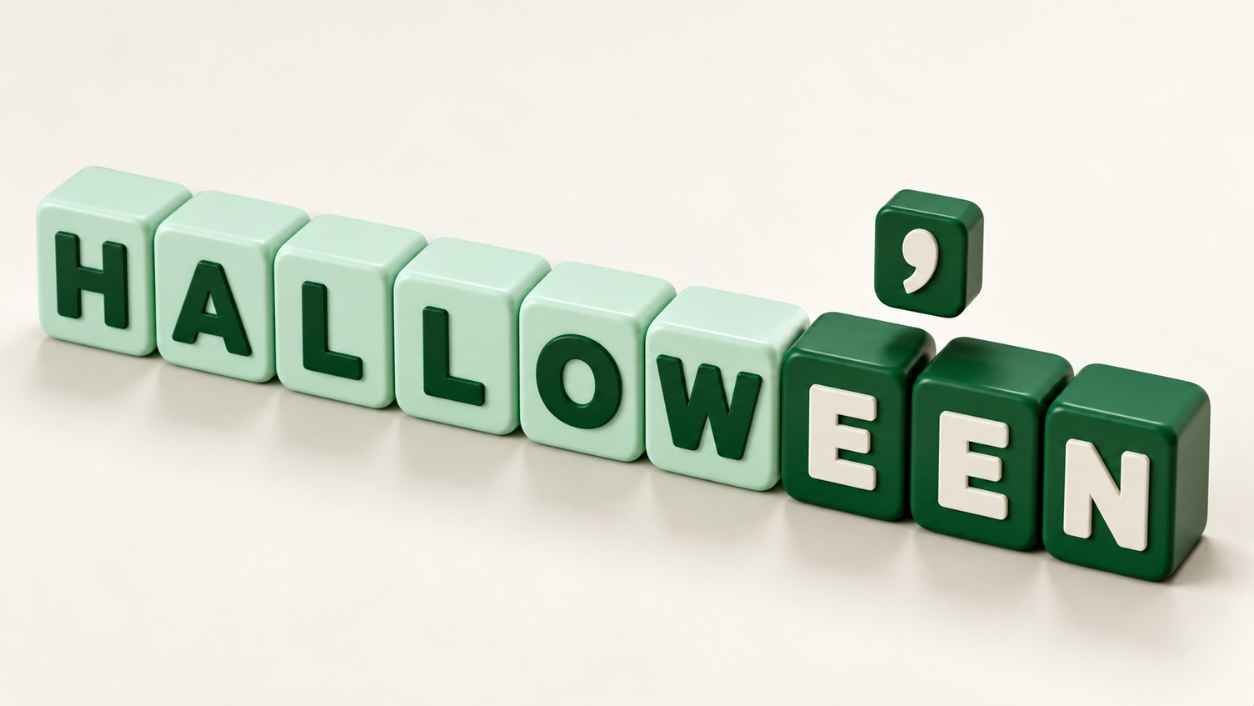
The apostrophe version, Hallowe’en, keeps the same letters and adds one mark. The apostrophe replaces the v in even, so it sits between the two E’s: Hallow plus e’en. Say it aloud in two chunks, hal-low and een, and the spelling usually clicks.
Proofreading helps more than memory. Read the word letter by letter in your final draft, because spell checkers can miss a wrong letter if the result looks like another word.
What is the easiest way to remember how to spell Halloween?
Break the word into two parts and match each part to a familiar word. The table below does that for both spellings.
| Spelling | Breakdown | Memory tip |
| Halloween | Hallow + een | Two L’s, one W, two E’s |
| Hallowe’en | Hallow + e’en | The apostrophe sits between the two E’s |
- Double L comes right after the first A.
- Single W follows the O, as in hallow.
- Double E closes the word before the final N.
- Hallow means holy and is a real English word.
- Apostrophe replaces the missing v, between the two E’s.
- Read it aloud in two chunks: hal-low, een.
Example in texting:
Friend 1: Quick check. Is it one L or two in Halloween?
Friend 2: Two L’s, one W, two E’s. Think hallow plus een.
What does the apostrophe in Hallowe’en actually stand for?
Curious about that tiny mark? Phones often turn the straight apostrophe in Hallowe’en into a curly one, hallowe’en, but the mark stands for a lost letter from an older word.
That lost letter is the v. Even is an old word for evening, and writers shortened it to e’en. Join All Hallows’ Even into one word and compress it, and you get Hallowe’en. The apostrophe is the only trace left of the v.
English has other words that drop a v the same way. O’er stands for over, e’er for ever, and ne’er for never. Hallowe’en belongs to that family of poetic shortenings.
Curly and straight apostrophes are the same mark in different styles. Print usually looks better with curly ones, while plain text and code use straight ones. In URLs and file names, skip the apostrophe entirely and write halloween.
Is Hallowe’en a contraction?
Yes. Grammarist calls it a contraction of All Hallows’ Evening, and that is the grammar term to use.
- Contraction is the right grammar term for Hallowe’en.
- Apostrophe replaces the missing v from even.
- Even is an old word for evening.
- Straight and curly apostrophes are the same mark in different styles.
- Placement matters: the mark sits between the two E’s.
- URLs and file names work best without an apostrophe.
Example in texting:
Friend 1: What’s the apostrophe doing in Hallowe’en?
Friend 2: It replaces the v in even. All Hallows’ Even got shortened.
Halloween capitalization rules explained
Is Halloween capitalized? Yes, and it stays that way in Hallowe’en too. Here is the short version of the rule: holidays are proper nouns, so they take a capital letter.
Halloween names a specific holiday, October 31. So should Halloween be capitalized? At the start of a sentence, in the middle, at the end, and in titles, yes. Grammarist adds that it stays capitalized even as an adjective, as in Halloween costume or Halloween party.
The same applies to related names: All Hallows’ Eve, All Saints’ Day, and Hallowmas. Words that simply go with the holiday, such as pumpkin, ghost, and costume, stay lowercase unless they start a sentence.
Capital letters also protect your credibility. A lowercase halloween on a flyer or a school newsletter looks rushed, and readers notice it before they notice anything else.
Which Halloween words need a capital letter?
Capitalize the holiday name every time. Keep ordinary nouns lowercase.
| Correct | Incorrect | Reason |
| Halloween starts tonight. | halloween starts tonight. | Proper noun |
| Our Halloween party | Our halloween party | Adjective keeps the capital |
| Hallowe’en night | hallowe’en night | Variant keeps the capital |
| a carved pumpkin | a carved Pumpkin | Common noun stays lowercase |

- Proper noun status gives Halloween a capital letter.
- Mid-sentence use still needs the capital H.
- Adjective use keeps the capital, as in Halloween candy.
- Hallowe’en takes the same capital H as Halloween.
- Titles and headlines capitalize it automatically.
- Common words like pumpkin and costume stay lowercase.
Example in texting:
Friend 1: Do I capitalize the H in my Halloween party invite?
Friend 2: Yes. Halloween is a holiday name, so it always gets a capital.
Should Halloween be capitalized in a sentence?
Still asking, should Halloween be capitalized in a sentence? Yes, every single time. The same goes for Hallowe’en, whether it opens the sentence or sits quietly in the very middle.
Position in the sentence changes nothing. Halloween is a proper noun, so it gets a capital at the start, the middle, and the end. Captions, emails, and school essays follow the same rule.
The most common slip happens in casual typing, when people write halloween in lowercase out of habit. A quick proofread catches it. If you write a lot of seasonal content, add Halloween to your personal checklist next to names and dates.
Possessives follow the rule too. Halloween’s origins and Halloween’s traditions both keep the capital H, and so do compounds like Halloween night.
Where can Halloween appear in a sentence?
Anywhere, and the capital H never moves. These examples show every position.
| Position | Example |
| Start | Halloween is my favorite night of the year. |
| Middle | We decorate the porch for Halloween. |
| End | The costume contest is on Halloween. |
| Adjective | The Halloween decorations are already up. |
| Variant | Hallowe’en lanterns lit the lane. |
- Sentence start always takes the capital H.
- Mid-sentence placement does not change the rule.
- End of sentence still needs the capital letter.
- Possessives like Halloween’s keep the capital H.
- Captions and emails follow the same capitalization rule.
- Proofread casual messages, where lowercase slips in most often.
Example in texting:
Friend 1: Should I write “see you on halloween” with a lowercase h?
Friend 2: Capital H. See you on Halloween!
Is Halloween always capitalized?
Is Halloween always capitalized? Yes, and Hallowe’en follows the same logic in every case. Grammarist confirms that the holiday keeps its capital letter, even when it works as an adjective.
In standard writing, the answer is always. Christmas, Easter, and Thanksgiving follow the same pattern: the name of a day gets a capital. Lowercase halloween usually points to a typo or a rushed text message.
One nuance helps. The root verb hallow, meaning to make holy, stays lowercase in the middle of a sentence. Only the holiday name takes the capital.
Brand styling and hashtags sometimes break the rule on purpose. That is a design choice, and formal writing should not copy it.
Are there any exceptions to capitalizing Halloween?
Not in ordinary prose. The few lowercase cases come from design, not grammar.
- Standard prose always capitalizes Halloween.
- Brand styling and hashtags may use lowercase, but formal writing should not.
- The verb hallow stays lowercase mid-sentence.
- Holiday names like Easter and Thanksgiving follow the same pattern.
- All Hallows’ Eve takes a capital on every main word.
- ALL CAPS designs still spell it HALLOWEEN, with the same letters.
Example in texting:
Friend 1: My phone auto-lowercased halloween. Is that acceptable?
Friend 2: Not in writing. Fix it to Halloween with a capital H.
Common Halloween spelling mistakes to avoid
Even careful writers slip on this holiday. When you spell Halloween, a missing letter or a stray apostrophe is the usual culprit, and Hallowe’en has its own small hidden traps.
The most frequent errors are dropping one L, dropping one E, and swapping the first A for an O. That last one happens because hollow is a common word and the eye fills it in. Apostrophe errors come next: putting the mark before the final E, as in Hallow’een, instead of between the two E’s.
Odd letter patterns trip people up in plenty of words. The knaw or gnaw spelling mix-up is another good example of a word where the first letters surprise you.
One more search people make is how to spell “which as in Halloween.” The word they want is witch, spelled W-I-T-C-H. Which is the question word, and witch is the costume.
What are the most common ways to misspell Halloween?
Most mistakes come from one wrong letter or one misplaced mark. This table covers the usual suspects.
| Misspelling | Correct form | What went wrong |
| Haloween | Halloween | One L missing |
| Hallowen | Halloween | One E missing |
| Holloween | Halloween | A swapped for O |
| Hallow’een | Hallowe’en | Apostrophe in the wrong spot |
| halloween | Halloween | Capital H missing |
- Double L is the letter most often dropped.
- Hollow looks similar, so some writers type Holloween.
- Double E at the end gets shortened by mistake.
- Apostrophe placement belongs between the two E’s.
- Lowercase h is a capitalization error.
- Autocorrect can fix or break the word, so proofread.
Example in texting:
Friend 1: I wrote Haloween on the banner. Does that look off?
Friend 2: Yes, you’re missing an L. It’s Halloween with two L’s.
FAQs
Is it Halloween or Hallowe’en?
Both are correct. Hallowe’en is the older form, while Halloween is the common American spelling.
How do you spell Halloween?
Use two L’s and two E’s: Halloween. The apostrophe variant is Hallowe’en.
Is Halloween capitalized?
Yes. Halloween and Hallowe’en are both proper nouns, so each takes a capital H.
Should Halloween be capitalized in a sentence?
Yes, in any position. Hallowe’en takes the same capital H everywhere.
Why does Hallowe’en have an apostrophe?
The apostrophe replaces the v in even. Hallowe’en shortens All Hallows’ Evening.
How do you spell which as in Halloween?
Spell it witch, not which. A witch costume is a staple of Hallowe’en parties.
What does Hallowe’en mean?
It means All Hallows’ Evening, the night before All Saints’ Day. Hallowe’en keeps that form.
Conclusion
Hallowe’en and Halloween are two valid forms of one old phrase, All Hallows’ Evening. The apostrophe marks the lost v, and the shorter form took over in most American writing. Pick one spelling for each article and stay with it. Seeing Hallowe’en in a British paper is simply an older spelling at work.
For capitalization, the answer never changes. Should Halloween be capitalized? Yes, always, in sentences, titles, and as an adjective. Hallowe’en takes the same capital H.
Next time you write the holiday, check three things: two L’s, two E’s, and a capital H. Then pick your spelling and publish with confidence.

Daniel Parker is an English language writer sharing clear grammar lessons, practical tips, and helpful examples for learners.










4 thoughts on “Hallowe’en Meaning: The Surprising Spelling Story”