You type the sentence, stop, and wonder whether that final “s” belongs there. Most writers hit this snag, and it can make a perfectly good sentence feel shaky.
This guide settles afterwords or afterwards, answers is it afterward or afterwards, and breaks down afterward vs afterwards with real examples, quick tests, and style rules. Stay with me, and the choice will feel automatic by the end.

What are You Looking For?
Maybe you want a fast verdict, or maybe you typed afterwords or afterwards and landed here by accident. Either way, you are in the right place to sort it out.
Which question brings you here?
- Quick verdict: Both words are correct and mean the same thing.
- Spelling worry: “Afterword” with a “d” is a different word entirely.
- Style choice: American writers lean toward afterward, British writers toward afterwards.
- Similar word pairs: If you like clear comparisons, see our guide on as well vs aswell.
- Another “vs” puzzle: Our breakdown of immigrate vs emigrate works the same way.
Example in texting:
Friend 1: Is it afterward or afterwards in my essay?
Friend 2: Both work. Pick one and stay consistent.
Quick Answer
Short on time? Here is the whole story in a few lines, so you can get back to your sentence with confidence.
What is the one-line answer?
- Afterward and afterwards are adverbs meaning “later” or “after that.”
- Neither form is wrong.
- American English prefers afterward.
- British English prefers afterwards.
- Choose one form per document and keep it.
| Form | Meaning | Common region |
| Afterward | Later, after that | United States, Canada |
| Afterwards | Later, after that | UK, Australia |
Example in chat:
Friend 1: Dinner first, movie afterward?
Friend 2: Sounds good. Pizza afterwards too.
What Does “Afterward” Mean?
Picture finishing a long day and saying you will rest “afterward.” That small word points to a moment that comes later in time, and it carries a calm, tidy feel.
Examples of “Afterward”
- Time marker: It places one event after another.
- Adverb: It modifies a verb, not a noun.
- Flexible position: It works at the start, middle, or end of a sentence.
- Neutral tone: It suits essays, emails, and stories.
- Synonym: It means “later” or “subsequently.”
Example in texting:
Friend 1: Call me after practice.
Friend 2: I’ll text you afterward.
Sentences to copy: “We ate lunch, and afterward we walked the trail.” “She felt tired afterward.” “Afterward, the team celebrated.”
What Does “Afterwards” Mean?
Afterwards says the same thing with an extra “s.” You will see it all over British newspapers, novels, and school texts, so it never feels foreign to UK readers.
Examples of “Afterwards”
- Same meaning: It is a direct match for afterward.
- Common in the UK: Writers in London or Sydney use it daily.
- Fits speech well: It sounds natural when spoken.
- No plural sense: The “s” is an old adverbial ending, not a plural.
- Safe choice: Using it in a US essay is fine if you stay consistent.
Example in chat:
Friend 1: Tea after the match?
Friend 2: Yes, and chips afterwards.
Sentences to copy: “I called her afterwards.” “Afterwards, we all went home.” “He apologised shortly afterwards.”
Afterward vs Afterwards: Key Differences
The real gap is regional habit, not grammar. Here is how the two forms compare side by side.
How do afterward and afterwards differ in practice?
- Meaning: No difference at all.
- Region: US prefers afterward; UK prefers afterwards.
- Formality: Both suit formal and casual writing.
- Frequency: Afterwards appears more often worldwide.
- Grammar role: Both are adverbs.
| Feature | Afterward | Afterwards |
| Part of speech | Adverb | Adverb |
| Meaning | Later | Later |
| Preferred in | US | UK, Australia |
| AP style | Preferred | Avoid |
Example in texting:
Friend 1: Which spelling is right?
Friend 2: Same word. Your audience decides.
When Should You Use “Afterward”?
Use afterward when you write for American readers, follow AP style, or submit work to a US publisher. It keeps your copy clean and matches what editors there expect.
Example Sentences
- Essay: “He studied hard and relaxed afterward.”
- News: “The mayor spoke briefly afterward.”
- Fiction: “Afterward, the house felt quiet.”
- Email: “Let’s debrief afterward.”
- Report: “The patient felt fine afterward.”
Example in chat:
Friend 1: Grab coffee after class?
Friend 2: Sure, we can talk afterward.
When Should You Use “Afterwards”?
Choose afterwards for British, Irish, Australian, or Indian English audiences. It also fits spoken English everywhere, since many people say it without thinking.
Example Sentences
- Blog: “We had cake, and afterwards we sang.”
- Letter: “I’ll write afterwards.”
- Story: “Afterwards, nothing was the same.”
- Class: “Discuss the poem afterwards.”
- Chat: “Pub afterwards?”
Example in texting:
Friend 1: Gym at six?
Friend 2: Yes, curry afterwards.
Side-by-Side Examples
Seeing both forms in matching sentences makes the sameness obvious. Read each pair aloud and notice that the meaning never shifts.
Can you swap one for the other in any sentence?
- Swap freely: Every example below works with either form.
- Keep consistency: Do not mix them in one piece.
- Check audience: Match your reader’s region.
- Read aloud: Both sound natural.
- Proofread: Search your draft for stray versions.
| American | British |
| We ate, then danced afterward. | We ate, then danced afterwards. |
| She called me afterward. | She called me afterwards. |
| Afterward, I slept. | Afterwards, I slept. |
Example in chat:
Friend 1: Compare these two sentences.
Friend 2: Identical meaning, different spelling.
Common Mistakes to Avoid
Small slips make confident writers look careless. These four are the usual culprits, and each is easy to fix once you spot it.
Mixing Both Forms in One Article
Writing “afterward” in paragraph two and “afterwards” in paragraph nine looks sloppy. Pick one and search your document before publishing.
Thinking One Form Is Incorrect
Dictionaries list both. Correcting a colleague’s “afterwards” in a UK memo is a mistake of its own.
Choosing the Wrong Style for Your Audience
A US magazine editor will change afterwards to afterward. A London editor will do the reverse. Check the house style guide first.
Confusing “Afterward” with “After”
After can be a preposition, conjunction, or adjective. Afterward is only an adverb. You say “after dinner,” not “afterward dinner.” Our piece on do to or due to shows a similar mix-up between small words.
- Wrong: “Afterward the meeting, we left.”
- Right: “After the meeting, we left.”
- Right: “We left afterward.”
- Tip: If a noun follows, use after.
- Tip: If nothing follows, use afterward or afterwards.
Example in texting:
Friend 1: “Afterward lunch” sounds off.
Friend 2: Use “after lunch” or “lunch, then afterward.”
Easy Memory Trick
Link each spelling to a place and you will never hesitate again. Short, silly hooks stick better than rules.
Afterward = American
Afterward is shorter and cleaner, and Americans love tidy forms. Think of the “A” in afterward and the “A” in America.
Afterwards = British
Afterwards carries the extra “s,” just as British English often adds letters, as in “whilst” and “amongst.” Think “s” for “Scotland, Surrey, Sydney.”
- A for A: Afterward for American.
- S for S: Afterwards for the “s” regions.
- Test it: Say the rule once, then write.
- Stay steady: One form per document.
- Reuse: Apply it to toward and towards.
Example in chat:
Friend 1: Remind me again?
Friend 2: A for American, S for the rest.
Common Phrases with “Afterward”
Certain phrases show up again and again, and they help you hear the word in action.
Example
- Shortly afterward: A brief time later.
- Soon afterward: Not long after.
- Moments afterward: Almost at once.
- Years afterward: A long gap later.
- Immediately afterward: Right after.
Example in texting:
Friend 1: When did she leave?
Friend 2: Shortly afterward, I think.
Common Phrases with “Afterwards”
The British counterpart works the same way, and these phrases are everyday English across the UK.
Example
- Shortly afterwards: A short time later.
- Straight afterwards: Right away.
- Not long afterwards: After a little while.
- Days afterwards: Several days later.
- Soon afterwards: Before long.
Example in chat:
Friend 1: Did he reply?
Friend 2: Yes, soon afterwards.
American vs British English
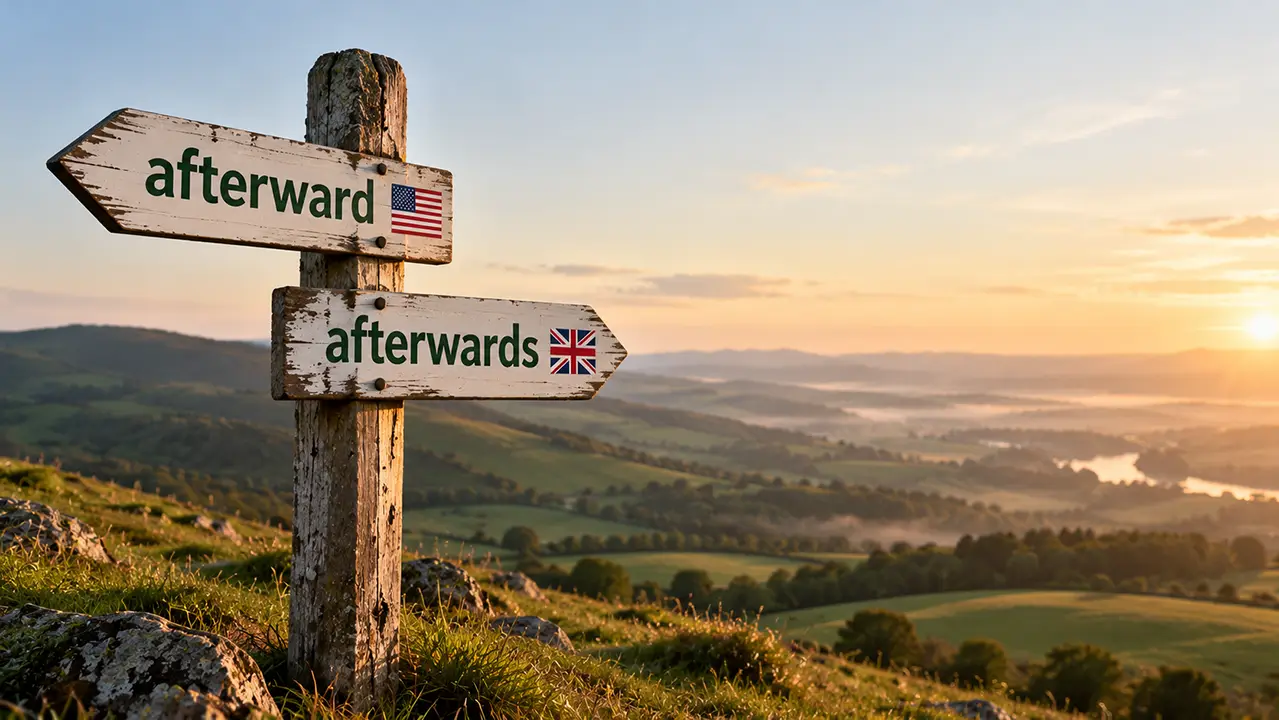
Regional habit drives this choice more than anything. Writers who know their audience pick the right form without a second thought, much like choosing between boujee and bougie based on context.
American English
- Default: Afterward.
- Style guides: AP and Chicago prefer it.
- Publishers: US editors will change afterwards.
- Schools: Textbooks teach afterward.
- Tip: Match your publication.
British English
- Default: Afterwards.
- Style guides: Oxford and Guardian use it.
- Publishers: UK editors expect the “s.”
- Everyday speech: Nearly universal.
- Tip: Keep the same form to the end.
| Style guide | Preferred form |
| AP Stylebook | Afterward |
| Chicago Manual of Style | Afterward |
| Oxford | Afterwards |
Example in texting:
Friend 1: I’m writing for a US blog.
Friend 2: Use afterward.
Afterwords or Afterwards: The Spelling Trap
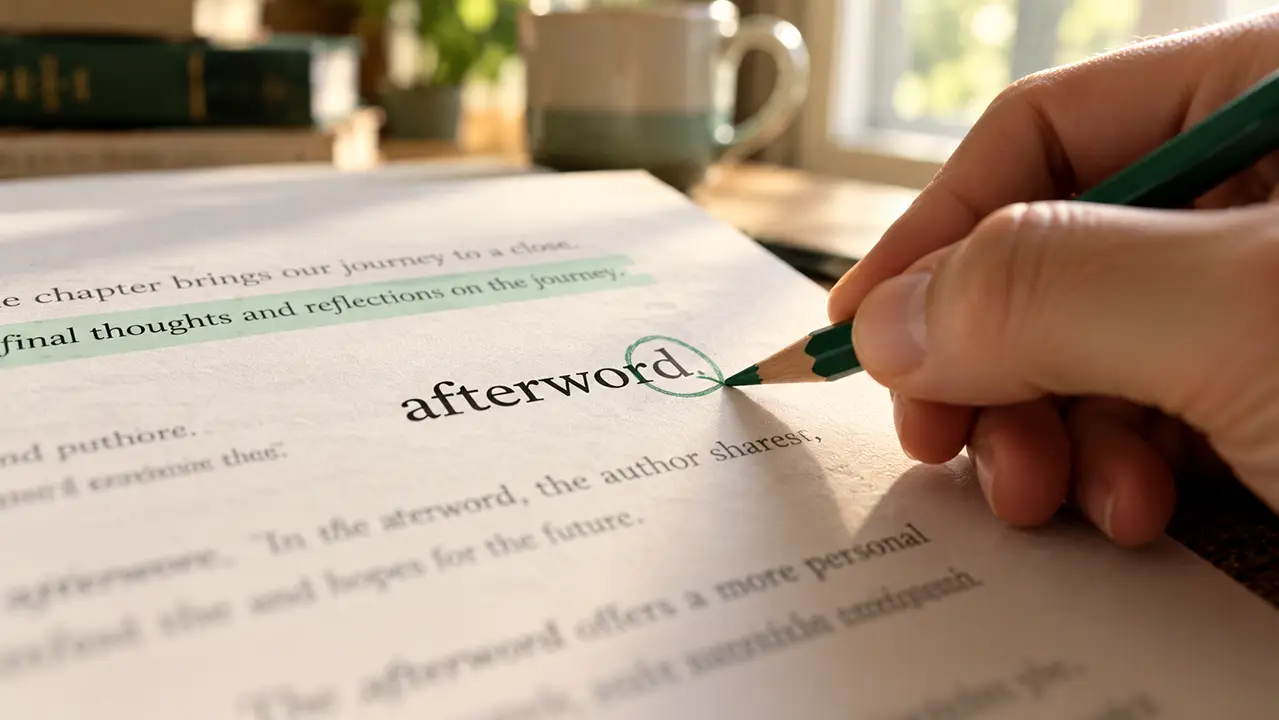
Many searchers type afterwords by mistake. It sounds identical in speech, so spell-check often lets it through, and that quiet error can sit in a published post for months.
What is the difference between afterword and afterward?
- Afterword: A short closing section of a book.
- Afterward: An adverb meaning later.
- Afterwords: The plural of afterword, rarely needed.
- Check the job: If it names a book section, use word.
- Memory hook: “Word” lives in books.
Example in chat:
Friend 1: The author wrote a moving afterword.
Friend 2: And we cried afterward.
Afterwards vs After That and Thereafter
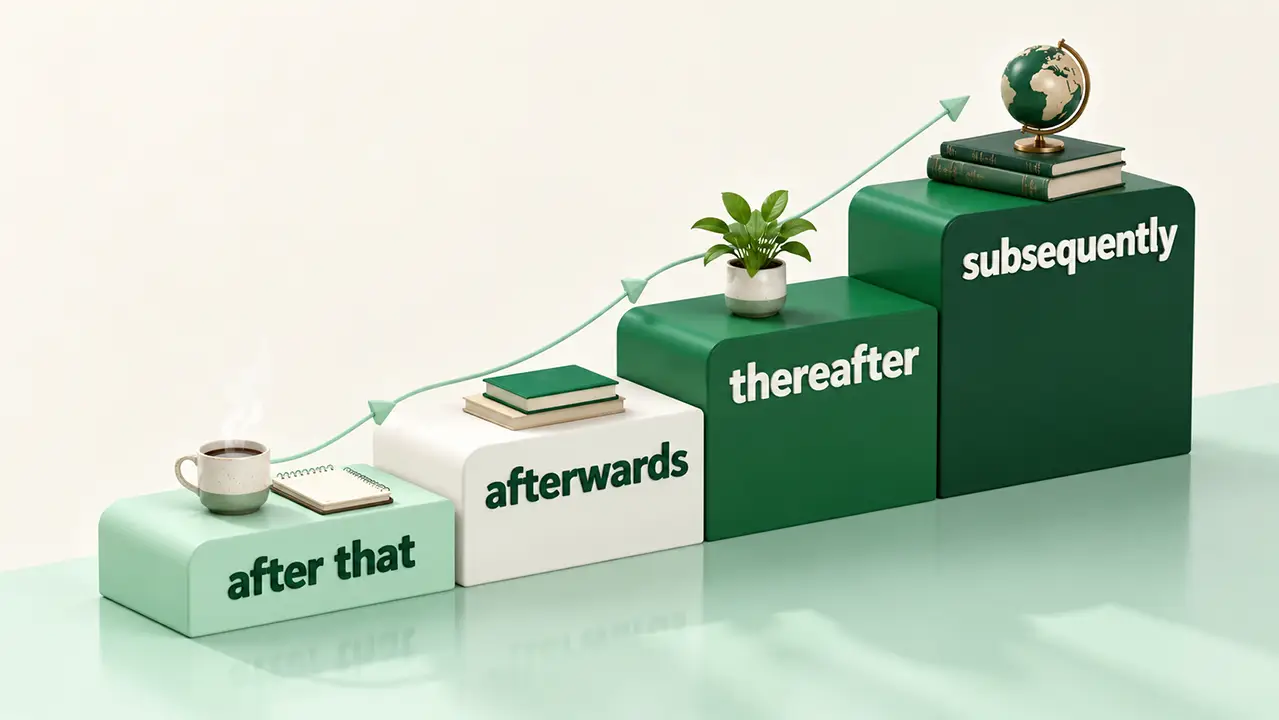
Writers hunting for variety often ask how afterwards compares with “after that,” “thereafter,” and “subsequently.” Each has its own tone.
Which alternative fits which situation?
- After that: Casual and clear.
- Thereafter: Formal and legal.
- Subsequently: Academic and reports.
- Later: Simple and flexible.
- Next: Works in step lists.
| Word | Tone | Best for |
| Afterwards | Neutral | Everyday writing |
| After that | Casual | Chats, stories |
| Thereafter | Formal | Contracts |
| Subsequently | Formal | Research |
Example in texting:
Friend 1: Use “thereafter” in my report?
Friend 2: Yes, it fits a formal tone.
Can Afterwards Start a Sentence?
Yes. Starting with afterwards is fine, and a comma usually follows. It works like “later” or “then” at the front of a sentence.
How do you punctuate a sentence that begins with afterwards?
- Add a comma: “Afterwards, we left.”
- Keep it short: Long openings drag.
- Vary placement: Move it to the end sometimes.
- Same for afterward: The rule is identical.
- Skip overuse: Too many openers feel repetitive.
Example in chat:
Friend 1: Can I open with it?
Friend 2: Sure. Afterwards, add a comma.
Is Afterwards Plural?
No. The “s” is a leftover adverbial ending from Old English, not a plural marker. You cannot say “one afterward, two afterwards.” If plural questions interest you, our post on journey plural covers a true plural case.
Why does afterwards end in s if it is not plural?
- Old English ending: It marked direction or time.
- Same pattern: Towards, backwards, sideways.
- No singular noun: There is no “an afterward.”
- Adverb only: It never takes an article.
- Zero change: The meaning stays the same.
Example in texting:
Friend 1: Is the s a plural?
Friend 2: No, it is just part of the word.
Afterward vs Afterwards in AP Style and Chicago Manual of Style
Professional writers rely on style guides. The two big US guides agree, which makes your choice easy for American publishing.
What do the major style guides say?
- AP: Use afterward.
- Chicago: Prefers afterward.
- MLA: Accepts both.
- Oxford: Prefers afterwards.
- Rule: Follow the guide your editor uses.
Example in chat:
Friend 1: My editor flagged afterwards.
Friend 2: She follows AP. Change it.
Do You Say After or Afterwards?
Both exist, and they behave differently. Think about what comes next in the sentence, and the answer shows itself.
How do after and afterwards differ in a sentence?
- After + noun: “After lunch.”
- After + clause: “After we ate.”
- Afterwards alone: “We ate, then left afterwards.”
- Never together: Skip “afterwards lunch.”
- Related note: Mistakes with small words also appear in ate or eaten.
Example in texting:
Friend 1: After or afterwards?
Friend 2: A noun follows? Use after.
Synonyms for Afterwards
Repeating one word gets dull. These alternatives keep your writing fresh while saving the same meaning. Choosing carefully matters, as with the lessons in forgive vs forget.
What can you say instead of afterwards?
- Later: The simplest swap.
- Then: Short and quick.
- Next: Good for steps.
- Subsequently: Formal.
- Following that: Flows well in essays.
Example in chat:
Friend 1: I used afterwards four times.
Friend 2: Swap two for “later.”
Practice Sentences
Test yourself. Fill each gap with afterward or afterwards, based on your target audience.
Can you complete these sentences?
- 1: We watched the film, and ___ we ate.
- 2: She apologised shortly ___.
- 3: ___, the crowd cheered.
- 4: He felt better ___.
- 5: I’ll email you ___.
Answers: any single form works, as long as you stay consistent. If spelling slips worry you, our article on absense meaning covers another common error, and leafs vs leaves offers more practice.
Example in texting:
Friend 1: Quiz me.
Friend 2: Fill in “dinner, then ___.”
FAQs
What is the difference between afterward and afterwards?
The difference is regional, not grammatical. Afterward vs afterwards comes down to American versus British habit.
Is afterward grammatically correct?
Yes. Afterward is a standard adverb, and afterwords or afterwards debates never make it wrong.
Is afterwards grammatically correct?
Yes. Afterwards is equally correct, and it is the usual British choice.
Which form should I use in American English?
Use afterward. Most US style guides treat it as the preferred form.
Which form should I use in British English?
Use afterwards. It is the standard in UK writing and speech.
Can I use both forms in the same article?
Avoid it. Consistency looks professional, even when is it afterward or afterwards feels flexible.
Do afterward and afterwards have different meanings?
No. Both mean “later,” so the choice never changes your message.
Summary
You now know that afterward vs afterwards is a matter of region, and that afterwords or afterwards hides a spelling trap: afterword belongs to books. Pick the form that suits your audience and stay with it through the whole piece.
Before you publish your next draft, search for both spellings and make them match. That two-minute check keeps your writing sharp. The question is it afterward or afterwards will never slow you down again.

Daniel Parker is an English language writer sharing clear grammar lessons, practical tips, and helpful examples for learners.





4 thoughts on “Afterward vs Afterwards Meaning: Which One to Use?”