You type a caption about autumn and freeze on one word. Does the tree have leaves or leafs? I have seen smart writers, teachers included, pause on this exact spot. It feels small, yet it can make a whole post look careless.
This guide settles leafs vs leaves in plain words, with real examples, quick rules, and a few surprises most pages skip. If you ever asked is it leafs or leaves, or wanted the right answer for tree leaves or leafs, you are in the right place. Keep reading.
What is a Leaf?
Ever hovered over a red squiggle and doubted yourself? Leafs vs leaves starts with knowing what a leaf is, which settles every tree leaves or leafs question you will meet.
What Does a Leaf Mean in English?
A leaf is the flat, usually green part of a plant that turns sunlight into food through photosynthesis. As a noun, it has one singular form, leaf, and one plural form, leaves. For plants, that plural is the whole answer.
The word also covers thin sheets. A page in a book and a drop-in table extension are both leaves too, which is why the question gets messy.
- Noun meaning: the flat green organ on a stem, like a maple leaf.
- Singular form: one leaf, never “one leaves.”
- Plural form: two or more leaves, in every English dialect.
- Page meaning: one sheet of paper, with a page on each side.
- Table leaf: the extra panel you add to stretch a dining table.
- Verb meaning: to turn pages quickly, written “leafs” in the present tense.
| Meaning | Part of speech | Correct form | Example |
| Plant organ | noun | leaves | Red leaves covered the lawn. |
| Book sheet | noun | leaves | Two leaves were torn from the diary. |
| Table extension | noun | leaves | We added both leaves for dinner. |
| Turn pages | verb | leafs | She leafs through the menu. |
Example in chat:
Friend 1: Is it “one leaf” or “one leaves” for my plant sketch?
Friend 2: One leaf. Two or more leaves.
Leafs or Leaves Pronunciation and Meaning in English

Say both out loud and the difference lands at the end. Leafs vs leaves ends in “fs” or “vz” sounds, so leafs or leaves pronunciation can guide your spelling choice.
How Do You Pronounce Leaf, Leaves, and Leafs?
Leaf rhymes with “beef.” Leaves rhymes with “believes,” with a buzzing v and a z at the end. Leafs rhymes with “briefs.” If you hear a z, write leaves.
The leafs or leaves meaning also depends on the word’s job. Leaves names more than one leaf, or acts as a verb. Leafs is a verb for turning pages, or part of a name.
- Leaf sounds like “leef,” with a clean f at the end.
- Leaves sounds like “leevz,” with a buzzing v and z.
- Leafs sounds like “leefs,” with a hard f and s.
- Voiced sounds (v and z) mark the plural noun, which guides spelling.
- One syllable in each word, so there is no stress pattern to learn.
- Context tells you the meaning when you only hear the word.
| Word | Sounds like | Rhymes with | Job |
| leaf | leef | beef | noun, singular |
| leaves | leevz | believes | plural noun, or verb (leave) |
| leafs | leefs | briefs | verb, or proper name |
Example in texting:
Friend 1: Did you say “leefs” on the call? I wrote “leaves.”
Friend 2: Plants take “leevz.” “Leefs” is only for flipping pages.
When to Use Leaves
Most of the time, the answer is short. Is it leafs or leaves for anything green on a branch? Leaves, in every tree leaves or leafs sentence you will write.
When Should You Use Leaves Instead of Leafs?
Use leaves whenever you mean more than one leaf of a plant. That covers trees, bushes, herbs, tea, salad greens, and fallen autumn piles. Leaves also works for more than one sheet of paper or table panel.
Writers get confused because the same spelling does a second job. Leaves is also the verb form of leave. The sentence around it sorts out which one you have.
- Plants: “The oak has thick leaves” is always correct.
- Food: write “bay leaves,” “tea leaves,” and “salad leaves.”
- Nature: “fallen leaves,” “autumn leaves,” and “dead leaves” all take the v.
- Counting: after “two,” “ten,” or “many,” choose leaves.
- Formal writing: exams, reports, and essays expect leaves for plants.
- Verb form: “He leaves early” uses the same spelling for a different word.
Example in chat:
Friend 1: Should the caption say “golden leafs” or “golden leaves”?
Friend 2: Golden leaves. Plants always get the v.
When to Use Leafs
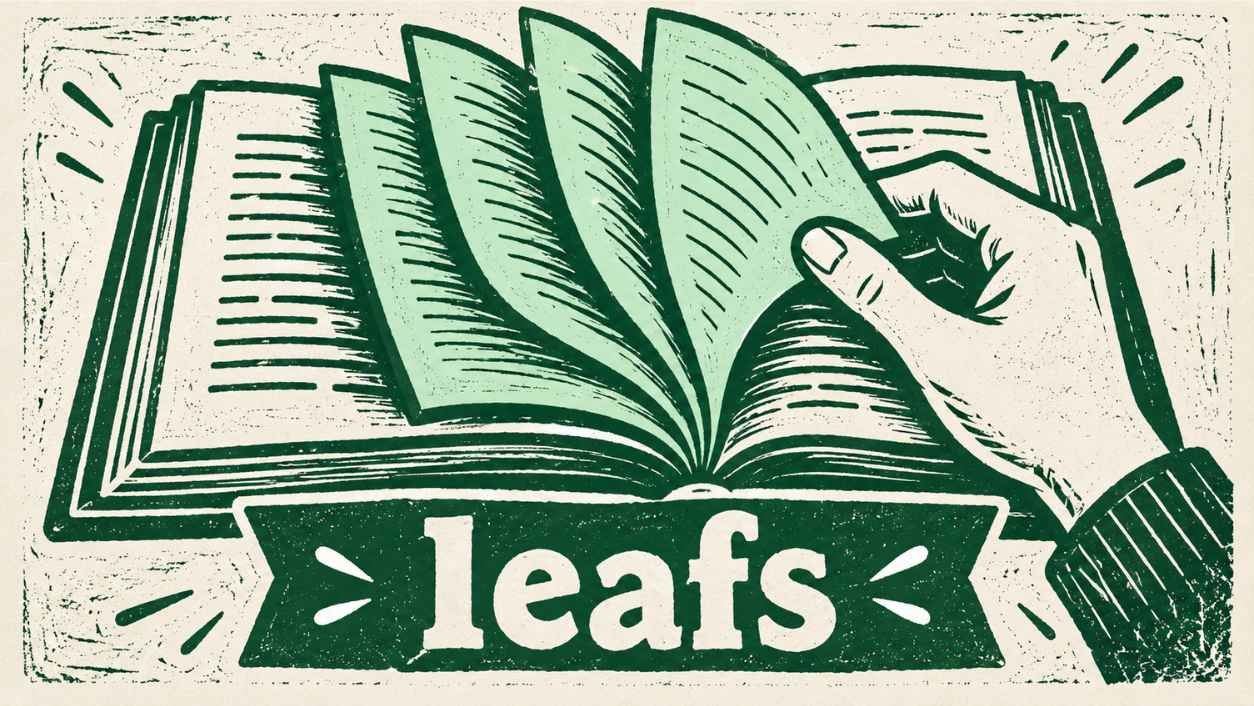
Now the rare side. Leafs vs leaves only splits when a verb or a name enters the sentence, and how to spell leaves on a tree never changes even then.
When Is Leafs Actually Correct?
Leafs is correct in two cases. First, it is the third person singular of the verb leaf, which means to turn pages quickly. Second, it appears in proper names, most famously the Toronto Maple Leafs.
Names follow their own spelling, the way you would check whether a name is spelled Isaac or Issac. The owner or family picks the spelling, and grammar does not overrule them. Gardeners also say a tree “leafs out” when buds open into leaves in spring.
- Page turning: “He leafs through the report” is correct.
- Past tense: “leafed” and “leafing” belong to the same verb.
- Budding: “The maples leaf out in April” uses the verb, not the plural.
- Team names: the Toronto Maple Leafs keep their official spelling.
- Brands: companies can choose their own plural spelling in a name.
- Never plants: “The tree has leafs” is wrong in every dialect.
| Use | Correct form | Example |
| Turn pages | leafs | She leafs through the manual. |
| Past tense | leafed | He leafed through old letters. |
| Spring buds | leafs out | The elm leafs out in May. |
| Team name | Leafs | The Leafs play at home tonight. |
| Plural of plant leaf | leaves | The elm shed its leaves. |
Example in texting:
Friend 1: My editor circled “leafs through.” Is that a typo?
Friend 2: No, that one is right. It is the verb.
Common Mistakes and Misconceptions

Slips happen fast when a rule feels obvious. Leafs vs leaves errors in essays usually come from adding a plain s, and tree leaves or leafs typos follow close behind.
What Are the Most Common Leafs vs Leaves Mistakes?
The biggest error is writing “leafs” for plants because most plurals just add s. English has a small group of words that swap f for v, and leaf belongs to it. Sports add to the habit, since the Maple Leafs make “leafs” look normal on screens and shirts.
Phones make it worse. Autocorrect, voice typing, and shorthand like the abbreviation RD in text messages teach people to type fast and skip checks.
- Plain s: writing “leafs” for plants because most plurals add s.
- Mixed number: “one leaves” pairs a plural with a singular count.
- Team spelling: copying “Maple Leafs” into sentences about trees.
- Verb confusion: using “leaves” for turning pages when “leafs” is needed.
- Autocorrect: trusting a tool that cannot see your meaning.
- Overcorrecting: writing “leaves through a book” after learning the plant rule.
Example in texting:
Friend 1: lol i typed “the tree has leafs” and my phone let it pass
Friend 2: Spellcheck sees a real word. It cannot tell you the plant plural is leaves.
Historical and Linguistic Background
Why does English do this to us? The story behind leafs vs leaves starts a thousand years ago, and leafs or leaves in English still carries that old sound rule.
Where Does the Word Leaf Come From?
Leaf comes from Old English lēaf, and it is related to German Laub. In Old English, f sounded like v between vowels. When Middle English added the plural ending -es, the f sat between vowels and kept the v sound. Spelling later matched the sound, giving leaves.
Modern English kept this pattern for many everyday native words. Newer and borrowed words mostly skipped it.
- Old English lēaf is the earliest ancestor of today’s word.
- Voicing turned f into a v sound between vowels in the plural.
- Spelling caught up later and wrote that sound as v.
- Relatives like wolf and wolves follow the same path.
- Verb use grew from the noun and takes a regular s.
- Names like Leafs keep an s because they work as labels.
Example in chat:
Friend 1: Why does English swap f for v in leaves but not in roofs?
Friend 2: Old sound habits stuck to some words and skipped others.
Words That Change F to V Like Leaf and Leaves
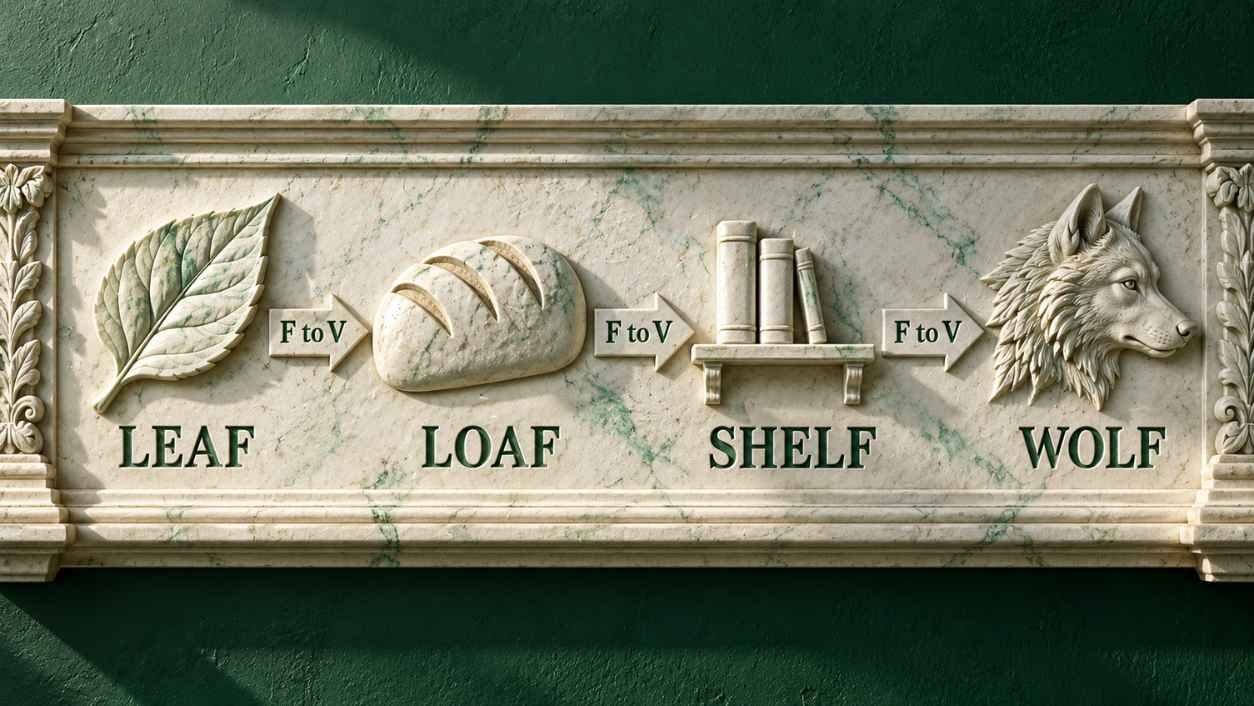
Leaf has company. Leafs or leaves gets easier once you meet the group, and how do you spell leaves on a tree becomes automatic after a few minutes of practice.
Which Words Change F to V in the Plural?
A short list of common nouns swaps f or fe for ves. The group includes leaf, knife, wolf, shelf, loaf, half, and life. Learn them as a set and the leaf plural stops feeling random.
Many other f words just add s, so check the list before you guess.
- Leaf becomes leaves, the word this article is about.
- Knife becomes knives, and wife becomes wives.
- Wolf becomes wolves, and shelf becomes shelves.
- Loaf becomes loaves, and half becomes halves.
- Life becomes lives, and thief becomes thieves.
- Roof stays roofs, and chief stays chiefs.
- Scarf and hoof allow two plurals each.
| Singular | Plural | Pattern |
| leaf | leaves | f to ves |
| knife | knives | fe to ves |
| wolf | wolves | f to ves |
| shelf | shelves | f to ves |
| roof | roofs | adds s |
| chief | chiefs | adds s |
| scarf | scarves or scarfs | both used |
Example in texting:
Friend 1: Quick check: “two roofs” or “two rooves”?
Friend 2: Roofs. Leaf got leaves, but roof never switched.
Visual Guide – Leaves or Leafs?
Pictures make rules stick. This guide settles is it leafs or leaves with simple scenes, so tree leaves or leafs choices take one quick glance instead of a long rulebook.
How Can You Picture the Leaves or Leafs Rule?
Picture four scenes and match the word to the scene. A park path covered in orange foliage shows leaves. A hand flipping through a magazine shows leafs. A hockey jersey shows the Leafs as a name. A spring branch with new buds shows a tree that leafs out.
- Park path covered in orange: write “fallen leaves.”
- Hand and magazine: write “she leafs through it.”
- Hockey jersey: write “Leafs” as the official team name.
- Spring branch with new buds: write “the tree leafs out.”
- Garden tray of basil: write “fresh basil leaves.”
- Dining table with extra panels: write “two table leaves.”
Example in chat:
Friend 1: Sent you a photo of my garden. Look at those leafs!
Friend 2: Gorgeous basil. Caption it “leaves,” not “leafs.”
Quick Reference Table
Short on time? Leafs vs leaves fits on one small chart, and this leafs or leaves meaning cheat sheet gives you the right answer fast, long before your coffee cools.
What Is the Fastest Way to Choose Between Leaves and Leafs?
Ask two questions. Does the sentence name plants, sheets of paper, or table parts? Use leaves. Is someone turning pages, or is it a team name? Use leafs.
- Plants: always leaves, no exceptions.
- Pages: leafs as a verb, leaves as a noun.
- Names: copy the official spelling exactly.
- Counting: leaf for one, leaves for two or more.
- Quick test: if “foliage” fits, write leaves; if “flips pages” fits, write leafs.
| Situation | Use | Example |
| More than one plant leaf | leaves | The maple has red leaves. |
| More than one page or sheet | leaves | Two leaves were missing. |
| Table or door panels | leaves | Add both table leaves. |
| Turning pages | leafs | He leafs through the file. |
| Spring budding | leafs out | The oak leafs out in April. |
| Team name | Leafs | The Maple Leafs won. |
| Plural of time off | leaves | Staff took paid leaves of absence. |
| Verb “leave” with he, she, it | leaves | She leaves at six. |
Example in texting:
Friend 1: Screenshot the cheat sheet for me?
Friend 2: Sent. Plants say leaves, page flipping says leafs.
Leaves vs Leaves: Noun Plural and Verb Meaning
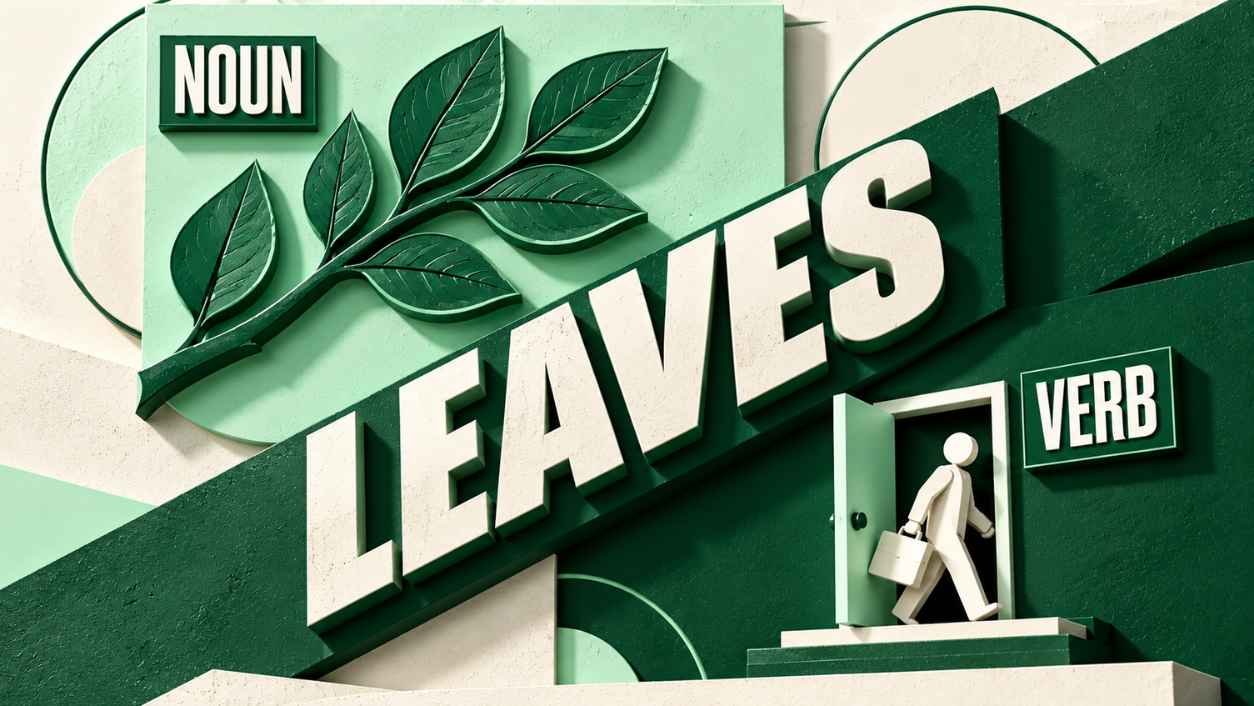
Wait, how can leaves vs leaves be a comparison? Same spelling, two jobs. This split sits behind many searches for is it leafs or leaves and trips up careful writers.
Is Leaves a Noun or a Verb?
Both. As a noun, leaves is the plural of leaf. As a verb, leaves is the third person singular of leave, which means to go away or let something remain.
The sentence tells you which one you have. “The tree leaves are wet” has a plural noun. “The bus leaves at nine” has a verb.
- Noun: “The leaves turned gold” names plant parts.
- Verb: “She leaves the house at seven” describes an action.
- Singular check: if “one leaf” fits, the noun is right.
- Third person: the verb form follows he, she, it, or one name.
- Past tense: the past of leave is left, so “she leaved” is wrong.
- Leaf verb: leafs belongs to a different verb, leaf, about turning pages.
| Sentence | Word type | Base word |
| The leaves are green. | plural noun | leaf |
| He leaves tomorrow. | verb | leave |
| Sick leaves pile up. | plural noun | leave (time off) |
| She leafs through it. | verb | leaf |
Example in chat:
Friend 1: “She leaves the book on the table.” Is that about foliage?
Friend 2: No. That is the verb leave. Foliage would be “leaves” as a noun.
Plural of Leave: Leaves of Absence and Holiday Leave
Time off adds another twist to leafs vs leaves. The plural of leave for holidays and absences is also leaves, a fact behind many plural of leave holiday searches online.
What Is the Plural of Leave of Absence?
Leave, as a noun, means permission to be away or a period of time off. Its plural is leaves, so “two parental leaves” and “three medical leaves” are correct. The full phrase becomes “leaves of absence,” with the plural on the first word.
The second word trips people too. If you want to be sure about the correct spelling of absence, check it before you send that HR memo.
- Leaves of absence is the standard plural, not “leave of absences.”
- Sick leaves and paid leaves are common workplace plurals.
- Annual leave usually stays singular as a mass noun.
- Parental leave stays singular in most policies.
- Never leafs: no meaning of leave produces that spelling.
- Policy documents switch to leaves when comparing several kinds of time off.
Example in chat:
Friend 1: How many “leaves of absence” did the team take this year?
Friend 2: Three. Two medical and one parental.
How Do You Spell Leaves on a Tree?

A simple question, with real stakes for captions and homework. How do you spell leaves on a tree? Write it with a v, and leafs vs leaves is settled for good.
How to Spell Leaves on a Tree in Three Steps?
Spell it l, e, a, v, e, s. Say the word aloud and you hear the v before the z sound. If you hear “leevz,” write the v.
October fills feeds with autumn captions, so this slip shows up everywhere. A quick read aloud before posting catches it.
- Letters: l, e, a, v, e, s spells the plural.
- Singular stays leaf, with an f, for one piece.
- Sound cue: if you can say “leevz,” write v.
- Caption check: read the line aloud before posting.
- Drawing labels: label one drawing “leaf” and a group “leaves.”
- Science sketches label a tree’s foliage as leaves.
Example in texting:
Friend 1: How do you spell leaves on a tree for my sign?
Friend 2: L-E-A-V-E-S. Add the v. No f.
Why Is It Toronto Maple Leafs and Not Maple Leaves?

Hockey fans ask this every season. The Toronto Maple Leafs or leaves question keeps fueling leafs vs leaves debates, and the answer is short, friendly, and rooted in team history.
Why Do the Toronto Maple Leafs Use Leafs?
The team name is a proper noun. Conn Smythe renamed the Toronto St. Patricks as the Maple Leafs in 1927, tying the club to the maple leaf badge Canadian soldiers wore in World War I.
Names made from ordinary words usually take a regular s plural, even when the base word is irregular. Linguists often use the Maple Leafs as a classic example. The same pattern gives us “the Smiths” and “two Walkmans.”
- Proper noun: the club name works like a label, not a plant word.
- 1927: the club took the Maple Leafs name from the St. Patricks.
- Maple leaf badge: Canadian soldiers wore it in the First World War.
- Plural rule: names built from words usually add a regular s.
- Fans say “the Leafs,” and the short form keeps the s.
- Everyday writing about trees still uses leaves.
Example in texting:
Friend 1: Why isn’t it the Toronto Maple Leaves?
Friend 2: Team names are labels. The name stays Leafs, the tree keeps leaves.
Is It Door Leaves or Leafs?
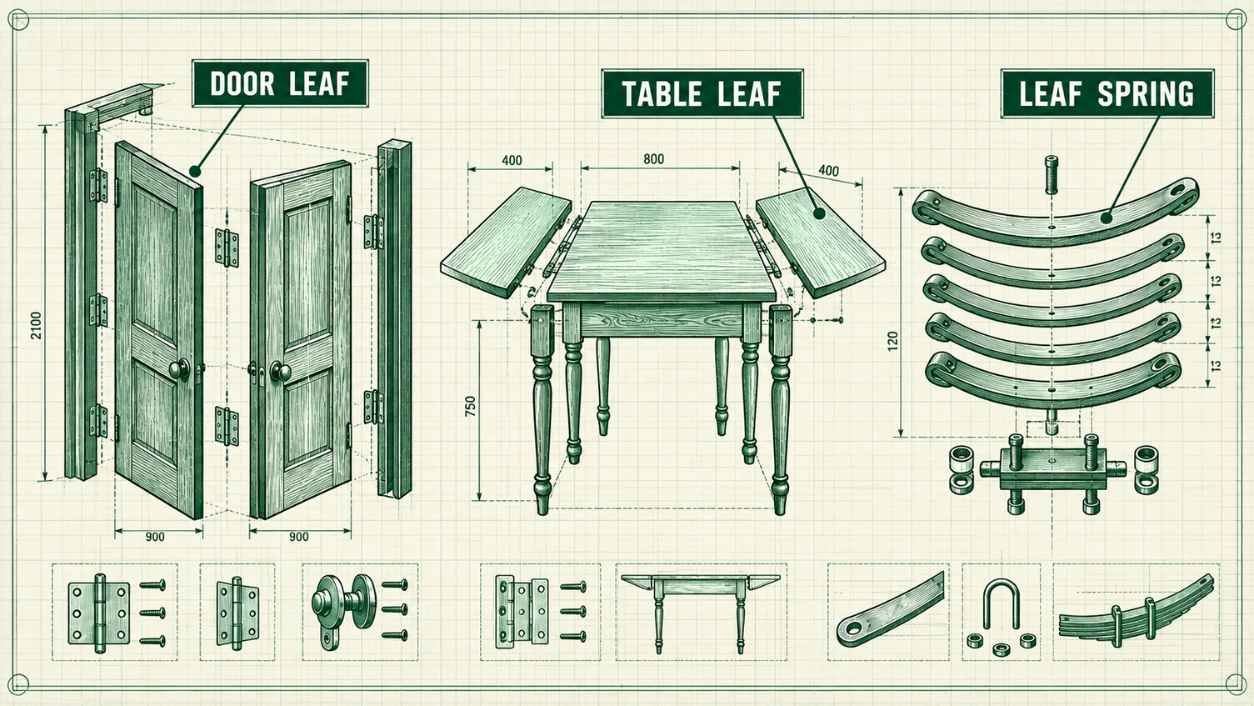
Carpenters, decorators, and online shoppers ask this one. Is it leafs or leaves on a double door, and does leafs or leaves of a table follow the same simple rule?
What Are the Leaves of a Door or Table Called?
A door leaf is one panel of a double door or folding door. Two panels make two door leaves. A table leaf is a removable or folding extension that makes the tabletop longer. A truck’s leaf spring stacks several thin steel leaves together.
- Door leaves: each panel of a double door is a leaf.
- Table leaves: each extension piece is a leaf, and several are leaves.
- Drop-leaf tables have hinged sides that fold down.
- Leaf springs in trucks stack several leaves together.
- Book leaves are sheets with a page on each side.
- Hardware catalogs spell the plural leaves.
| Item | One piece | Several pieces | Example |
| Door | door leaf | door leaves | Open both door leaves. |
| Table | table leaf | table leaves | Insert two table leaves. |
| Drop-leaf table | drop leaf | drop leaves | Lower the drop leaves. |
| Leaf spring | leaf | leaves | The spring has five leaves. |
| Book | leaf | leaves | Two leaves were loose. |
Example in chat:
Friend 1: The shop says the table has two “leafs.” Typo?
Friend 2: Yes. Furniture pieces have leaves, so the sign needs fixing.
Case Studies and Real-World Examples
Rules feel clearer in real life. Here is leafs vs leaves in a school task, a blog post, and a sports headline, plus more leafs or leaves in English examples.
What Do Real Leafs or Leaves Examples Look Like?
A science lab report that says “the leafs lost water” loses a mark for a simple spelling slip. A garden blog that writes “fresh basil leaves” reads clean. A sports page that writes “Maple Leafs rally in third” is correct as a name.
Seasonal posts mix all three. A blogger writing about autumn leaves and a costume party also needs to know how to spell and capitalize Halloween.
- School lab report: “leaves lost water” earns the mark; “leafs” loses it.
- Garden blog: “basil leaves” and “mint leaves” read clean.
- Sports headline: “Maple Leafs” keeps the official name.
- Library note: “she leafs through the archive” uses the verb.
- Business memo: “pending leaves of absence” uses the leave plural.
- Menu: “tea leaves” and “bay leaves” are standard.
Example in texting:
Friend 1: My cousin’s essay says “the leafs absorb light.” Should I tell her?
Friend 2: Yes, gently. Plant parts take leaves.
Tips for Writers and Students
Small habits stop big errors. These tips keep leafs vs leaves straight in drafts, and how to spell leaves on a tree becomes a question you answer in two seconds.
What Are the Best Tips to Remember Leaves vs Leafs?
Pair the rule with a test you can run mid-sentence. Replace the word with “foliage” or “flips pages.” Whichever phrase fits tells you the spelling.
Plural rules reach compound words too. Writers who ask about leaves often ask about hyphenated terms next, and the guide on how trick-or-treat becomes trick-or-treaters shows where the s goes.
- Foliage test: if “foliage” fits, write leaves.
- Page test: if “flips pages” fits, write leafs.
- Count test: one means leaf, many means leaves.
- Read aloud: a z sound at the end signals leaves.
- Proofread names against the official site or team page.
- Teach the f to v list: knife, wolf, shelf, loaf, life.
- Save a style note so your whole team spells it the same way.
Example in chat:
Friend 1: Can you proofread my plant report tonight?
Friend 2: Sure. I will search for “leafs” first and fix every plant one.
FAQs About “Leaves or Leafs”
Readers keep asking the same short questions. These seven answers settle leafs vs leaves quickly, and each one covers a leafs or leaves meaning question people type into Google daily.
1. What is the difference between “leaves” and “leafs”?
The leafs vs leaves difference is simple. Leaves is the plural noun for plants, and leafs is a verb for turning pages.
2. Which form is correct in formal writing?
Leaves is correct for plants in formal writing. On leafs vs leaves, exams, journals, and reports all expect the v.
3. Can I use “leafs” in professional communication?
Yes, but only as a verb or in a name, like “she leafs through the file.” For plants, leafs vs leaves still means leaves.
4. Does regional English affect usage?
No. Is it leafs or leaves has the same answer in American, British, Canadian, and Australian English: plants take leaves.
5. How does this impact time management or scheduling documents?
Schedules list time off as “leaves of absence.” In leafs vs leaves terms, the plural of leave never becomes leafs.
6. What is the plural form of “leaf”?
The plural is leaves. Learning leafs vs leaves starts with that single f to v change.
7. What does “leafs” mean?
Leafs means turns pages, or it appears in names like the Maple Leafs. In leafs vs leaves, it never names plant parts.
Conclusion
The answer to leafs vs leaves comes down to one habit: plants take leaves. Write it with a v whenever you mean foliage, pages, table panels, or time off. Keep leafs for the verb that turns pages and for proper names like the Toronto Maple Leafs.
If you still wonder is it leafs or leaves, run the two quick tests from this guide. Does “foliage” fit? Write leaves. Does “flips pages” fit? Write leafs. That check takes five seconds and works in essays, emails, and captions, even when you are tired or typing on a phone.
The same plural rules also settle tree leaves or leafs and every sentence about leafs vs leaves you will write this season. Next time you caption an autumn photo, read the line aloud and listen for the z.

Daniel Parker is an English language writer sharing clear grammar lessons, practical tips, and helpful examples for learners.










1 thought on “Leaves or Leafs Correct Usage and Common Mistakes”