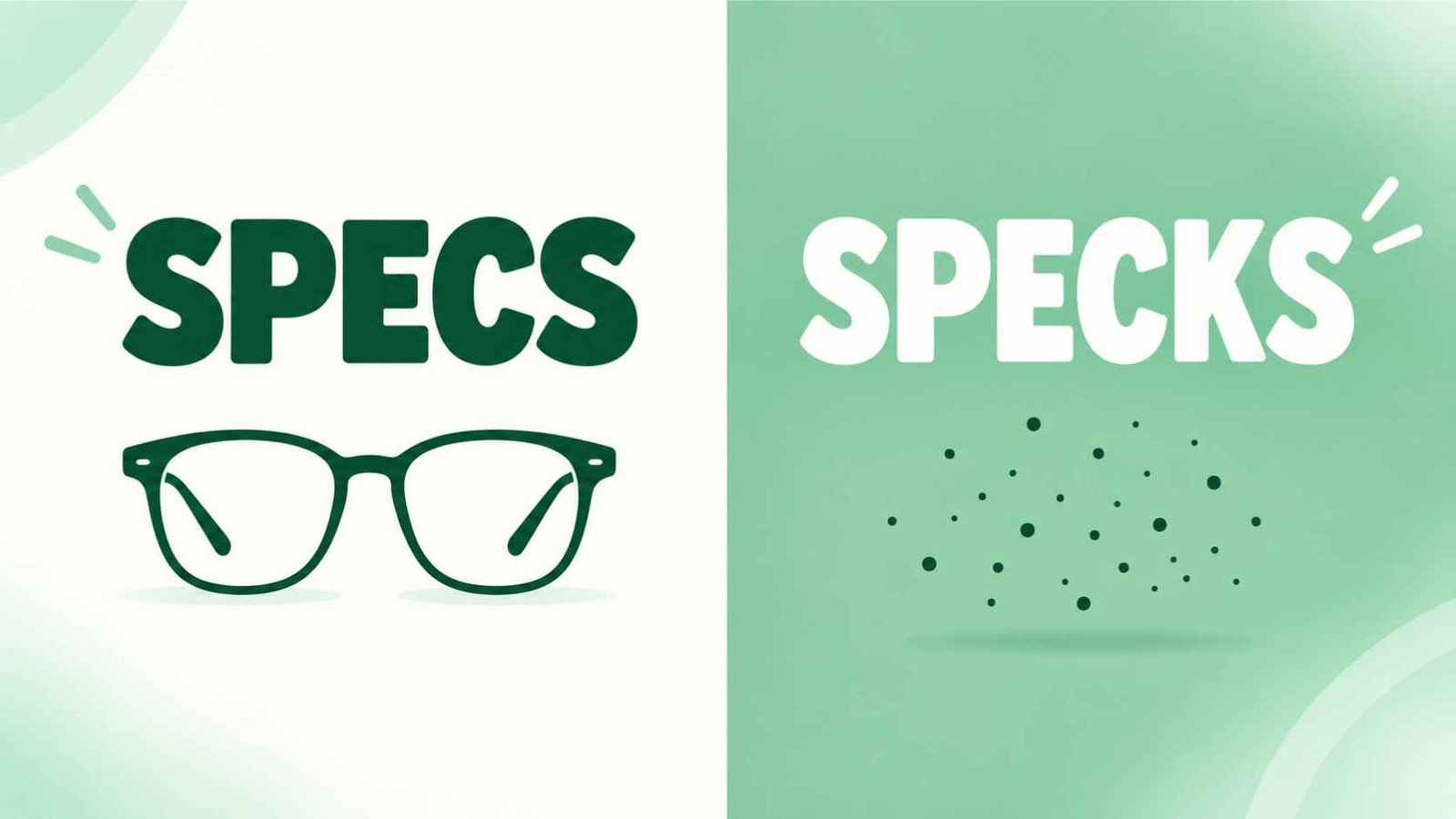
You typed it, hit backspace, then typed it again. Was it “specs” or “specks”? If you’ve ever paused mid-sentence over this exact word, you’re definitely not the only one who’s second-guessed something that sounds so simple.
This guide breaks down the real specs spelling meaning in plain, human language, no confusing grammar jargon involved. You’ll walk away knowing exactly when to use specs and when specks is actually the right call, backed by simple tricks, real examples, and a comparison table you can bookmark. Keep reading, because by the end of this, that mix-up will never trip you up again.

Quick Answer
Short on time and just need the answer? Here’s the specs spelling meaning broken down in one glance, no fluff, just the facts you came here for.
- Specs usually means specifications, technical details, or eyeglasses.
- Specks means tiny spots, particles, or small pieces of something.
- The spelling of specs never changes no matter which meaning you intend.
- Both words sound nearly identical, which is exactly why people swap them.
- If you mean details or glasses, the correct spects spelling is actually “specs.”
Examples
- Check the product specs before buying a laptop.
- There were specks of dust on the table.
- I can’t find my specs anywhere this morning.
- Tiny specks floated in the sunlight near the window.
Example in texting: Friend 1: can you send me the phone specs before I buy it Friend 2: sure, one sec, checking the site now
What Does Specs Mean?
The specs spelling meaning covers two very different situations, and getting them mixed up can genuinely confuse whoever is reading your message. Both meanings use the exact same spelling of specs, just different context.
- Specs is short for specifications in technical or business writing.
- Specs can also mean eyeglasses in casual, everyday English.
- The word is always spelled the same way regardless of meaning.
- Context alone tells the reader which definition you actually intend.
- Native speakers rarely confuse the two meanings once context is clear.
How Is Specs Used in Everyday Conversations?
People lean on specs constantly in tech talk, shopping chats, and casual mentions of eyewear, almost always trusting context to carry the actual meaning through.
- Shoppers ask about phone or laptop specs before buying.
- Engineers reference project specs during planning meetings.
- Friends casually mention losing or needing their specs.
- Reviewers compare specs across competing tech products online.
- Teachers sometimes use specs informally when talking about glasses.
Example in chat: Friend 1: what are the specs on your new laptop Friend 2: 16GB ram, solid battery, pretty happy with it honestly
1. Specifications or Technical Details
In business, technology, engineering, and product listings, the specs spelling always points toward specifications or detailed requirements that buyers and teams rely on.
| Context | Example Sentence |
| Technology | The phone’s specs include 12GB of RAM. |
| Business | Read the project specs carefully before starting. |
| Construction | The architect reviewed the building specs twice. |
| Gaming | These computer specs are ideal for gaming. |
2. Eyeglasses

In informal English, especially British English, the spelling of specs also refers to eyeglasses, and this usage feels completely natural in casual speech.
- I can’t find my specs anywhere in this house.
- She cleaned her specs before starting to read.
- His new specs genuinely look stylish on him.
- Grandpa always misplaces his reading specs somewhere odd.
- Kids sometimes borrow specs just to look older.
Example in texting: Friend 1: have you seen my specs anywhere Friend 2: check the kitchen counter, you left them there again
Is “Specs” the Correct Spelling or Is It “Specks”?
This question comes up constantly because both words are pronounced almost the same way, and only the actual spelling of specs versus specks reveals the intended meaning.
- Specs are correct for details, requirements, or eyeglasses only.
- Specks is correct for dust, particles, or tiny spots only.
- Neither spelling is ever interchangeable with the other, despite the sound.
- The spects spelling some people search for is simply the word “specs.”
- When unsure, ask whether you mean information or tiny particles.
What’s the Fastest Way to Test the Right Word?
Ask yourself one quick question before typing: am I describing information or size? Details and glasses need “specs,” while tiny particles always need “specks” instead.
Example in chat: Friend 1: is it specs or specks for laptop details Friend 2: definitely specs, specks is for dust and stuff
What Does Specks Mean?
Specks is the plural form of speck, meaning a very small spot, mark, particle, or tiny piece of something barely noticeable to the naked eye.
- A speck is usually tiny, often smaller than a grain of rice.
- Specks never refers to specifications, details, or technical information.
- The word appears often in descriptions of dust, dirt, or paint.
- Distant objects can also look like specks from far away.
- Confusing this with the specs spelling is one of the most common mix-ups.
Examples
- Tiny specks of dust covered the wooden shelf.
- There were specks of paint scattered across the floor.
- The sky held a few distant specks that turned out to be birds.
- Small specks of dirt stained the white fabric badly.
Example in texting: Friend 1: why does this shirt have tiny specks on it Friend 2: probably paint specks from when we redid the fence
Specs vs Specks: Side-by-Side Comparison
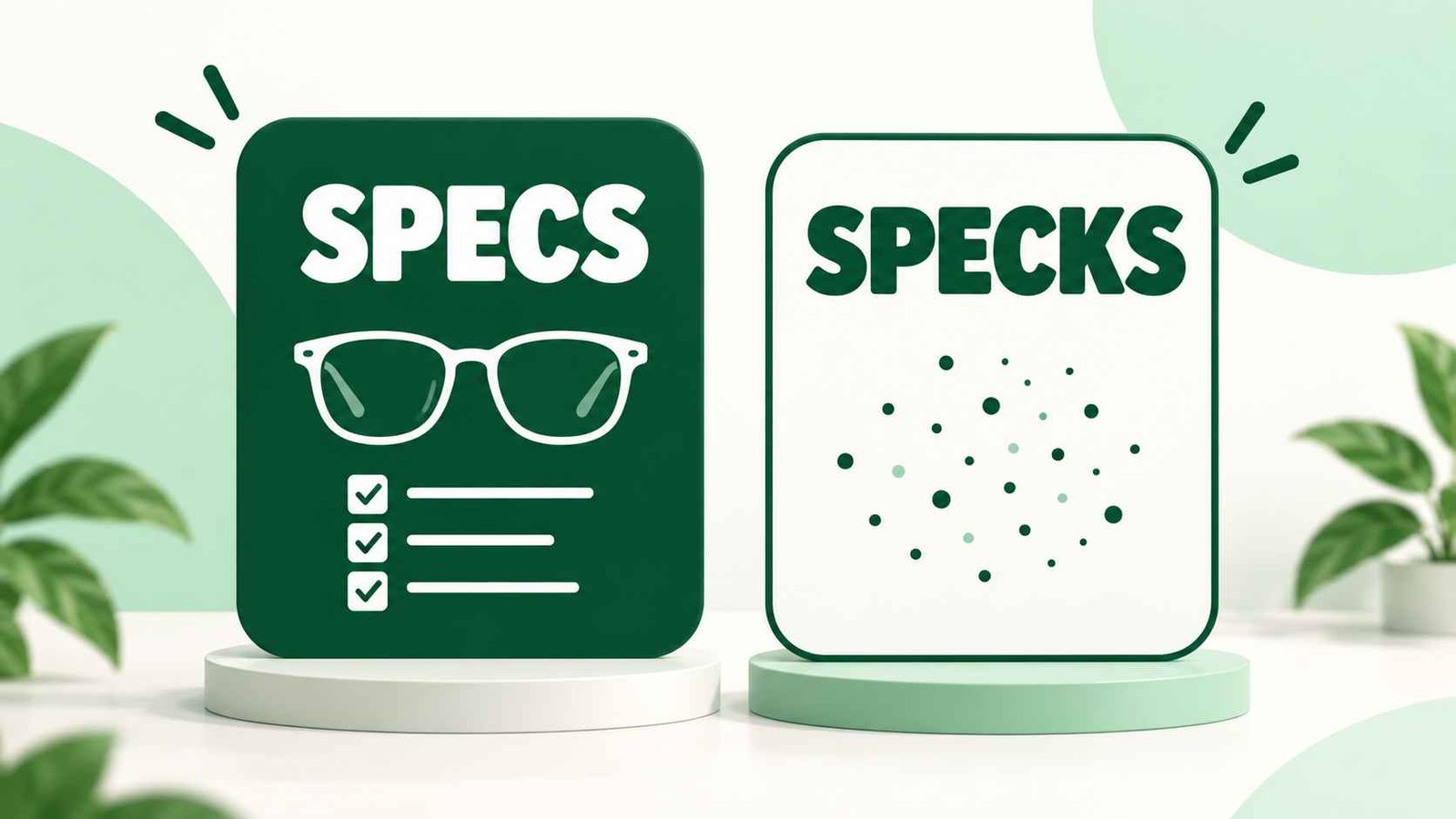
| Feature | Specs | Specks |
| Meaning | Specifications or eyeglasses | Tiny spots or particles |
| Part of Speech | Noun | Noun |
| Common Contexts | Technology, products, eyewear | Dust, dirt, paint, small marks |
| Example | Review the laptop specs. | Specks of dust covered the desk. |
| Refers To | Details or glasses | Tiny pieces or spots |
- Specs and specks are never used to mean the same thing.
- The core spelling of specs stays fixed across both of its meanings.
- Specks always describes something small and physical, never abstract details.
- Reading the surrounding sentence almost always clears up the confusion instantly.
- A quick mental swap test (details vs. dust) settles it every time.
Correct Spelling of Specs vs Common Misspellings
Because “specs” and “specks” sound so close, plenty of writers second-guess the correct spelling entirely, sometimes inventing spellings that don’t actually exist in English.
- The only correct spects spelling for specifications is “specs,” never “spects.”
- “Specks” is never an acceptable substitute for specifications in writing.
- Autocorrect sometimes swaps these words without the writer noticing at all.
- Double-checking before sending an email or message avoids embarrassing mistakes.
- Style guides and dictionaries list only one correct spelling per meaning.
| Misspelling Seen Online | Correct Form | Meaning Intended |
| Spects | Specs | Specifications or glasses |
| Specks (for details) | Specs | Specifications |
| Specs (for dust) | Specks | Tiny particles |
Example in chat: Friend 1: is it “spects” or “specs” for laptop details Friend 2: it’s specs, spects isn’t actually a real word
How to Use Specs Correctly
Using the specs spelling correctly depends entirely on context, and once you spot the pattern, choosing the right word becomes almost automatic every single time.
- Use specs whenever discussing product details or requirements.
- Use specs whenever the topic is eyeglasses or eyewear.
- Never swap in specks when talking about technical information.
- Business documents almost always rely on the specifications meaning.
- Casual conversation might use either meaning depending on the topic.
Technology and Products
- Compare the camera specs before making a purchase decision.
- These laptop specs support advanced gaming without any lag.
- The manufacturer recently updated the product specs online.
- Buyers often screenshot specs to compare across retailers.
- Reviewers highlight standout specs in their video breakdowns.
Example in texting: Friend 1: send me the specs for that graphics card Friend 2: sending now, it’s actually a solid upgrade
Business and Projects
- The contractor followed the design specs exactly as written.
- Project specs were shared with the entire development team.
- The client formally approved the final specs yesterday afternoon.
- Missing a single spec can delay an entire project timeline.
- Teams often revise specs multiple times before final sign-off.
Eyeglasses
- He left his specs sitting on the kitchen table again.
- My new specs finally arrived in the mail yesterday.
- She wears reading specs only when working at her desk.
- Kids sometimes tease classmates who just started wearing specs.
- Losing your specs at a party is a common frustration.
How to Use Specks Correctly
Whenever you’re describing something physically tiny, the word specks almost always fits better than any other option, especially when talking about dust, dirt, or distant shapes.
- Use specks for dust, dirt, or visible tiny particles.
- Use specks for paint, ink, or small stains on surfaces.
- Use specks for distant objects that appear small from afar.
- Never use specks when the topic is actually specifications.
- Microscopic descriptions almost always call for the word specks.
| Situation | Correct Word | Example |
| Dust on furniture | Specks | Specks of dust covered the shelf. |
| Paint on hands | Specks | Specks of paint stained his fingers. |
| Birds far away | Specks | The birds looked like tiny specks. |
| Laptop details | Specs | The laptop specs are impressive. |
Example in chat: Friend 1: what are those white specks on the car Friend 2: probably pollen specks, it’s that season again
Dust and Dirt
- Specks of dust floated visibly in the afternoon sunlight.
- The mirror had several stubborn specks of dirt on it.
- Cleaning specks off glass surfaces takes patience and the right cloth.
- Old furniture often collects specks over months of neglect.
- A microscope reveals specks invisible to the naked eye.
Paint and Ink
- Specks of paint covered the artist’s hands after the mural.
- Tiny specks of ink stained the printed page slightly.
- Removing paint specks from clothing usually requires a solvent.
- Printers occasionally leave ink specks on finished documents.
- Artists sometimes intentionally add specks for a textured effect.
Distant Objects
- The airplanes appeared as tiny specks high in the sky.
- Boats looked like small specks far along the horizon.
- From the mountaintop, the cars below looked like moving specks.
- Stars can resemble faint specks on a clear night.
- Photographers sometimes capture specks that turn out to be wildlife.
Why Do People Misspell Specs as Specks?
The confusion almost always comes down to sound, since both words are pronounced nearly identically in fast, casual speech across most English accents.
- Pronunciation offers zero reliable clues between the two words.
- Autocorrect occasionally suggests the wrong version without warning.
- Fast typing on phones increases the chance of a swap.
- Many learners never receive clear teaching on the difference.
- Native speakers sometimes rely on instinct rather than the actual rule.
Is This Mistake More Common in Texting Than Formal Writing?
Yes, definitely. Casual texting speed encourages shortcuts, and a quick mix-up between the specs spelling and specks rarely gets a second glance before hitting send.
Example in texting: Friend 1: ugh I always mix up specs and specks when typing fast Friend 2: same here, autocorrect makes it worse honestly
Common Mistakes With Specs and Specks
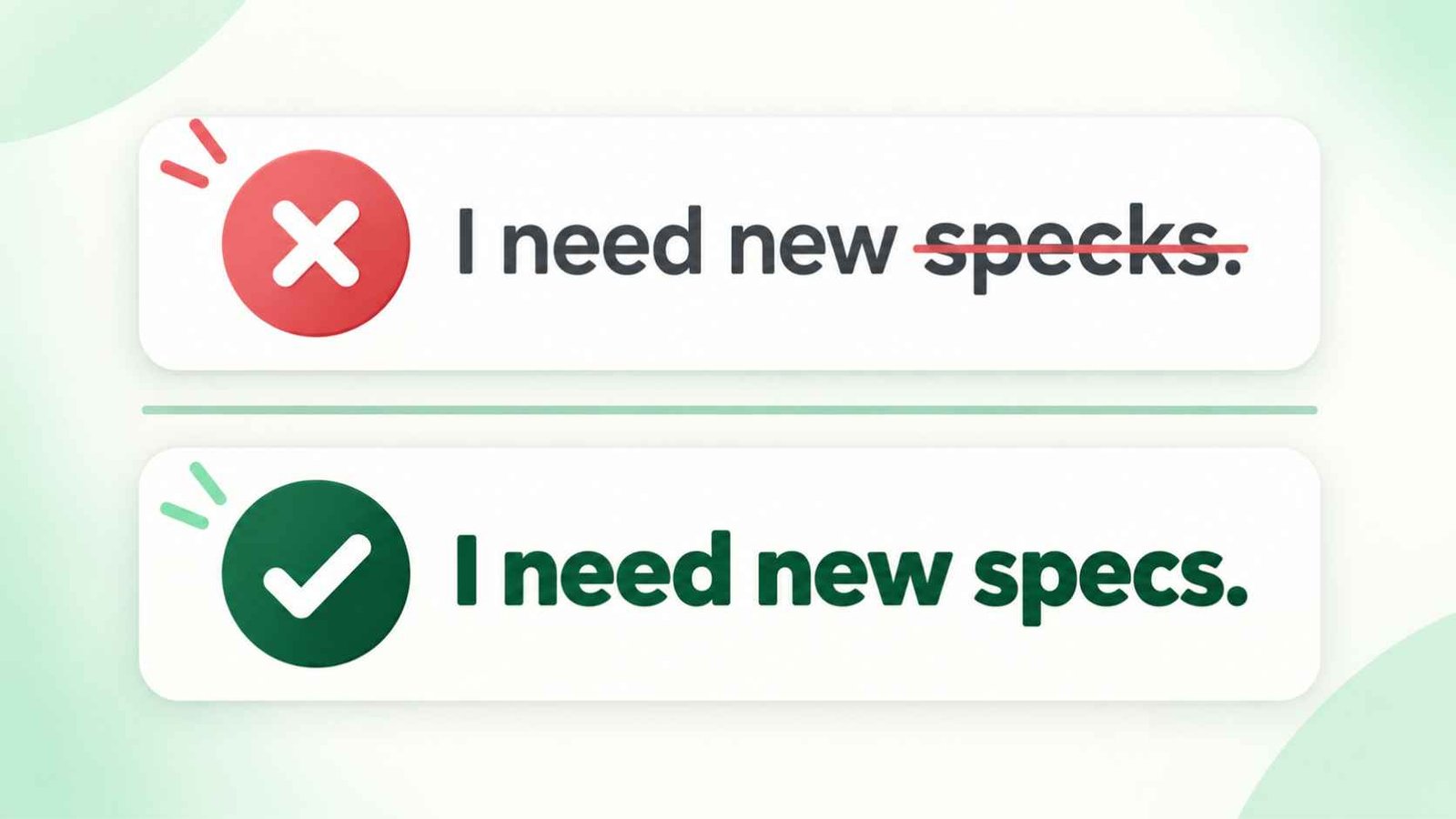
Because the words sound alike, many people accidentally use the wrong one, especially under a deadline or while typing quickly on a small keyboard.
Mistake 1: Using Specks for Specifications
Incorrect: Check the phone’s specks before buying it. Correct: Check the phone’s specs before buying it.
Mistake 2: Using Specs for Tiny Particles
Incorrect: There were specs of dust on the shelf. Correct: There were specks of dust on the shelf.
Mistake 3: Confusing the Meanings
Incorrect: The sky was filled with flying specs. Correct: The sky was filled with flying specks.
- Always pause and ask whether you mean details or particles.
- Grammar checkers catch some of these errors but not all.
- Reading a sentence aloud often reveals which word actually fits.
- Similar mix-ups happen with other tricky word pairs, like the boys vs boy’s apostrophe rule, where a single character changes the entire meaning.
- Keeping a mental checklist of both meanings prevents repeat mistakes.
- Peer editing often catches these swaps before publishing anything.
Example in chat: Friend 1: wait did I write specs or specks in that email Friend 2: you wrote specs, and that’s correct since it’s about details
Easy Memory Tricks
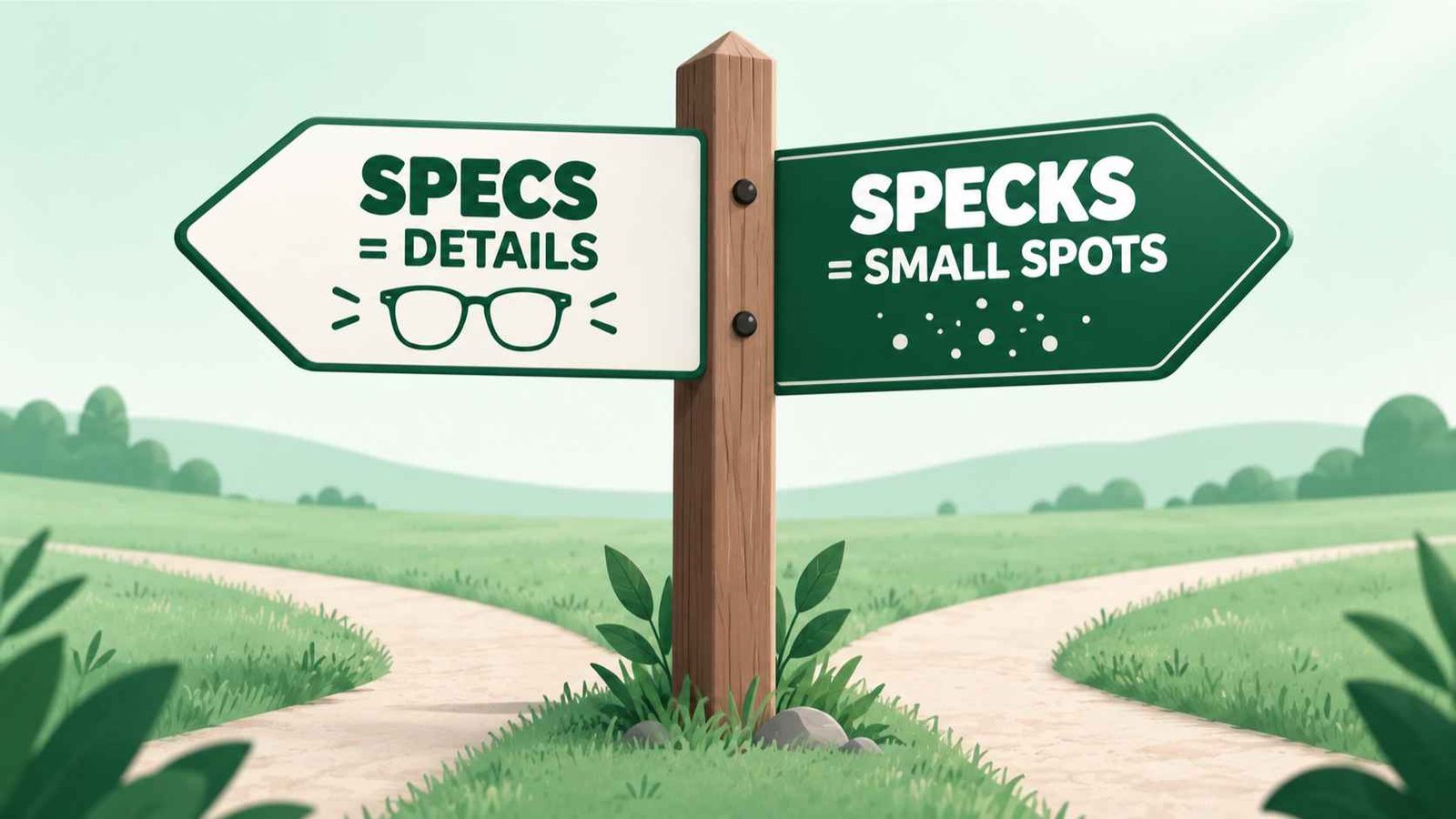
A quick memory trick can save you from second-guessing every sentence, whether you’re texting a friend or finishing a report under a tight deadline.
- Ask yourself: “am I describing details or dust?”
- If it’s information, always choose the specs spelling.
- If it’s tiny particles, always choose specks instead.
- Specs rhymes with “checks,” a nod to specifications and lists.
- Specks contains “eck,” a hint toward little flecks or spots.
Specs = Specifications
- The word specs is genuinely short for “specifications.”
- Think requirements, features, or technical details whenever you see it.
- Product listings almost always rely on this shortened form.
- Business writing treats specs as a standard, accepted abbreviation.
- Glasses share the same spelling, so context still matters here too.
Specks = Small Spots
- Specks always signals something visually tiny and scattered.
- Picture flecks of dust, paint, or dirt whenever you use it.
- The word never applies to information of any kind.
- Nature writing often describes birds or boats as distant specks.
- If you can’t see it clearly, specks is probably the right word.
Example in texting: Friend 1: quick tip for remembering specs vs specks Friend 2: specs is details, specks is dust, that’s literally it
Specs Spelling in American and British Dictionaries
Major dictionaries on both sides of the Atlantic agree on the spelling of specs, though usage frequency shifts slightly between American and British speakers.
- American and British dictionaries both list identical spellings for specs.
- British English uses “specs” for glasses far more casually than American English.
- American speakers more often say glasses instead of specs.
- Specks carries the exact same meaning in both dialects.
- Neither dialect has ever developed an alternate spelling for either word.
| Dictionary Region | Specs Meaning | Common Usage |
| American English | Specifications, occasionally glasses | Mostly technical contexts |
| British English | Specifications and glasses | Both meanings equally common |
Example in chat: Friend 1: do Brits actually say specs for glasses a lot Friend 2: yeah, way more casually than Americans do honestly
Examples in Everyday Sentences
Seeing both forms inside natural, everyday sentences often makes the specs spelling meaning click faster than any rule ever could on its own.
Specs
- The software specs were updated last week.
- Review the design specs before construction begins.
- Her specs make reading much easier at night.
- The gaming console’s specs genuinely impressed reviewers.
- I misplaced my specs again this morning.
Specks
- Specks of snow covered the entire window ledge.
- The shirt had a few stubborn specks of mud.
- Tiny specks appeared clearly under the microscope.
- The old photograph contained faint specks of damage.
- Specks of sand stuck to our shoes all afternoon.
Example in texting: Friend 1: check these camera specs before we buy it Friend 2: looks solid, way better than the last model
When Should You Use the Specs Spelling in Writing?
Reach for the specs spelling any time your sentence involves technical details, requirements, or eyewear, and never when describing something physically tiny or scattered.
- Use it for product comparisons, reviews, and shopping guides.
- Use it for project documentation and business requirements.
- Use it whenever the topic is eyeglasses casually.
- Avoid it completely when describing dust, dirt, or distant shapes.
- When unsure, silently replace the word with “specifications” as a test.
Does Formal Writing Treat Specs Differently Than Casual Writing?
Not really. Formal writing simply expects the full word “specifications” more often, while casual writing happily shortens it to specs without any loss of clarity.
Example in chat: Friend 1: should I write specifications or specs in this report Friend 2: specs is fine, it’s pretty standard even in reports now
American vs British English

The meanings of specs and specks stay the same in both American and British English, though one small usage difference is worth knowing.
Specs as Eyeglasses
- British English treats specs as a very common informal word for glasses.
- Americans are more likely to say glasses or eyeglasses instead.
- Both groups still understand the word specs without confusion.
- The spelling of specs itself never changes between dialects.
- Specks remains completely identical in meaning across both varieties.
Example in texting: Friend 1: have you seen my specs mate Friend 2: haha that’s such a British way to say it, check the couch
Specs Spelling Rules You Should Never Break
A handful of simple rules keep the specs spelling consistent no matter what you’re writing, from casual texts to formal business documents.
- Never add an extra letter to make “specs” into “spects.”
- Never use specks as a shortcut for specifications.
- Always match the word to whether you mean details or particles.
- Keep the spelling of specs identical regardless of British or American English.
- Double-check tech and shopping content, since specs appears constantly there.
- Read sentences aloud whenever you’re genuinely unsure which word fits.
| Rule | Reminder |
| No extra letters | “Spects” is never correct. |
| Details = specs | Specifications always use specs. |
| Dust = specks | Tiny particles always use specks. |
Example in chat: Friend 1: is “spects” ever correct in any context Friend 2: nope, that’s just a common typo for specs
Frequently Asked Questions
What is the difference between specs and specks?
Specs refers to specifications or eyeglasses, while specks means tiny spots, particles, or marks scattered somewhere.
Is specs short for specifications?
Yes. The specs spelling is commonly used as a shortened, informal form of specifications in everyday writing.
What does specks mean?
Specks are very small spots, particles, or pieces of something, often too tiny to notice immediately.
Can specs mean glasses?
Yes. In informal English, especially British English, the specs spelling often refers casually to eyeglasses.
Which word should I use for dust particles?
Always use specks when referring to dust particles, since the specs spelling never applies to tiny physical bits.
Are specs and specks pronounced the same?
In many accents, they sound almost identical, which is exactly why the specs spelling gets confused with specks so often.
Is specks ever used for technical details?
No. Technical details always use the specs spelling, never specks, regardless of the industry or context.
Do Americans and British people use these words differently?
The core meanings match, though the specs spelling for eyeglasses is noticeably more common in everyday British conversation.
Summary
The difference between the specs spelling and specks really comes down to context. Specs refers to specifications, technical details, requirements, or eyeglasses, while specks describes tiny spots, particles, or marks. Although the words sound almost identical when spoken, they describe genuinely different things in writing.
Remember that the spelling of specs always relates to details, information, or glasses, never to something physically tiny. Specks, on the other hand, always points to small, visible particles like dust or paint. Once this simple test becomes second nature, choosing between specs and specks stops feeling like guesswork, and your writing will read more clearly and confidently every time.

Daniel Parker is an English language writer sharing clear grammar lessons, practical tips, and helpful examples for learners.










2 thoughts on “Specs Spelling Meaning: The Truth Everyone Gets Wrong”