

You typed “this place feels so homie” and something felt off. Maybe you second-guessed it, deleted it, and typed it again anyway.
That small pause is exactly why so many people search homey or homie every day. This guide gives you the real meaning of both words, where they come from, and simple rules so you never second-guess the spelling again. Homey or homie confusion ends here, and by the end you’ll also know the difference between homie or homey, homy or homey, and the growing search term hommies meaning. Keep reading.
Homey or Homie – Quick Answer
Homey means warm, cozy, and comfortable, while homie means a close friend. That’s the whole rule, and it explains almost every mistake people make with homey vs homie online.
- Places get described as homey: a room, a café, an apartment
- People get called homies: a friend, a buddy, someone you trust
- Homey works in formal and casual writing
- Homie stays casual, texting, and social media only
- Spelling matters more than most people think, since homy is not standard
Example in texting: Friend 1: this apartment feels so homey, I love it here Friend 2: right? bring the homies over this weekend
Is it homie or homey
It depends entirely on what you’re describing. If you mean a feeling or a place, the word is homey. If you mean a person, the word is homie. Mixing the two changes the meaning of the sentence and can make writing sound wrong to a native reader.
What Does Homey Mean?

A cozy living room and a warm greeting share one word, and that word is homey, an adjective describing comfort rather than people. Homey is the correct and widely accepted spelling; homy is rare and mostly avoided in modern writing.
How Is Homey Used in Everyday Writing?
- Describes rooms, houses, cafés, and hotel lobbies
- Suggests a warm and welcoming atmosphere
- Appears often in décor blogs and travel reviews
- Carries a positive, comforting tone
- Works in both formal and informal writing
- Never refers directly to a person in standard use
Example in chat: Friend 1: how’s the new apartment Friend 2: small but so homey, I never want to leave
What Does Homie Mean?
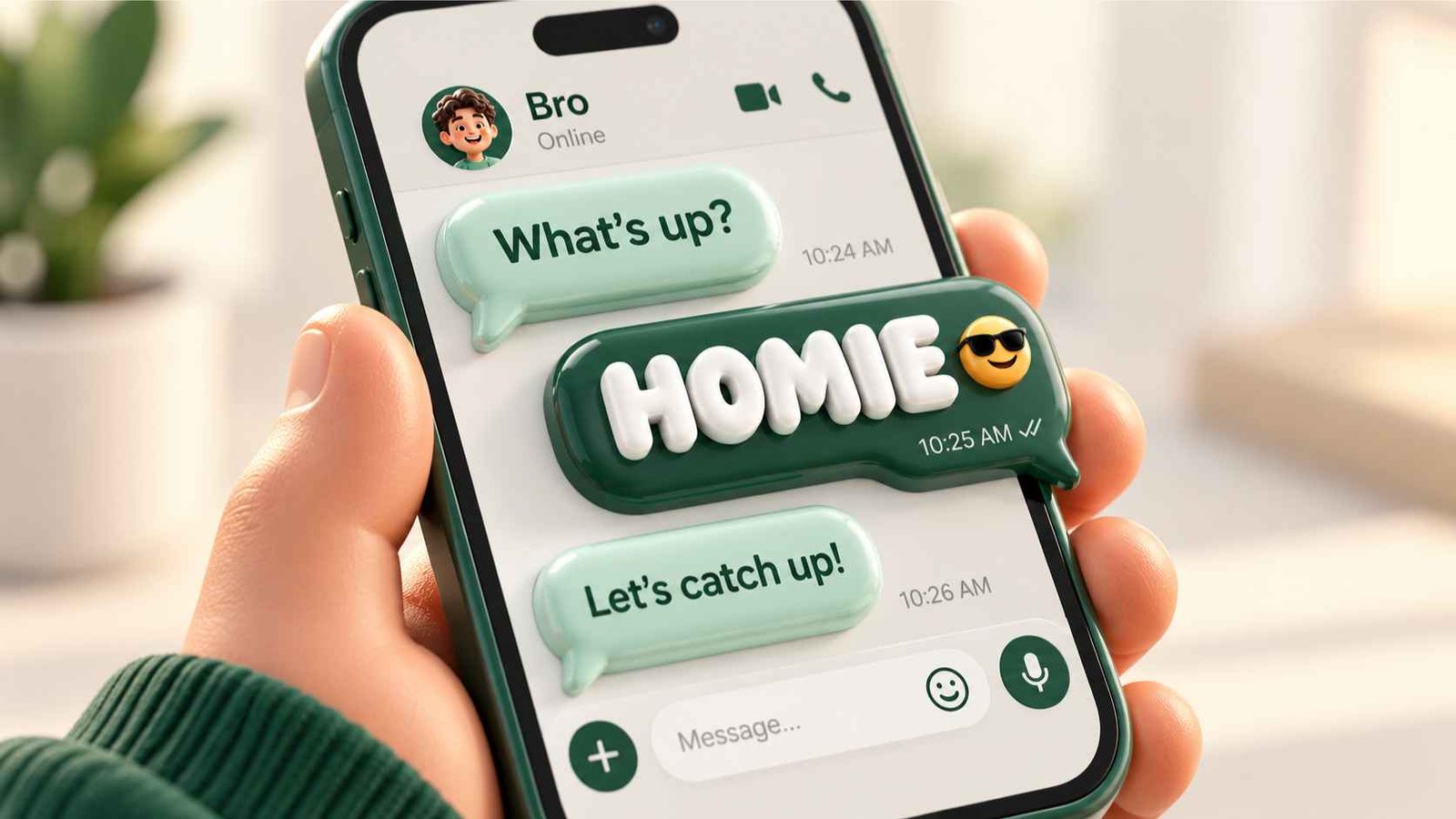
Somewhere between “homeboy” and a text message, homie became the word millions of people use for their closest friends every single day. It’s a noun and informal slang term for a close friend, buddy, or someone trusted, and it’s extremely common in hommies meaning searches from social media users.
What Does Homie Mean in Texting?
- Means a close friend or trusted buddy
- Comes from American street slang, not standard grammar
- Appears constantly in music, film, and social posts
- Fits casual conversation between friends
- Avoid using it in professional emails or reports
- Spelled H-O-M-I-E, never “homy” or “homey” for a person
| Word | Part of speech | Refers to | Formal use |
| Homey | Adjective | A place or feeling | Yes |
| Homie | Noun | A person | No |
Example in texting: Friend 1: bring your homies to the game tonight Friend 2: already told them, we’re all coming
The Origin of Homey or Homie
Homey comes directly from the word home and has described comfort and warmth in English for more than a century. Homie has a shorter, sharper history rooted in American street culture rather than formal grammar.
- Homey traces back to old English use of “home” as a feeling
- Homie grew from “homeboy,” meaning a friend from the same neighborhood
- Homeboy shortened naturally into homie through casual speech
- Music and film in the 1980s and 1990s spread homie nationwide
- Homey stayed rooted in home décor and lifestyle writing the whole time
Homey or Homie Meaning in Pop Culture and Music
Hip-hop lyrics, sitcom dialogue, and group chats all did more to spread homie than any dictionary ever could. Meanwhile homey quietly kept its place in design magazines and lifestyle blogs.
Why Do People Use Homie in Music and Movies?
- Signals loyalty and closeness between friends on screen
- Sounds natural in dialogue between characters from the same crew
- Spread through rap, R&B, and coming-of-age films
- Reinforced through repeated use across decades of pop culture
- Normalized the word for younger generations texting today
Example in chat: Friend 1: that new song literally says homie in every line Friend 2: it’s basically the whole vibe of the genre now
British English vs American English Usage

Homey travels well across both British and American English, but homie stays mostly American. This single fact solves most of the confusion behind homy or homey searches from outside the US.
| Word | British English | American English | Meaning |
| Homey | Common | Common | Cozy, comfortable |
| Homie | Rare | Very common | Friend, slang |
- Homey is safe for a global audience
- Homie is strongly tied to American slang
- British writers rarely use homie in casual speech
- Global content should lean on homey when unsure
- Regional slang shifts fast, so context always matters
What Does Homey Mean in Texting?
A cozy couch photo captioned “so homey” reads completely differently from a group photo captioned “my homies.” Texting relies on this exact word choice to set the tone instantly.
- Signals comfort when describing a room, café, or space
- Pairs naturally with photos of home, décor, or travel
- Never replaces homie when tagging friends
- Reads warmer and softer than slang terms
- Fits captions, reviews, and casual descriptions equally well
Example in texting: Friend 1: this coffee shop is giving very homey vibes Friend 2: I know, I could sit here all day
Which One Should You Use?
Choosing between homey vs homie comes down to one question: are you describing a place or a person? Everything else follows from that single distinction.
- Describing a place or feeling → use homey
- Describing a friend → use homie
- Writing professionally or academically → stick with homey
- Texting friends casually → homie works fine
- Unsure of your audience → default to homey, the safer choice
If you enjoy sorting out tricky word pairs like this one, the same confusion shows up with spelling mix-ups such as genius or genious, where one letter changes everything about how correct a sentence looks.
Homey or Homie: Regional and Generational Usage Differences
Grandparents say homey about a kitchen. Teenagers say homie about a best friend. Both are right, because the words never competed for the same job in the first place.
When Should You Use Homie Instead of Homey?
- Older generations lean toward homey in daily conversation
- Younger generations use homie constantly in group chats
- Southern and West Coast American slang popularized homie early
- Formal settings favor homey regardless of age or region
- Online spaces blend both generations, so context still decides
Example in chat: Friend 1: my mom calls every cozy restaurant “homey” Friend 2: mine calls every friend of mine her “homie” too lol
Common Mistakes with Homey or Homie
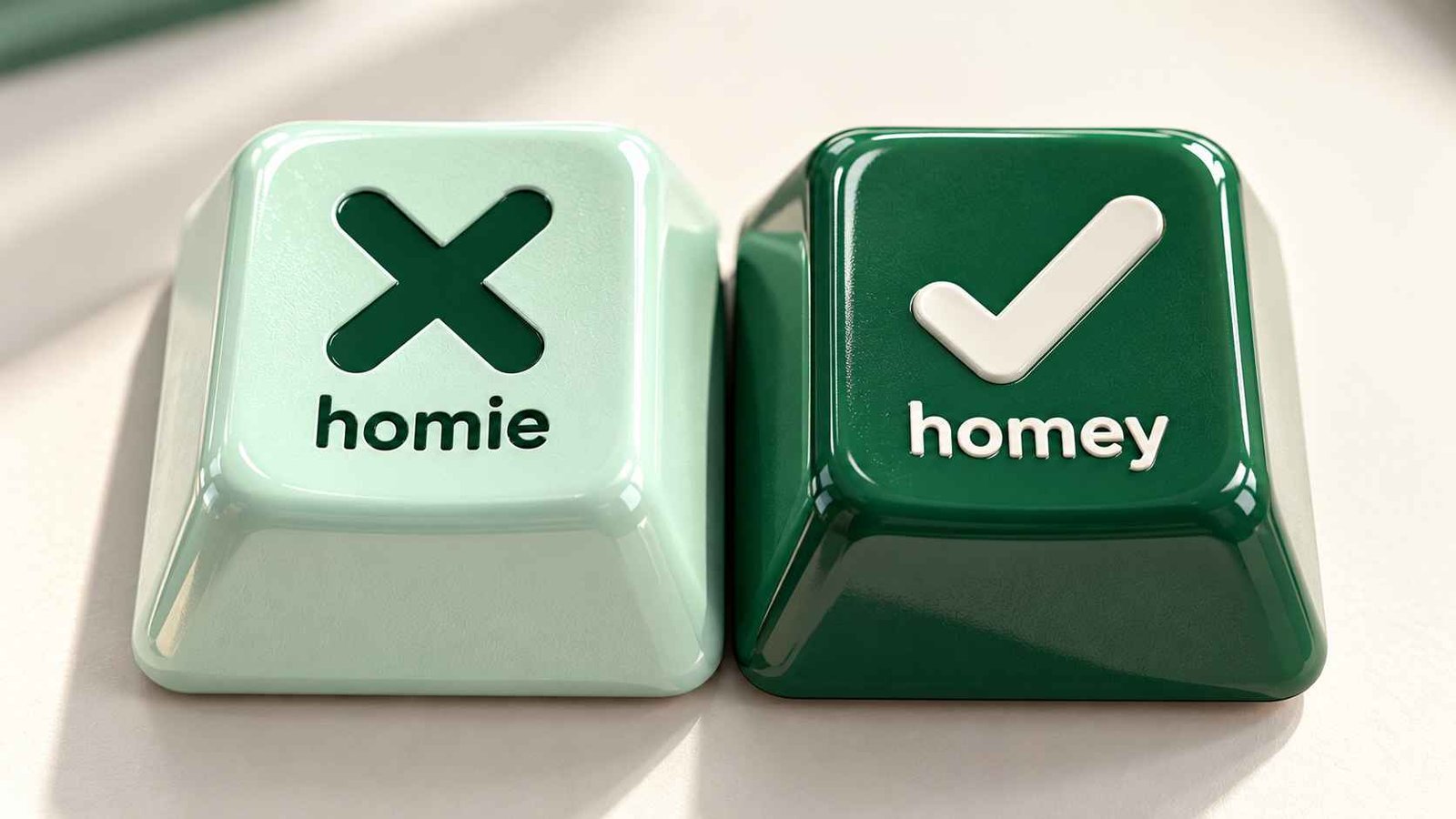
Autocorrect and casual typing cause most homey or homie errors, not a lack of grammar knowledge. The fix is almost always about meaning, not spelling.
- ❌ “This café feels homie” → ✅ “This café feels homey”
- ❌ “He’s my homey from school” → ✅ “He’s my homie from school”
- Avoid slang like homie in professional emails entirely
- Double-check captions before posting on social media
- Read the sentence back and ask: place or person?
Why Do People Confuse Homey and Homie Online?
Social media moves fast, and both words sound almost identical out loud, which is exactly why mix-ups spread so easily online.
- Sound nearly the same when spoken casually
- Share the same root word, home, causing overlap
- Autocorrect sometimes swaps one for the other
- Fast typing skips the small but critical letter difference
- Repeated wrong spellings online normalize the mistake further
Homey or Homie in Everyday Examples
Seeing both words in real sentences makes the rule stick faster than any definition alone.
- Emails: “The office has a homey and relaxed feel.”
- News: “The shelter offers a safe, homey environment for families.”
- Social media: “Out with my homies tonight.”
- Formal writing: “The design creates a homey atmosphere for guests.”
- Texting: “Miss my homies from college so much right now.”
Homey or Homie in Branding and Business Names
Coffee shops, home décor brands, and clothing labels borrow both words on purpose, betting that the warmth of homey or the friendliness of homie will stick in a customer’s memory.
- Décor brands lean on homey for comfort marketing
- Streetwear labels use homie to signal community and loyalty
- Café names often pick homey for a welcoming first impression
- Clothing drops use homie to sound relatable and casual
- Both words work as marketing shortcuts for very different feelings
Example in chat: Friend 1: this candle brand’s whole tagline is “smells like homey” Friend 2: smart, that word just sells comfort instantly
Homey or Homie – Google Trends & Usage Data
Search data shows people are unsure about meaning and correct usage, not spelling. Homey or homie ranks as a common question among English learners and casual writers alike.
- Homey trends highest in décor blogs and hotel reviews
- Homie trends highest on social media and in music content
- Search interest spikes around casual writing questions, not grammar exams
- English learners drive a large share of these searches
- Both words stay consistently searched across the year
| Search context | Homey | Homie |
| Home décor blogs | High | Low |
| Social media captions | Low | High |
| Music and entertainment | Low | High |
| Hotel and café reviews | High | Low |
Synonyms for Homey and Homie You Can Use Instead
Sometimes neither word fits the tone you want, and a close synonym reads more naturally.
- Cozy, welcoming, comfortable replace homey in most sentences
- Snug, inviting, warm work well for spaces and rooms
- Buddy, pal, bestie replace homie in casual writing
- Close friend, trusted friend work for slightly more formal tone
- Crew, squad replace homies when talking about a group
Comparison Table: Homey vs Homie
| Word | Correct spelling | Meaning | Formal use |
| Homey | Yes | Cozy, warm | Yes |
| Homie | Yes | Friend, slang | No |
FAQs
Are homey and homie the same word?
No. Homey describes comfort, while homie describes a person. They come from the same root but serve completely different purposes in a sentence.
Is homie considered slang?
Yes, homie is informal slang for a close friend. It fits casual chats and social media, but it doesn’t belong in professional writing.
Can homey describe a person instead of a place?
Rarely. Homey almost always describes a room, café, or feeling. Using it for a person sounds unnatural to most native speakers.
Is homie okay to use in work emails?
No. Save homie for texting and casual chats. Work emails and professional documents should avoid slang like this entirely.
Is homy an acceptable spelling of homey?
No. Homy is a rare, outdated spelling. Modern English almost always uses homey instead, so stick with that version.
Do British writers use homie often?
Rarely. Homie is mostly American slang, while homey works comfortably in both British and American English writing.
Which word is the safer choice for global writing?
Homey is the safer pick for a global audience. It reads clearly everywhere, while homie stays tied to American slang and casual tone.
Conclusion
The confusion around homey or homie comes from one shared root, the word “home,” used in two very different directions. Homey describes comfort: a room, a café, a feeling of safety. Homie describes a person: a close friend you trust.
There’s no real spelling problem here, only a meaning problem. Once you remember that places are homey and people are homies, the choice becomes automatic. Use homey in professional or global writing, and save homie for texting and casual conversation.
Next time you’re not sure which one fits, ask a simple question: am I describing a place, or a person? That one question solves the homey or homie debate every time.

Daniel Parker is an English language writer sharing clear grammar lessons, practical tips, and helpful examples for learners.










2 thoughts on “Homey or Homie: What’s the Difference?”