
You get a text back and it’s just two fingers pointing at each other: 👉👈. No words attached, and somehow it says more than a full paragraph would. That nervous, can’t-quite-look-at-you feeling is basically the whole 👉👈 meaning in one gesture.
This guide covers the full 👉👈 meaning, including how it shifts (or doesn’t) between a 👉👈 meaning from a girl and a guy, how to use it so it lands right, and which combos are worth copying and pasting today. Stick around and you won’t second-guess this emoji again.
What does Finger Pointing At You Emoji Mean?
At its core, the 👉👈 meaning is simple: shyness. Two fingers touching mimics a real nervous habit, the kind of thing you do when you’re too embarrassed to say something straight to someone’s face.
How Is 👉👈 Used in Everyday Conversations?
- Shyness: sent right after admitting something embarrassing or personal.
- Nervous excitement: used while waiting for someone’s reaction.
- Soft requests: added to a favor so it sounds less demanding.
- Crush talk: dropped when mentioning someone you like.
- Cute apology: softens an awkward or clumsy moment.
- Playful teasing: used sarcastically among close friends.
- Silence filler: replaces a reply when words feel like too much.
Meaning in real life: The gesture predates the emoji trend. A photo of someone standing with their index fingertips pressed together spread widely starting in mid-February 2020 as a reaction image for shyness and awkwardness, gaining popularity alongside the matching emoji pairing, which is a big part of why 👉👈 still reads as shy today.
Example in texting:
- Friend 1: ok I have to tell you something but it’s embarrassing 👉👈
- Friend 2: omg just say it, I won’t judge
👉👈 Meaning of This Emoji
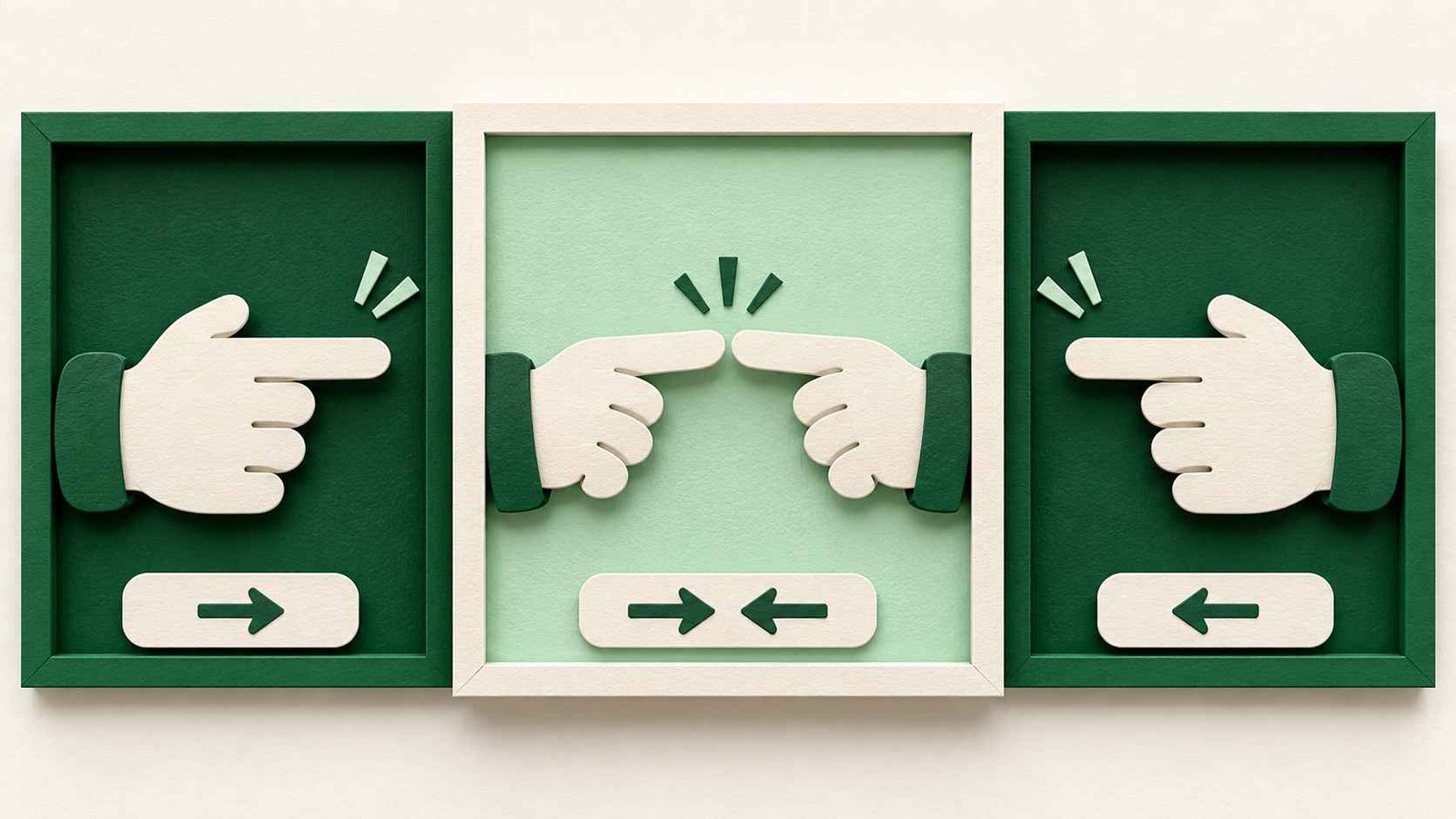
Break the pair apart and each finger has its own job. Put them together and the 👉👈 meaning changes completely, from pointing at something to pointing at a feeling. Order barely matters, which covers 👈👉 meaning too.
Does the Order of the Emojis Change the Meaning?
- 👉 alone: usually points at or calls out nearby text.
- 👈 alone: often marks something, or jokes as an “exit.”
- 👉👈 together: switches meaning entirely, from outward pointing to an inward feeling.
- 👈👉 reversed: read exactly the same way, just a typing habit.
- 👉🏻👈🏻 with skin tone: identical meaning, just personalized to match the sender.
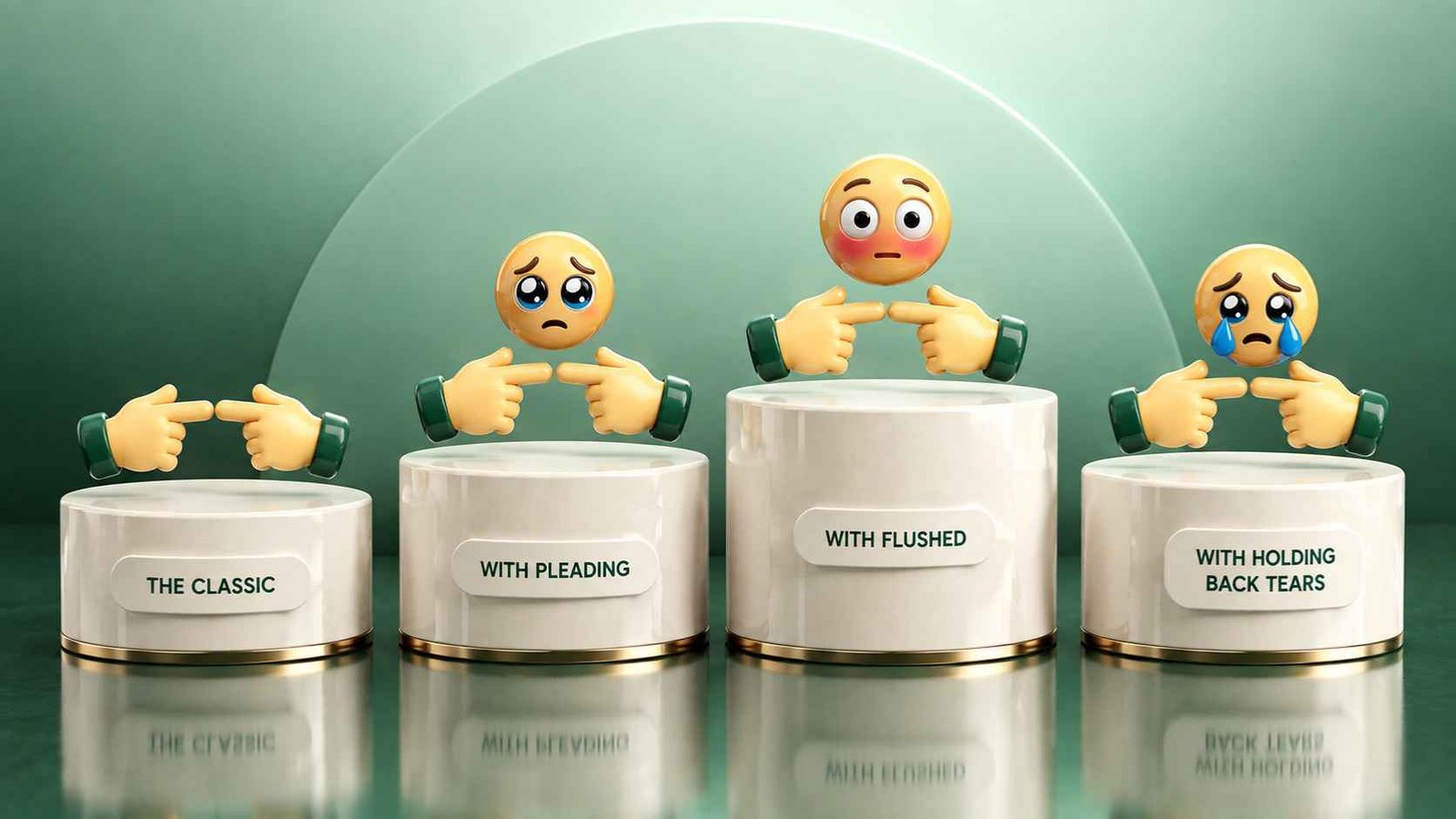
| Emoji | What it usually signals |
| 👉 | Pointing something out, or listing items |
| 👈 | Marking something, sometimes a joking “exit” |
| 👉👈 | Shyness, nervousness, a soft or timid feeling |
| 🥺👉👈 | The same shy feeling, turned up for extra cuteness or a gentle request |
Example in chat:
- DM: hey so this might be random 👈👉
- Reply: haha go on, I’m listening
The meaning of the right-pointing emoji
👉 by itself has a different job than the 👉👈 meaning most people search for. On its own, it usually works as a pointer, not a feeling.
- Draws attention: points readers toward specific text or an item.
- List-style use: common in posts that read like a checklist.
- No shyness alone: the shy read only shows up once 👈 joins it.
Example in chat:
- Post: 👉 link in bio
- Comment: got it, thanks
Left-pointing emoji meaning
👈 mirrors 👉 but points the other way, and people often use it as a joke rather than a real direction.
- Marks something: points at nearby text, just from the other side.
- “Exit” joke: sometimes used sarcastically to mean “leaving now.”
- Pairs naturally with 👉: together they build the full 👉👈 meaning.
Example in chat:
- Message: this conversation 👈 that’s me leaving
- Reply: lol bye then
The meaning of the whole emoji
Put 👉 and 👈 together and the 👉👈 meaning stops pointing outward and starts pointing at a feeling instead.
- Combined effect: two pointers flip into one shy gesture.
- Not additive: it isn’t “point plus point,” it’s a new meaning entirely.
- Consistent everywhere: reads the same across texting, DMs, and captions.
Example in texting:
- Friend 1: ok don’t laugh but 👉👈
- Friend 2: I would never, tell me
History and Origin of the 👉👈 Emoji Trend
Every internet gesture starts somewhere, and this one has an actual paper trail. Knowing where the 👉👈 meaning came from makes it easier to explain to anyone who still thinks it’s random.
- February 2020: the viral fingertip-touching photo kicked off the shy-pose reaction trend.
- June 2018: the Pleading Face emoji joined Unicode and later became a common add-on to the two-finger pose.
- 2010 to 2015: both pointing emojis were approved under Unicode 6.0 in 2010 and didn’t reach phones as emoji until 2015.
- 2020 onward: pairing them with 🥺 became known as a bashful pose, often nicknamed a simp pose.
- Today: the pairing outlived the meme that started it and became its own shorthand.
Example in texting:
- Friend 1: bro since when did 👉👈 mean shy
- Friend 2: since like 2020, it’s from a meme
🥺👉👈 Meaning From a Girl
When a girl sends 👉👈, the 👉👈 meaning from a girl rarely strays from the general 👉👈 meaning: shyness. It usually means she’s working up the nerve to say something she actually cares about.
What Should You Reply When a Girl Sends 👉👈?
- Stay warm: respond gently, not jokingly, especially after a serious message.
- Ask softly: “wait what do you mean” works better than pushing hard.
- Match the energy: a shy admission deserves an unhurried reply.
- Avoid teasing: calling it out too much can shut the conversation down.
- Give space: a short pause is fine; she’s building up courage.
Example in texting:
- Her: ok this is random but I kind of missed talking to you 🥺👉👈
- You: not random at all, I missed you too
How to use Finger Pointing At You Emojis
Using 👉👈 well is less about rules and more about timing. Drop it in the wrong spot and it reads confusing instead of cute, so context does most of the work.
Which Emojis Pair Well With 👉👈?
- After a confession: pairs naturally with admitting a crush or a mistake.
- With 🥺: adds extra softness to a request or apology.
- With 😳: signals embarrassment more than shyness.
- Solo, mid-sentence: works as a pause where words trail off.
- Not for bad news: keep it away from serious or upsetting messages.
- Not too often: repeating it in every message dulls the effect.
Example in texting:
- You: can I ask you something kind of personal 👉👈
- Friend: of course, what’s up
👉👈 Meaning on TikTok, Instagram, and Snapchat
Each app bends the 👉👈 meaning slightly toward its own style. The feeling stays shy, but where it shows up changes the read.
- TikTok comments: reacts to a cute or relatable video.
- Instagram captions: pairs with soft, low-key posts rather than bold ones.
- Snapchat chat: common right before sending something a little vulnerable.
- Story replies: a fast way to react shyly without typing anything.
- Group chats: usually aimed quietly at one person, not the whole group.
Example in chat:
- Story reply: 👉👈 this reminded me of you
- Reply: omg stop, that’s so sweet
Why Do People Send 👉👈 on Social Media?
People don’t send 👉👈 by accident. It’s a shortcut for a feeling that would take a whole sentence to explain otherwise, and typing that sentence out feels harder.
- Saves face: shows vulnerability without spelling it out.
- Feels safer: easier to send than typing “I’m nervous.”
- Reads as cute: softens a message that might otherwise feel heavy.
- Matches the mood: fits shy, sweet, or slightly awkward moments.
- Builds connection: invites a warm reply instead of a neutral one.
Example in chat:
- Comment: this video is so you 👉👈
- Reply: hahaha why is that accurate
Best Emoji Combinations for Copy Paste
Copy-paste combos save you from hunting through an emoji keyboard mid-conversation. Here are the ones people actually use, plus what each adds to the base 👉👈 meaning.
Ready-to-Use Emoji Combinations
| Combo | Copy it | Quick meaning |
| Shy classic | 👉👈 | Plain shyness or nerves |
| Extra soft | 🥺👉👈 | Shy plus a gentle request |
| Embarrassed | 😳👉👈 | Caught off guard, flustered |
| Holding back | 🥹👉👈 | Shy with a hint of emotion |
| Down bad | 😔👉👈 | Shy mixed with longing |
Simple Meaning
- 👉👈 alone: plain shy, nervous energy.
- Adding 🥺: turns shy into a soft ask.
- Adding 😳: leans more embarrassed than nervous.
- Adding 🥹: adds a touch of genuine emotion.
- Adding 😔: reads closer to longing than simple shyness.
Example in texting:
- Friend 1: sending you good luck vibes for tomorrow 🥺👉👈
- Friend 2: thank you, I need it
Aesthetic Emoji Ideas for Social Media
Social media aesthetics run on small details, and 👉👈 fits right into that world. Plenty of small creators lean on it for a soft, approachable feel before they’ve built a big following.
- Bio taglines: short lines like “soft era 👉👈” work well.
- Caption softeners: end a vulnerable caption with it instead of a paragraph.
- Comment sections: react to a friend’s post without over-explaining.
- Highlight covers: use it to set a shy, cute theme.
- Pastel pairings: works visually with soft, muted color palettes.
Example in chat:
- Caption: first post in a while, be nice 👉👈
- Comment: welcome back, we missed you
👉👈 vs 🥺👉👈: What’s the Difference?
These two look almost identical, but the 👉👈 meaning shifts slightly once 🥺 gets added. One is quiet nerves; the other is asking for something.
- 👉👈 alone: general shyness, no specific ask attached.
- 🥺👉👈: shyness plus a request, favor, or plea.
- Tone difference: 🥺 adds pleading energy on top of nerves.
- Use case: pick 🥺👉👈 when you actually want something back.
- Overlap: both still read as soft and non-confrontational.
Example in texting:
- Plain: idk if I should tell you this 👉👈
- With request: could you maybe help me with this 🥺👉👈
When Should You Use 👉👈 in a Conversation?
Timing decides whether 👉👈 lands as cute or confusing. It works best right after something personal, not in the middle of a normal update.
- Right after a confession: admitting a crush, mistake, or feeling.
- When asking a favor gently: softens the ask.
- Replying to a compliment: shows you’re a little flustered by it.
- Not for logistics: skip it in plans, times, or directions.
- Not for bad news: keep it away from serious topics.
Example in chat:
- Message: I actually really liked hanging out today 👉👈
- Reply: same, we should do it again soon
👉👈 Meaning From a Boy
A guy using 👉👈 usually means the same 👉👈 meaning from a boy as anyone else: nervousness, not toughness. It reads as more surprising simply because it breaks the usual too-cool texting habit.
Is It Weird When a Guy Uses 👉👈?
- Rare, not weird: guys use it less often, so it stands out more.
- Same root meaning: shyness or a soft request, no gender flip involved.
- Often about a crush: frequently shows up right before admitting he likes someone.
- Reads as sincere: dropping the tough-guy filter tends to land as genuine.
- Fine to call out gently: a light “aw” reply usually goes over well.
Example in texting:
- Him: not gonna lie, I’ve wanted to ask you out for a while 👉👈
- Her: wait, seriously? yes
Common Problems and Solutions
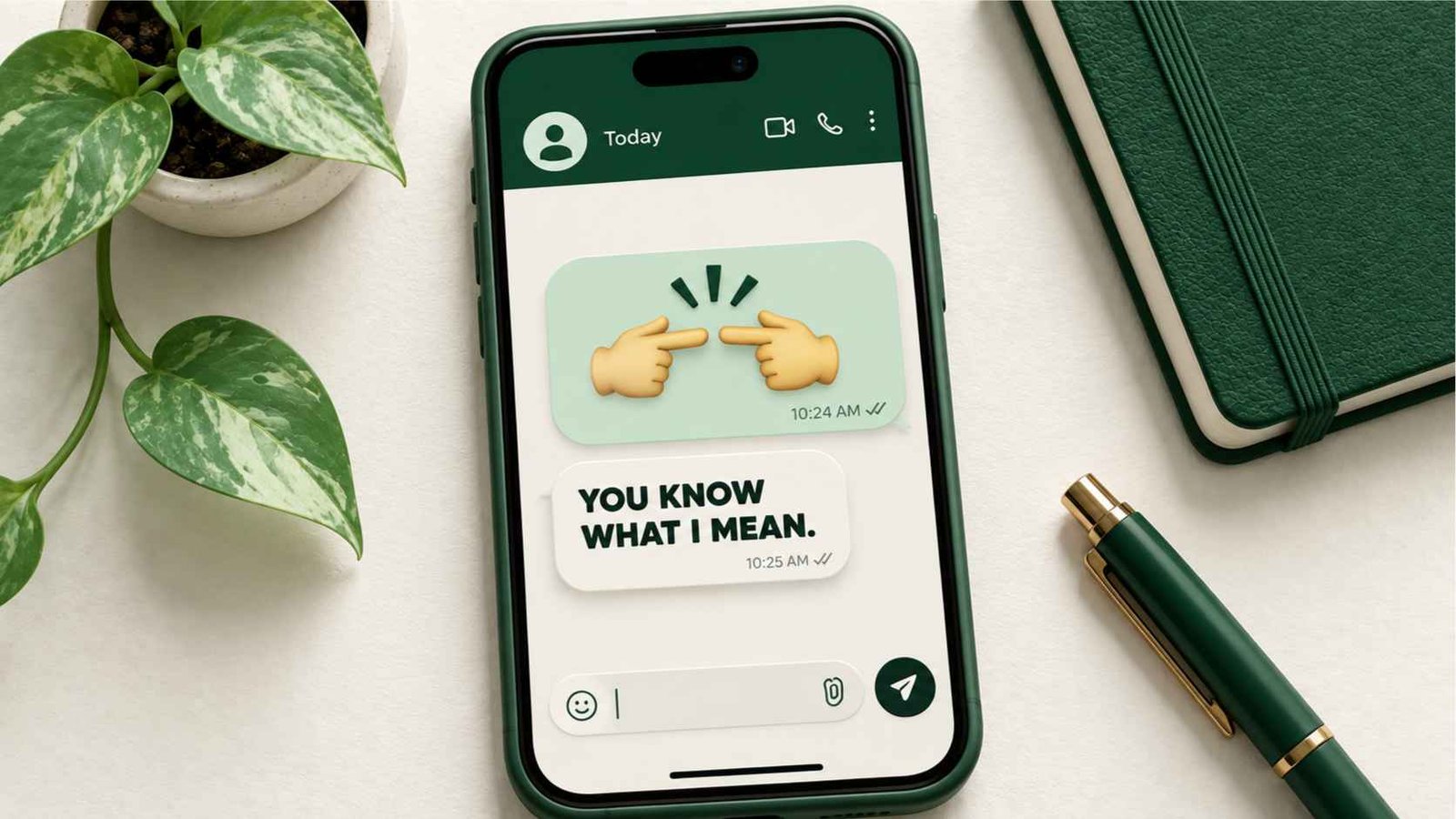
Even a simple emoji causes mix-ups sometimes. Here’s what usually goes wrong with the 👉👈 meaning and how to fix it fast.
❌ Emoji not showing correctly
- Update your keyboard: older phone software sometimes shows a blank box.
- Check the app: some platforms render emoji pairs oddly in small text.
- Copy fresh: paste directly from an emoji keyboard instead of retyping.
❌ Confused between 👉 and 🫵
- 👉 points sideways: at text, a list item, or something nearby.
- 🫵 points forward: directly at the person reading it, like “you.”
- Different feeling: 👉👈 reads shy; 🫵 alone reads confident or accusatory.
❌ Looks too aggressive in messages
- Check the pairing: 👉👈 together reads soft; 👉 alone can feel pointed.
- Add tone words: a short “lol” or “haha” nearby softens it further.
- Watch punctuation: exclamation points next to it can read as intense.
❌ Not getting engagement in posts
- Pair with a caption: the emoji alone rarely carries a whole post.
- Use it as an accent: not the entire message.
- Match your audience: it lands better with younger, casual followers.
| Problem | Likely cause | Quick fix |
| Emoji shows as a box | Outdated keyboard or OS | Update your phone’s software |
| Mixed up with 🫵 | Similar pointing gesture | 🫵 points at “you,” 👉👈 points at a feeling |
| Reads as aggressive | Used alone instead of paired | Keep 👉 and 👈 together, not solo |
| Low engagement | Used with no context | Add a short caption alongside it |
Trending Emoji Usage in 2026
The 👉👈 meaning has stuck around a lot longer than most emoji trends. It’s still one of the easiest ways to show shyness without typing a single word.
- Still everywhere: shows up daily in comments, captions, and DMs.
- Still searched constantly: people keep looking up what it means.
- Newer pairings: emojis like 🥹 now show up alongside it too.
- Not fading: unlike a lot of 2020 trends, this one never really left.
- Same core meaning: the shy, nervous read from 2020 has held steady.
Example in chat:
- Comment: this trend really said 👉👈 and I felt that
- Reply: it’s giving shy but valid
Other Emoji Combos Similar to 👉👈
Once you get the 👉👈 meaning, related combos become easy to read too. Most borrow the same shy, soft energy and just add a twist.
- 😔👉👈: shy mixed with a bit of longing or regret.
- 😳👉👈: caught off guard, more embarrassed than nervous.
- 👉🙄👈: a joke about ignoring someone, not shyness at all.
- 🥹👉👈: shy with real emotion behind it.
- 🤭👉👈: shy, but trying to hide a smile.
Example in texting:
- Friend 1: I might have already told everyone about your surprise 😳👉👈
- Friend 2: WHAT
Is 👉👈 Flirty or Just Friendly?
This is the question people search for most, and it depends entirely on context. The 👉👈 meaning covers both, without much separating them visually.
- With a crush: almost always flirty.
- With a friend: usually just shy or apologetic, nothing romantic.
- Paired with 🥺: leans more toward flirty or a soft ask.
- In a group chat: almost always just friendly.
- When in doubt: read the rest of the message, not just the emoji.
Example in texting:
- Crush context: I’ve been wanting to tell you this for a while 👉👈
- Friend context: I might have eaten your leftovers 👉👈
Quick Emoji Table
Officially, Unicode’s names for them are Backhand Index Pointing Right and Backhand Index Pointing Left, though almost nobody uses those names in conversation. Here’s the whole 👉👈 meaning family in one place.
| Emoji | Name | Meaning |
| 👉 | Backhand Index Pointing Right | Points at or calls out something |
| 👈 | Backhand Index Pointing Left | Marks something, sometimes jokes as “exit” |
| 👉👈 | Two Fingers Touching | Shy, nervous, bashful |
| 👈👉 | Reversed order | Same as 👉👈 |
| 🥺👉👈 | “Simp pose” | Shy plus a soft request |
| 👉🏻👈🏻 | Skin-tone variant | Same meaning, personalized |
FAQs
What does 👉👈 mean in a text message?
The 👉👈 meaning in texting is shy, nervous, or bashful. It usually shows up right after someone admits something personal or slightly embarrassing.
Is 👉👈 flirty or just cute?
It can be either. The 👉👈 meaning leans flirty around a crush and stays friendly in a regular chat with a friend.
What does 👉👈 mean from a guy?
The 👉👈 meaning from a guy matches the general meaning: shyness, not toughness. It often shows up right before he admits liking someone.
What does 🥺👉👈 mean?
Adding 🥺 turns the plain 👉👈 meaning into something extra: shyness plus a soft request or a plea for a gentle reaction.
Is 👉👈 the same as 👈👉?
Yes. Reversing the order doesn’t change the 👉👈 meaning at all; it’s just a typing habit.
What emoji goes well with 👉👈?
🥺, 😳, and 🥹 all pair naturally, each nudging the base 👉👈 meaning toward pleading, embarrassment, or genuine emotion.
Is 👉👈 a Gen Z or Gen Alpha thing?
It started with Gen Z around 2020, but the 👉👈 meaning has since spread to Gen Alpha and plenty of older users too.
Conclusion
The 👉👈 meaning really comes down to one simple thing: shyness that’s easier to show than to say. Whether it’s the plain 👉👈 meaning, the softer 🥺👉👈 version, or the 👉👈 meaning from a girl admitting something to a crush, the feeling underneath stays the same. It works because typing “I’m nervous” out loud feels harder than sending two fingers touching. Next time you get one, don’t overthink it. Reply warmly, give the other person a little room, and let the 👉👈 meaning do what it does best: say the awkward part for you.

Daniel Parker is an English language writer sharing clear grammar lessons, practical tips, and helpful examples for learners.










2 thoughts on “👉👈 Meaning: The Real Reason Behind This Shy Emoji”