
You typed kindergarden into a school enrollment form, then stopped halfway through the last word. Something about it looked wrong, but your phone’s spellcheck stayed quiet, so you shrugged and hit send anyway.
That small hesitation is exactly why so many parents and teachers search for kindergarten or kindergarden every single day. This guide settles the confusion for good, walking you through the German roots of the word, the real spelling rule, and simple tricks that finally make it stick. Keep reading, and you’ll never second-guess this word again.
Kindergarden or Kindergarten – Quick Answer
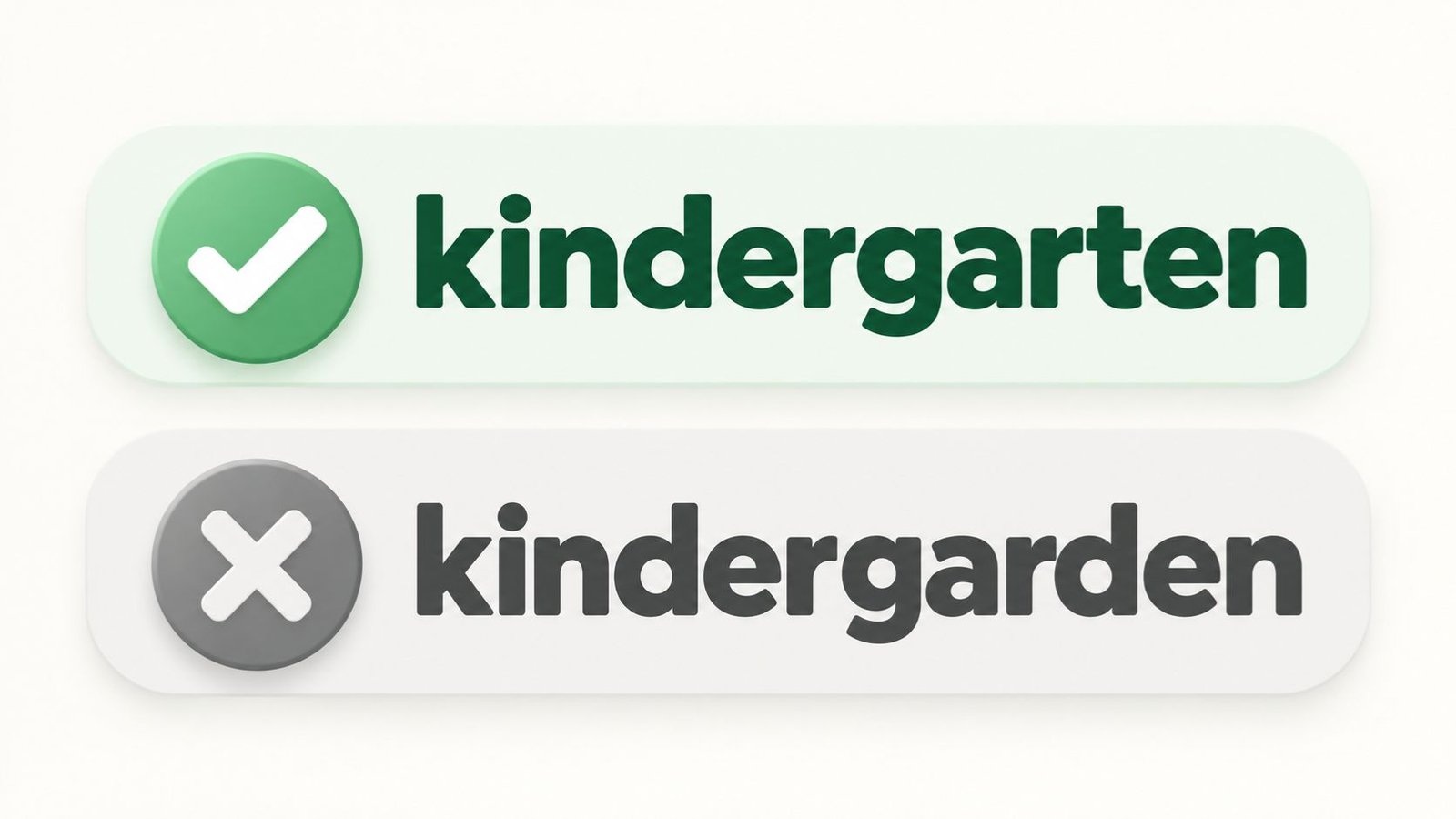
Kindergarten is the correct spelling. Kindergarden is a common but incorrect version that people write because of how the word sounds when spoken quickly.
- Correct: My daughter starts kindergarten in the fall. ✅
- Correct: The kindergarten teacher sent home a note. ✅
- Incorrect: She works as a kindergarden aide. ❌
Simple rule: If you’re talking about the first year of school for young children, the word ends in -garten, not -garden.
This mix-up is one of the most searched spelling questions among parents, teachers, and even school administrators, because the two forms are so visually and phonetically close that the brain often can’t tell them apart at a glance. Once you see the pattern clearly, though, it becomes almost impossible to unsee, and you’ll start noticing the correct spelling everywhere from storybooks to enrollment portals.
The Origin of Kindergarden or Kindergarten
The confusion around kindergarten or kindergarden starts to make sense once you meet the word’s German parents: Kinder, meaning children, and Garten, meaning garden. Together, the word literally translates to “children’s garden.”
- German roots: Friedrich Fröbel coined the term in 1840 in Germany.
- Original idea: Children grow and learn like plants in a garden.
- Direct borrow: English kept the original German spelling intact.
- No translation: The word was never anglicized into “children’s garden.”
- Sound trap: English speakers hear “garten” and assume it’s “garden.”
How Did a German Word Become Standard English?
English absorbed thousands of loanwords without changing their spelling, and kindergarten is one of them. Because it entered the language as a whole unit rather than being built from English parts, it kept its German ending. That’s also why the mistaken form kindergarden never had any real historical basis, it’s a modern error born from pronunciation, not from an older or alternate spelling.
Fröbel’s original vision was surprisingly progressive for its time. He believed children learned best through structured play, songs, and hands-on activities rather than rigid memorization, and he designed the first kindergarten as a nurturing environment where curiosity was treated as a strength, not a distraction. When the concept spread to England and later to the United States in the mid-1800s, educators kept both the philosophy and the German spelling intact, which is exactly why the word still looks a little foreign compared to everyday English vocabulary today. That historical continuity is also why dictionaries never list kindergarden as a valid variant, even an outdated or archaic one, it simply never existed as a legitimate spelling at any point in the word’s documented history.
Example in chat: Friend 1: Did you know kindergarten is actually a German word? Friend 2: Wait really? I always thought it was kindergarden lol
What Does Kindergarten Really Mean?
Behind the spelling debate sits a genuinely warm idea, one that explains why kindergarten or kindergarden shows up so often in conversations about early childhood. The meaning itself is simple, but it carries real weight for how we think about learning.
- Literal meaning: “Children’s garden,” a nurturing space for growth.
- Educational meaning: The first formal year of schooling for young kids.
- Age range: Usually covers children around five to six years old.
- Core philosophy: Learning through play, curiosity, and gentle structure.
- Modern usage: Now a standard term across schools worldwide.
| Term | Meaning |
| Kinder | Children |
| Garten | Garden |
| Kindergarten | Children’s garden (early school) |
| Kindergarden | Misspelling, no accepted meaning |
Understanding the actual meaning behind kindergarten also helps explain why the wrong spelling feels so persistent. Because the word describes something warm and familiar, a garden, most people’s brains automatically reach for the more common English spelling of that concept instead of the borrowed German one. Once you separate the meaning from the sound, though, the correct spelling becomes far easier to lock in permanently, since you’re no longer relying on how the word feels when spoken out loud.
Example in texting: Friend 1: What does kindergarten even mean, like literally? Friend 2: It’s German for “children’s garden,” kinda sweet actually
British English vs American English Spelling
One thing that makes kindergarten or kindergarden confusing is the assumption that British and American English disagree on spelling the way they do with “colour” versus “color.” Here, both sides of the Atlantic actually agree.
- British English: Uses kindergarten, no regional variation.
- American English: Also uses kindergarten, identical spelling.
- No dialect split: This word avoids the usual UK-US spelling battle.
- Wrong form: Kindergarden is rejected in both regions equally.
- Global schools: International curricula also use the German spelling.
| Version | Correct Spelling |
| British English | kindergarten |
| American English | kindergarten |
| Australian English | kindergarten |
| Wrong form (any region) | kindergarden |
It’s worth noting that British schools often use the term “reception” for the equivalent early school year, which sometimes adds to the confusion for parents comparing systems across countries. But when British educators, journalists, or parents do use the word kindergarten, whether for private nurseries, international schools, or general references to early childhood education, they spell it exactly the same way Americans do. This rare moment of transatlantic agreement makes kindergarten one of the easier words to standardize in global English writing.
Example in chat: Friend 1: Is it different in British schools, like kindergarden with a D? Friend 2: Nope, same everywhere, it’s always kindergarten
Which Spelling Should You Use?
If you’re writing for any audience anywhere, the answer to kindergarden or kindergarten never changes. There’s no professional, academic, or regional context where the alternate spelling becomes acceptable.
- US readers: Always write kindergarten.
- UK readers: Always write kindergarten.
- Commonwealth countries: Same rule, kindergarten only.
- ESL learners: Memorize kindergarten as the one correct form.
- Professional writing: Using the wrong spelling can look careless.
Why Does Consistency in Spelling Matter So Much Here?
Small spelling slips like kindergarden can quietly undercut trust in a resume, a school newsletter, or a company website. Readers often judge credibility by these tiny details, even when they can’t quite name why something feels off.
This matters more than people expect in certain fields. Teachers, childcare providers, and school administrators are often judged partly on their written communication, and a misspelled word in a printed newsletter or an official letter can stand out far more than it would in casual chat. The same goes for daycare websites, tuition brochures, and enrollment paperwork, where a single kindergarden typo can make an otherwise professional page look rushed or careless to a parent scanning for the right fit for their child.
Example in texting: Friend 1: Should I write kindergarden or kindergarten on the flyer? Friend 2: Kindergarten, always, no exceptions
Kindergarten vs Preschool: What’s the Difference?
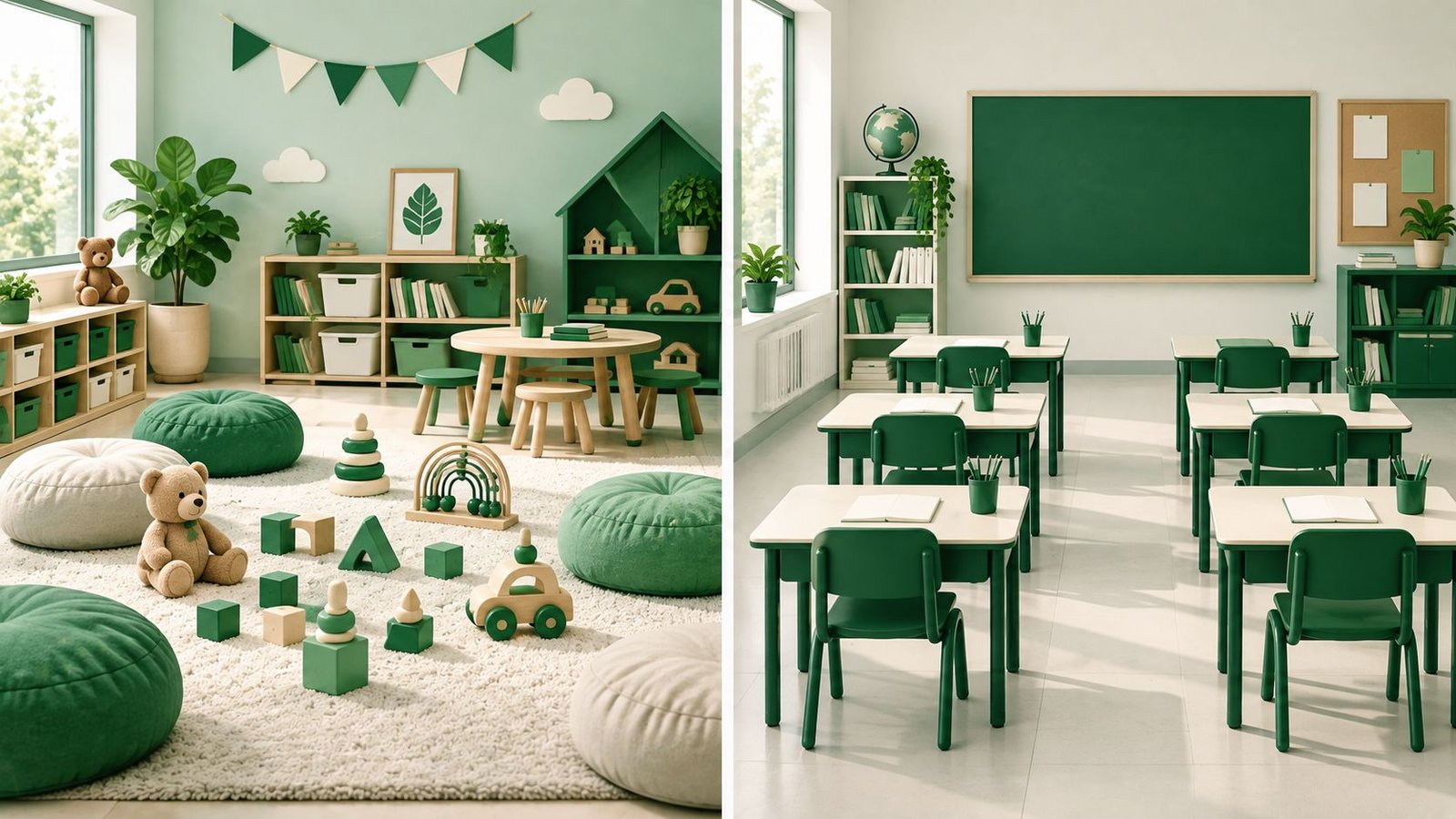
Parents often land on kindergarten or kindergarden searches while actually trying to figure out how kindergarten differs from preschool. Clearing this up helps you use both words with confidence.
- Preschool: Usually for children ages three to four.
- Kindergarten: The formal starting point of primary education.
- Structure: Kindergarten follows a more structured curriculum.
- Legal status: Kindergarten is often mandatory, preschool typically isn’t.
- Focus: Preschool leans social, kindergarten adds academic basics.
- Enrollment: Kindergarten usually requires proof of age and residency.
- Duration: Most kindergarten programs run a full academic year.
Parents comparing programs often notice that preschool tends to feel more flexible in scheduling and curriculum, while kindergarten follows a more standardized timetable set by local school districts or education boards. Knowing this distinction helps when filling out enrollment forms, since mixing up the two terms, or misspelling either one, can cause real confusion during an already stressful registration season.
| Feature | Preschool | Kindergarten |
| Typical age | 3–4 years | 5–6 years |
| Mandatory | Usually no | Often yes |
| Curriculum focus | Social skills, play | Reading, numbers, structure |
| Spelling confusion | Rare | Common (kindergarden) |
Example in chat: Friend 1: Is preschool the same as kindergarten? Friend 2: Not quite, kindergarten is the more formal, structured year
Common Mistakes with Kindergarden or Kindergarten
Most people who mix up kindergarden or kindergarten aren’t careless, they’re just following how the word sounds out loud. Here’s where the mistake shows up most often.
- Speech-to-spelling: The “garten” sound is misheard as “garden.”
- Autocorrect gaps: Phones don’t always flag the wrong version.
- Repetition effect: Seeing the error online normalizes it further.
- Form filling: Rushed typing on school documents invites typos.
- ESL confusion: Learners connect it to the familiar word “garden.”
Where Does This Mistake Show Up Most Often?
The error tends to cluster in casual, fast-typed spaces rather than edited, formal writing, which is exactly why it feels so common even though it’s technically wrong everywhere. Group chats, quick social captions, and voice-to-text messages are the biggest offenders, since none of these formats naturally slow a person down long enough to double-check spelling before hitting send. Printed materials, published articles, and school district websites, on the other hand, almost always go through some form of editing, which is exactly why the correct spelling dominates in those spaces.
- ❌ My son is in kindergarden.
- ✅ My son is in kindergarten.
- ❌ The kindergarden teacher called me.
- ✅ The kindergarten teacher called me.
Example in texting: Friend 1: Is kindergarden acceptable in British English? Friend 2: Nope, only kindergarten counts, everywhere
Why Do People Misspell Kindergarten as Kindergarden?
This question gets asked constantly, and honestly, the reason is refreshingly simple once you break it down phonetically instead of grammatically. Linguists actually have a name for this kind of error: it’s a form of folk etymology, where a word gets reshaped in people’s minds to match a more familiar word or pattern, even when the connection isn’t historically accurate. “Kindergarden” fits this pattern perfectly, since “garden” is a word most English speakers learn far earlier in life than the borrowed German “garten.”
- Pronunciation drift: Fast speech blurs “ten” into “den.”
- Familiar word bias: “Garden” is a common, everyday word.
- Lack of exposure: Fewer people read the word in print.
- No correction loop: Group chats rarely fact-check spelling.
- Visual similarity: The words differ by only two letters.
| Cause | Effect |
| Fast pronunciation | “Garten” sounds like “garden” |
| Familiar root word | Brain defaults to known spelling |
| Weak autocorrect | Error slips through unnoticed |
Example in chat: Friend 1: Why does everyone spell it kindergarden anyway? Friend 2: Because it just sounds like garden when you say it fast
Kindergarden or Kindergarten in Everyday Examples
Seeing kindergarten or kindergarden used correctly across different real-world settings makes the rule easier to remember than any dictionary definition ever could.
- Emails: “Our child will join kindergarten in September.”
- School forms: “Please write your child’s kindergarten class.”
- News headlines: “The city opened a new kindergarten this year.”
- Social media: “First day of kindergarten today!”
- Formal writing: “Early learning starts in kindergarten.”
Which Everyday Sentences Get This Word Wrong the Most?
Casual, unedited writing like texts, captions, and quick emails carries the highest risk, simply because there’s no second pass to catch the slip before it’s sent. Parent group chats, PTA newsletters drafted in a hurry, and last-minute Facebook posts about school events are especially prone to this, since the focus is usually on speed rather than polish. Slowing down for just a few extra seconds before posting anything with the word kindergarten in it can prevent the mistake almost entirely.
Example in texting: Friend 1: Sending the kindergarden registration form now, is that spelled right? Friend 2: Almost, it’s kindergarten, you’re missing the fix
How to Spell Kindergarten Correctly Every Time
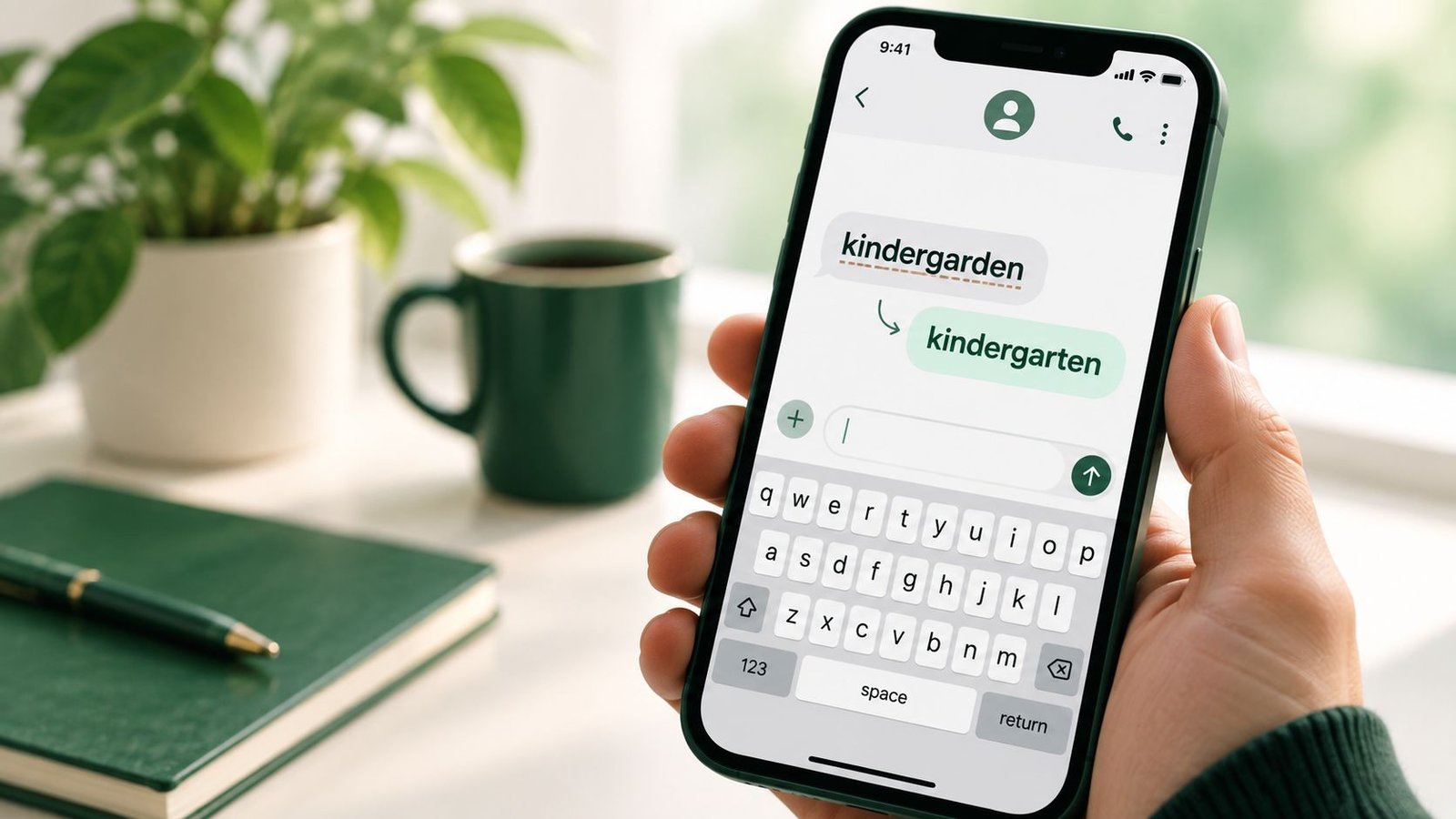
If you’ve struggled with kindergarden or kindergarten for years, a few small memory tricks can permanently fix the habit without much effort.
- Break it down: Say “Kinder + Garten” slowly out loud.
- Visual anchor: Picture a garden full of children, not adults.
- Spellcheck habit: Turn on autocorrect for school-related documents.
- Read more: Notice the correct spelling in books and news.
- Write it out: Practice the full word five times by hand.
| Trick | Why It Works |
| Say “Kinder + Garten” | Separates the sound from “garden” |
| Picture children’s garden | Ties meaning to correct spelling |
| Manual practice | Builds muscle memory over time |
Example in chat: Friend 1: How do you remember it’s not kindergarden? Friend 2: I just say “kinder-garten” in my head, like two words
Kindergarden or Kindergarten – Google Trends & Usage Data
Search data around kindergarden or kindergarten tells a consistent story: one spelling dominates everywhere that actually matters for credibility.
- Search volume: Kindergarten is searched far more overall.
- Correction searches: Most “kindergarden” searches are people checking spelling.
- ESL regions: Wrong-spelling searches spike where English is a second language.
- Print sources: Books and journals use kindergarten almost exclusively.
- Casual sources: Typos cluster in social posts and quick forms.
Is the Mistake Getting More Common Online?
Casual typing on mobile keyboards has made small errors like this easier to publish and harder to catch, which slightly inflates how often the wrong spelling appears in everyday content. Voice typing tools add another layer to the problem, since they transcribe based on sound rather than meaning, and “kindergarten” spoken quickly can easily be misheard as “kindergarden” by both humans and software. Even so, search engines and style guides have stayed consistent for decades, treating kindergarten as the only standard form regardless of how the mistake trends online.
Example in texting: Friend 1: I keep seeing kindergarden spelled with a D on Instagram Friend 2: Yeah it’s a typo trend, kindergarten is still the only correct one
Is Kindergarden Ever Acceptable in Informal Writing?
Even in relaxed settings like texting or social captions, kindergarden doesn’t earn a pass, and it’s worth understanding exactly why the rule doesn’t bend here.
- No informal exception: Slang rules don’t apply to spelling errors.
- Brand risk: Businesses using it look unpolished.
- Teacher standard: Educators expect the correct form always.
- Search engines: Google still flags it as a misspelling.
- Habit forming: Writing it wrong once makes repeating it easier.
Example in chat: Friend 1: It’s just a text, does the spelling really matter? Friend 2: Kinda, once you type kindergarden it sticks in your head wrong
Kindergarten Spelling Around the World

Beyond the US and UK, the debate over kindergarden or kindergarten barely exists, because most English-speaking regions independently settled on the same German-based spelling. Even in countries where English is a second or third language, official curricula and translated school materials almost always import the German spelling directly rather than adapting it into a local variant, which has helped kindergarten become one of the more globally consistent education terms in the English language.
- Canada: Uses kindergarten, identical to the US.
- Australia: Uses kindergarten, sometimes shortened to “kindy.”
- India: International and private schools use kindergarten.
- South Africa: Follows standard kindergarten spelling in schools.
- Global textbooks: English-language materials worldwide match this one spelling.
| Country | Common Spelling | Local Nickname |
| United States | kindergarten | “K” |
| United Kingdom | kindergarten | “reception” (different stage) |
| Australia | kindergarten | “kindy” |
| Canada | kindergarten | “kindergarten” |
Example in texting: Friend 1: Do other countries spell it differently, like kindergarden somewhere? Friend 2: Not really, it’s kindergarten basically everywhere in English
Comparison Table: Kindergarden vs Kindergarten
| Feature | Kindergarten | Kindergarden |
| Correct spelling | Yes | No |
| Used in schools | Yes | No |
| Used in exams | Yes | No |
| Accepted in US/UK | Yes | No |
| Professional writing | Yes | No |
| Recognized by dictionaries | Yes | No |
If you keep this kindergarten or kindergarden comparison in mind, you’ll never need to second-guess a school form, resume, or email again. Bookmark this table if you tend to write about early education often, whether for a classroom newsletter, a parenting blog, or a school district’s official communications, since a quick glance can settle the question faster than typing it into a search bar each time.
FAQs
Is kindergarden a real word?
No, kindergarden is not a real word in any dictionary. It’s simply a common spelling mistake based on pronunciation, not an accepted alternate form of the term.
Which spelling is correct in American English?
Kindergarten is the only correct spelling in American English. Schools, textbooks, and official documents across the US never accept kindergarden as valid.
Which spelling is correct in British English?
British English also uses kindergarten exclusively. There’s no regional split like there is with other well-known British versus American spelling differences.
Why do people write kindergarden instead of kindergarten?
People confuse kindergarten or kindergarden mainly because “garten” sounds almost identical to the familiar word “garden” when the word is spoken quickly in conversation.
Is kindergarten a German word?
Yes, kindergarten comes directly from German, combining “Kinder” (children) and “Garten” (garden) into the phrase “children’s garden,” coined in 1840.
Can kindergarden be accepted in informal writing?
No, even in texts, captions, or casual posts, kindergarden is still considered incorrect. The kindergarten or kindergarden rule doesn’t relax based on tone or platform.
How can I remember the correct spelling of kindergarten?
Break the word into “Kinder + Garten” and picture a garden full of children, this small mental trick fixes the kindergarden habit permanently for most people.
Conclusion
Sorting out kindergarden or kindergarten really comes down to one simple fact: kindergarten is correct, and kindergarden never has been, in any country or context. The word traveled straight from German into English, keeping its original “garten” ending instead of shifting to the more familiar “garden.”
Once you remember the phrase children’s garden and the split Kinder + Garten, the spelling stops feeling tricky. Whether you’re filling out a school form, writing a quick text, or drafting a professional email, kindergarten is the only version that belongs. If you also want to sort out other everyday confusions in how we write and text, this guide on the waxing gibbous emoji meaning is a good next stop for cleaning up small mix-ups that show up in daily conversations.
Next time your fingers start typing kindergarden, pause for a second, picture that little garden full of children, and let the correct spelling take over.
Small habits build lasting accuracy. Reading a little more, slowing down before you hit send on school emails, and repeating the German root out loud when you’re unsure are all quick ways to keep this word locked in correctly for good. Spelling confidence tends to spread, too, once you nail down one tricky word like this, similar mix-ups start feeling far less intimidating, and your everyday writing, whether for work, school, or casual chats, starts to read as more careful and more trustworthy overall.

Daniel Parker is an English language writer sharing clear grammar lessons, practical tips, and helpful examples for learners.










1 thought on “Kindergarden? The Real Meaning Behind Kindergarten”