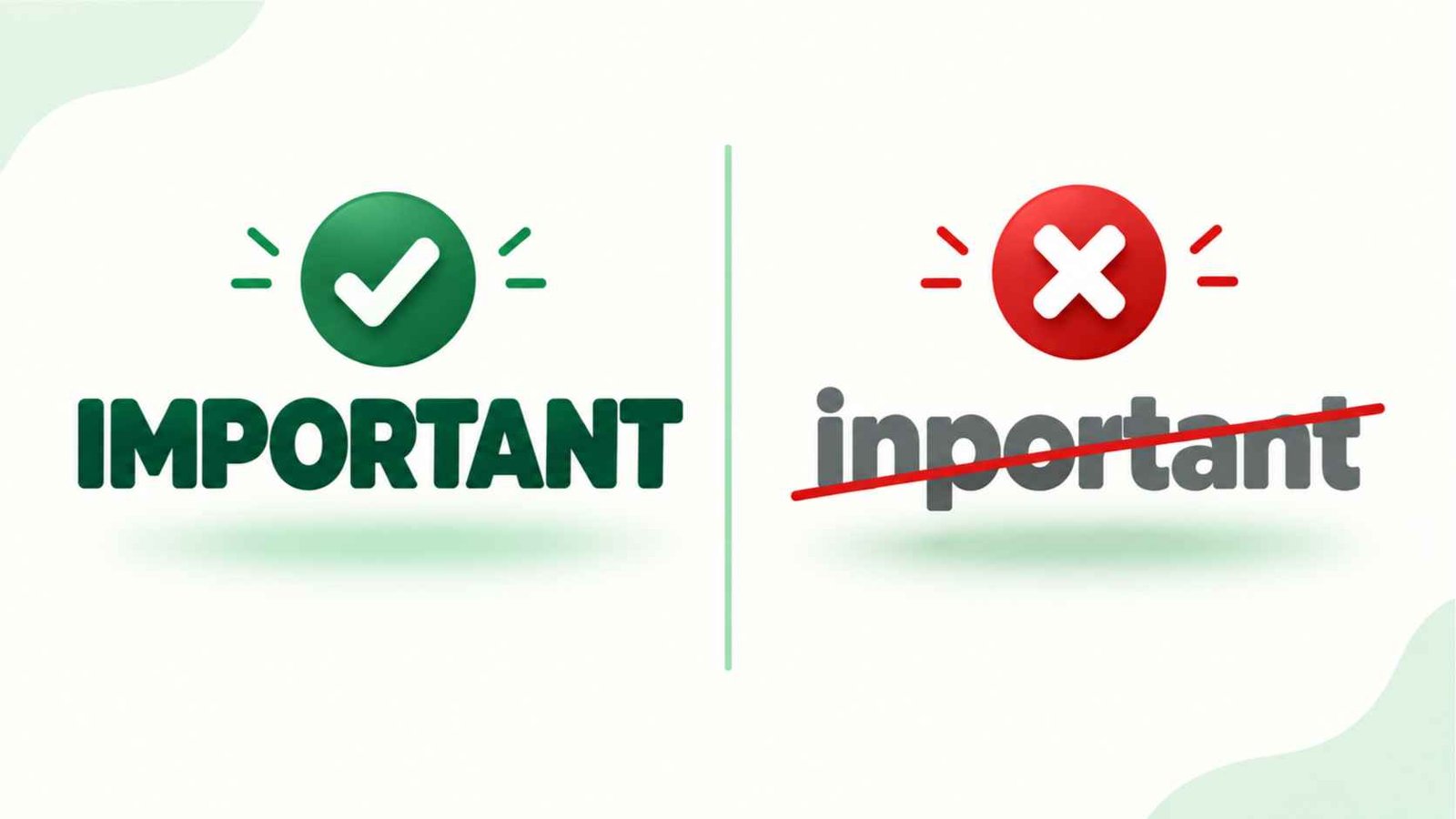

You’ve typed it, deleted it, and typed it again. Somewhere between hitting “send” and hitting “backspace,” you paused and thought: wait, is it inportant or important? You’re not alone, and honestly, that little flicker of doubt just means you care about getting your writing right.
This guide clears up the confusion for good. You’ll get a straight answer, a quick look at why this mix-up happens so often, and simple examples you can copy into your own writing. By the end, you won’t have to second-guess yourself again, so let’s settle inportant or important once and for all.
Inportant or Important – Quick Answer
Important is correct. Inportant is a common misspelling.
There is only one accepted spelling in standard English, and it’s important. The version inportant is not a real word in any dictionary, style guide, or English-speaking region.
- ✅ This deadline is important.
- ❌ This deadline is inportant.
- ✅ Please read this important notice.
- ❌ Please read this inportant notice.
| Spelling | Status | Notes |
| Important | Correct | Standard adjective in all English varieties |
| Inportant | Incorrect | A pronunciation-based typo, not a valid word |
If you remember nothing else from this article, remember this: important always uses an m, never an n.
What Does “Important” Mean?

Important is an adjective that describes something with real value, weight, or influence on a situation. It’s one of the most commonly used words in English writing and speech, from casual texts to formal reports.
- Describes something with significant value or meaning
- Signals that a task, person, or event deserves priority
- Shows up in emails, essays, contracts, and everyday conversation
- Functions only as an adjective, never a verb or noun
- Related forms include importance (noun) and importantly (adverb)
Example in chat: Friend 1: Can you check your email? There’s something important there. Friend 2: On it, opening now!
Is Inportant a Real Word?
No, and this is worth saying plainly: inportant has never appeared in any dictionary, past or present. It’s simply a misheard, mistyped version of important that slips through when people write quickly.
- Not found in Merriam-Webster, Oxford, or Cambridge dictionaries
- Never accepted in academic, business, or published writing
- Flagged as an error by nearly every spellcheck tool
- Sometimes appears in casual texts or social captions by mistake
- Has zero historical use in formal English at any point
Even though inportant shows up occasionally online, its presence in casual writing doesn’t make it correct. It’s a typo that spread through repetition, not a legitimate spelling variant.
Why Do People Write “Inportant”?
This mix-up isn’t really about grammar at all, it comes down to how the word sounds when spoken quickly in everyday conversation. Your ears hear one thing, but your fingers type something else entirely.
- The m sound blends into nearby letters when spoken fast
- Quick speech makes “im-” sound closer to “in-” to the ear
- Writers sometimes spell by sound instead of memory
- Mobile typing and autocorrect can introduce the error too
- Non-native English speakers may rely more heavily on pronunciation
This kind of error has a name: a pronunciation-based spelling mistake. English is full of words where the way we say something doesn’t perfectly match the way we write it, and important is one of the more common examples.
How Is This Mistake Different From a Typo?
A random typo happens by accident, like hitting a nearby key. This mix-up is different because it’s consistent and tied to how the brain processes sound. People who write “inportant” usually do it the same way every time, because they genuinely believe that’s what they hear.
Why Does Important Sound Like It Has an N?
This happens because of a linguistic effect called assimilation, where one sound shifts slightly to match the sound next to it in fast speech. It’s common, natural, and not a sign of poor English.
- The m in “im-” sits right before a p sound
- Nasal sounds like m and n are easy to confuse in speech
- Fast talkers naturally soften consonants for smoother flow
- The brain fills in a sound it expects, not the one written
- This same pattern affects other m/n word pairs too
Knowing the reason behind the confusion makes it much easier to remember the fix: trust the spelling, not the sound, whenever you write important.
The Origin of Important
The word important traces back to the Latin term importare, meaning “to carry in” or “to bring significance to something.” It moved into English through French, keeping its original m spelling intact the entire way.
- Root word: Latin importare
- Passed through Old French before entering English
- The m has remained unchanged for centuries
- Related to words like import, portable, and transport
- Inportant has never existed in this word’s linguistic history
Because the m comes directly from the Latin root, there’s no version of English, old or modern, where inportant was ever the accepted spelling. This isn’t a recent rule; it’s simply how the word has always been built.
British English vs American English

Some English words genuinely do change spelling depending on the region, think colour versus color. This isn’t one of those cases, and that consistency actually makes life easier for writers everywhere.
| English Variety | Correct Spelling | Example Sentence |
| British English | Important | This decision is important for the team. |
| American English | Important | Your feedback is important to us. |
| Australian English | Important | Safety training is important here. |
| Canadian English | Important | This step is important before submitting. |
- No regional variation exists for this particular word
- Style guides like AP and Chicago agree on the spelling
- International business writing uses the same form globally
- ESL curriculums worldwide teach only the m spelling
- The word behaves consistently across every English-speaking country
Which Spelling Should You Use?
Always choose important, regardless of your audience, region, or writing platform. There’s no context, casual or formal, where inportant becomes acceptable to use in place of it.
- Use important in emails, essays, and professional documents
- Use it the same way for US, UK, or international readers
- Apply it consistently across texts, captions, and comments
- Never assume slang or informal writing changes the rule
- Rely on it in both spoken and written contexts equally
Example in texting: Friend 1: Wait is it inportant or important lol Friend 2: Important! Always with the m, trust me on this one
Important vs Improtant vs Inportant: Common Typos Compared
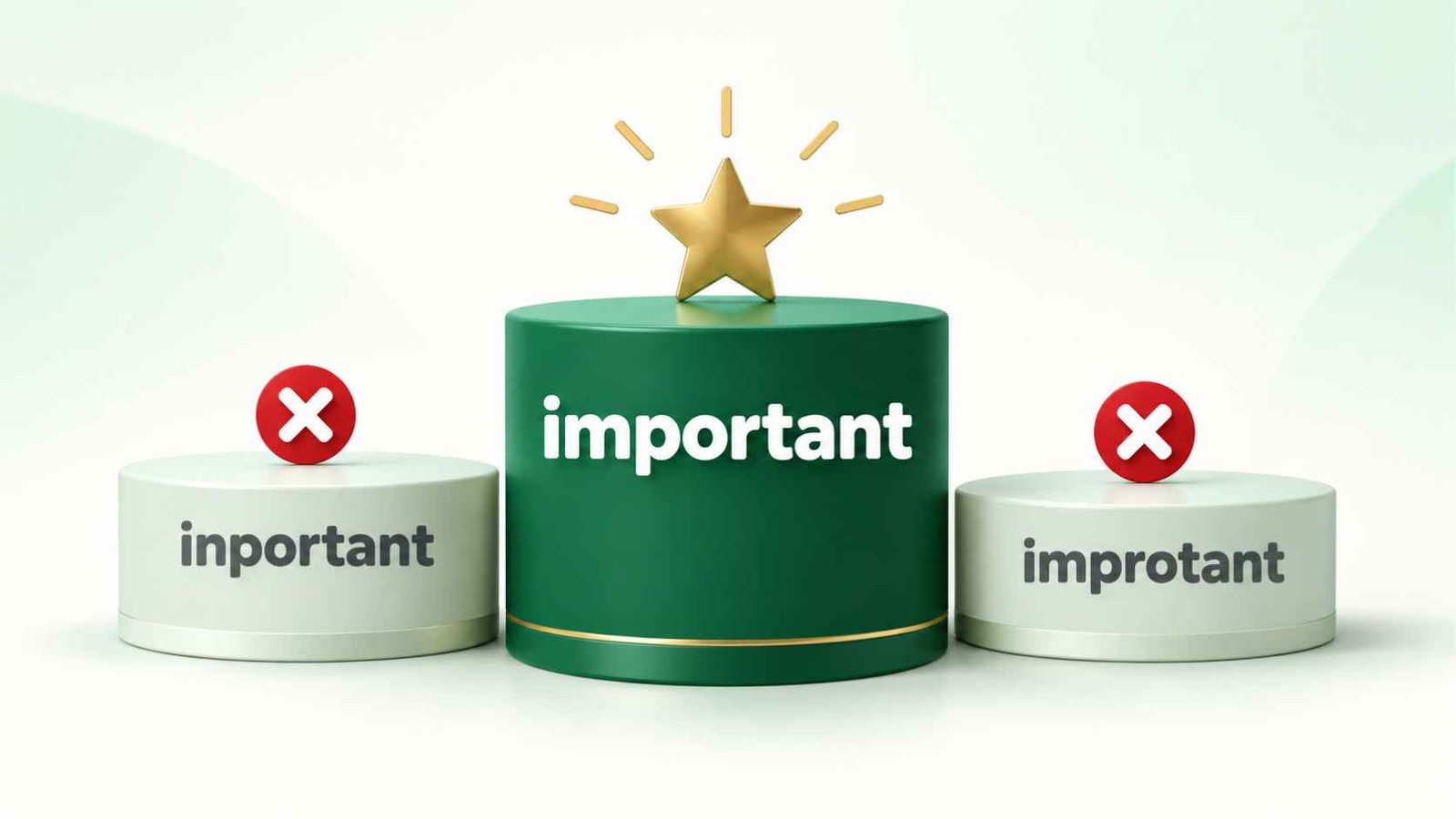
Beyond “inportant,” this word attracts a surprising number of typos thanks to fast typing and autocorrect glitches. Seeing them side by side makes the correct version easier to spot instantly.
| Typo | Why It Happens | Correct Form |
| Inportant | M/N sound confusion in speech | Important |
| Improtant | Letters swapped while typing fast | Important |
| Imporant | A letter dropped during quick typing | Important |
| Importent | Vowel confusion at the ending | Important |
| Impotant | Missing the r, changes meaning entirely | Important |
- Most errors come from speed, not lack of knowledge
- Mobile keyboards make letter-swap typos more common
- Autocorrect sometimes misses unusual misspellings
- Reading your sentence aloud can help catch these errors
- Muscle memory improves the more you type the word correctly
Common Mistakes with Inportant or Important

Most people don’t misspell this word out of carelessness; they fall into a few very specific, very fixable habits. Once you know what they are, avoiding them becomes second nature.
Writing what you hear
- Relying on pronunciation instead of memorized spelling
- Typing quickly without a quick mental double-check
- Trusting how a word “feels” rather than how it’s written
- Repeating a childhood spelling habit that never got corrected
- Fix: consciously picture the word before typing it
Trusting sound over spelling
- Believing speech patterns reflect accurate written English
- Skipping the visual memory step most fluent writers use
- Assuming a word sounds the same as it’s spelled
- Not slowing down enough to notice the “m”
- Fix: read the sentence back silently before sending it
Ignoring spellcheck warnings
- Dismissing the red underline without checking why it’s there
- Turning off spellcheck on fast-paced messaging apps
- Assuming autocorrect will “fix it” automatically every time
- Not proofreading on mobile devices where errors slip through
- Fix: pause on flagged words instead of typing past them
How to Never Misspell Important Again
A few small habits make this error disappear for good, and none of them require memorizing complicated grammar rules. Consistency matters more than perfection here.
- Sound it out slowly: im-POR-tant, not in-POR-tant
- Link it to the word import, which shares the same m
- Keep spellcheck enabled across every device you use
- Practice typing the word a few times until it feels automatic
- Reread messages before sending, especially on mobile
Example in chat: Friend 1: I finally stopped typing inportant lol Friend 2: See, the m sticks once you notice it enough times
Inportant or Important in Everyday Use
This word shows up constantly across nearly every kind of writing you’ll ever do, from quick texts to formal reports. Seeing it in real context makes the correct spelling stick faster than any rule ever could.
Emails
- This is an important update for the whole team.
- Please read this important message before Friday.
- Marking a subject line as important grabs attention fast.
School & Education
- This is an important exam for your final grade.
- Grammar accuracy is important in academic writing.
- Teachers often highlight important dates on the syllabus.
Work & Business
- Customer feedback is important to our next decision.
- This meeting is important for the upcoming launch.
- Clear communication is important in every workplace.
News & Media
- An important policy change was announced today.
- Reporters flagged this as an important development.
- Editors prioritize stories with important public impact.
Social Media
- This post is important, please share it widely.
- Save this important reminder before it disappears.
- Captions with important context perform better with readers.
What’s the Fastest Way to Fix This Spelling Mistake?
The quickest fix is building a visual anchor, a mental image or association that locks the correct spelling in place permanently. Most people only need to repeat this a handful of times.
- Picture the word import hidden inside important
- Say the word slowly out loud before typing it
- Keep autocorrect and spellcheck turned on everywhere
- Write the correct spelling three times when you notice a slip
- Bookmark a quick reference guide for repeat mix-ups
This kind of confusion isn’t unique to spelling errors either. Even casual slang terms trip people up the same way, which is why guides breaking down the true meaning behind commonly confused terms like feining tend to get bookmarked just as often as spelling guides do.
Important: Synonyms and Alternative Words to Use
Sometimes the real fix for a spelling worry is simply choosing a different word. These synonyms carry a similar meaning and can add variety to your writing.
| Synonym | Best Used For |
| Significant | Formal or academic writing |
| Crucial | High-stakes or urgent situations |
| Essential | Necessities or required steps |
| Vital | Life-related or critical contexts |
| Key | Casual or conversational tone |
- Choose significant for research papers or reports
- Use crucial when urgency needs extra emphasis
- Pick essential for instructions or requirements
- Reach for vital in health or safety contexts
- Try key for a lighter, more casual tone
Important in Formal vs Informal Writing
The word itself never changes, but how you use it can shift depending on your tone and audience. Knowing the difference helps your writing feel natural in any setting.
- Formal writing: pair important with precise, direct sentences
- Informal writing: important works fine in casual texts too
- Business emails often start sentences with “This is important”
- Social captions lean on important for urgency and shares
- Academic essays use important to signal argument weight
Example in texting: Friend 1: Quick reminder, this deadline is important lol don’t forget Friend 2: Noted! Setting a reminder right now
Inportant or Important – Search & Usage Insight
Thousands of people search inportant or important every month, and the reasons behind those searches are surprisingly consistent across different groups of writers.
- They want quick spelling confirmation before hitting publish
- They typed the word and suddenly felt unsure about it
- English isn’t their first language, so sound-based guessing happens
- They’re double-checking a document before sending it professionally
- They saw the word misspelled somewhere and want the real answer
This search pattern is common among:
- Students writing essays or assignments
- Job seekers polishing resumes and cover letters
- ESL learners building written vocabulary
- Fast typists messaging on mobile devices
- Content writers checking grammar before publishing
The meaning of the word is never actually confusing, only the spelling trips people up.
Comparison Table: Inportant vs Important
| Feature | Important | Inportant |
| Correct spelling | ✅ Yes | ❌ No |
| Found in dictionaries | ✅ Yes | ❌ No |
| Accepted in formal writing | ✅ Yes | ❌ No |
| Common in casual typing | ✅ Yes | ⚠️ Occasionally, by mistake |
| Passes spellcheck | ✅ Yes | ❌ No |
FAQs About Inportant or Important
1. Is “inportant” ever correct?
No. Inportant is never correct in any form of standard English writing.
2. Why do people spell it incorrectly?
Because the m and n sounds blend together in fast, casual speech.
3. Is the spelling different in British and American English?
No. Important stays identical across British, American, and Australian English.
4. Can spellcheck catch this error?
Yes, most spellcheck tools flag inportant since it isn’t a valid word.
5. Is important a noun or adjective?
Important functions only as an adjective, describing significance or value.
6. Does important have silent letters?
No, but its sounds blend together when spoken quickly in conversation.
7. Is this mistake common?
Yes, it’s one of the more frequent spelling mix-ups searched online worldwide.
Conclusion
The debate over inportant or important really comes down to one simple fact: important is the only correct spelling, and inportant is a common mistake caused by how quickly we speak. Once you understand that the confusion is about sound, not grammar, it becomes much easier to catch yourself before hitting send.
Keep the Latin root import in mind, lean on spellcheck, and reread your writing before you publish it anywhere. Whether you’re drafting an email, a school assignment, or a quick text, using important correctly adds a small but real layer of polish to your writing.
The next time your fingers hesitate over that m, you’ll already know exactly what to type.

Daniel Parker is an English language writer sharing clear grammar lessons, practical tips, and helpful examples for learners.










1 thought on “Inportant or Important: The Simple Meaning Explained”