
Have you ever typed ether vs either and wondered “what is the actual word?” You are not alone. These words look similar and depending on the context and accent, word ether vs either can create confusion to make you wait and guess what you are writing is correct?
Here’s the good news: this guide walks through the meaning of each word, how to spot which one you need by looking at the sentence around it, and enough real examples that you won’t have to guess next time. Keep reading and this stops being confusing for good.
Quick answer

Either is a grammar word. You use it when you’re picking one of two options, agreeing with a negative statement, or building an “either…or” sentence. Ether, on the other hand, is a noun: a chemical compound, an old-fashioned anesthetic, or the cryptocurrency (ETH) tied to Ethereum.
| Word | Type | Meaning | Example |
| Either | Determiner, pronoun, adverb, conjunction | One of two choices | “Pick either seat.” |
| Ether | Noun | Chemical, historical anesthetic, or cryptocurrency | “The lab keeps ether in a sealed cabinet.” |
If your sentence is about a choice, go with either. If it’s about chemistry, an old medical treatment, or crypto, it’s ether.
Example in texting:
Friend 1: pick a movie, either one works for me
Friend 2: lol ok, either it is then
What Does Either Really Mean in a Sentence?
If you’re checking your own writing, this is the fastest test:
- Ask if two options are involved, not three or more
- Look for negative agreement, like “I don’t either”
- Check for the pattern “either…or”
- Notice if the word replaces a noun already mentioned
- Read the sentence aloud, since context clears up pronunciation confusion instantly
Core explanation: noun versus choice word
The split here is simple once you see it. Either functions grammatically, meaning it does a job inside a sentence: it points at a choice, agrees with a negative, or links two options. Ether does none of that. It just names a thing, the way “table” or “oxygen” names a thing.
That’s really the whole rule. A grammar word versus a noun.
- Either never appears alone as a subject naming a physical or digital thing
- Ether never introduces a choice between two options
- Either shows up constantly in daily speech
- Ether shows up mostly in science, crypto, and older writing
- Confusing the two usually comes from how similar they sound, not what they mean
Example in chat:
DM 1: either coffee shop is fine with me
DM 2: haha you’d never say “ether coffee shop is fine” though right
Grammar functions: how to spot either by structure
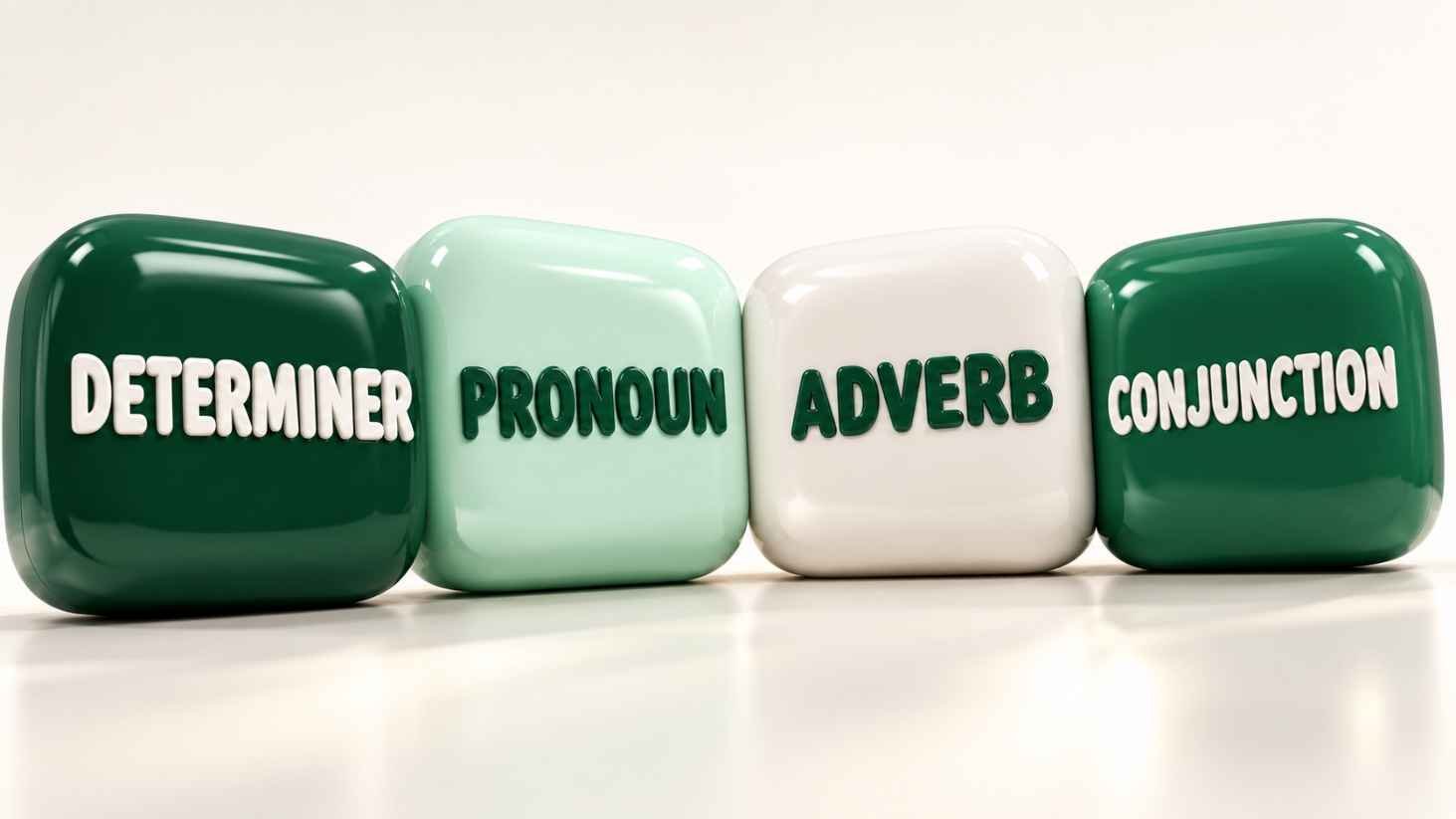
Either shifts roles depending on where it sits, and that flexibility is exactly why people search for the either meaning so often. Watch the sentence pattern, not just the word itself, and the correct spelling becomes obvious fast.
- Determiner: comes right before a singular noun (“either road”)
- Pronoun: stands in for a noun already understood (“Either is fine”)
- Adverb: shows up in negative sentences (“I don’t like it either”)
- Conjunction: pairs with “or” to link two options (“either call or text”)
- Never: performs any of these jobs for the word ether
How Is Either Used in Everyday Conversations?
People lean on either constantly without noticing, mostly in three ways: offering two choices, agreeing with something negative, and describing “each of two” (as in either side of a street).
Example in texting:
Friend 1: I don’t eat shellfish either
Friend 2: same, either way we’re safe at this restaurant
Hyphenation and pronunciation (quick check)
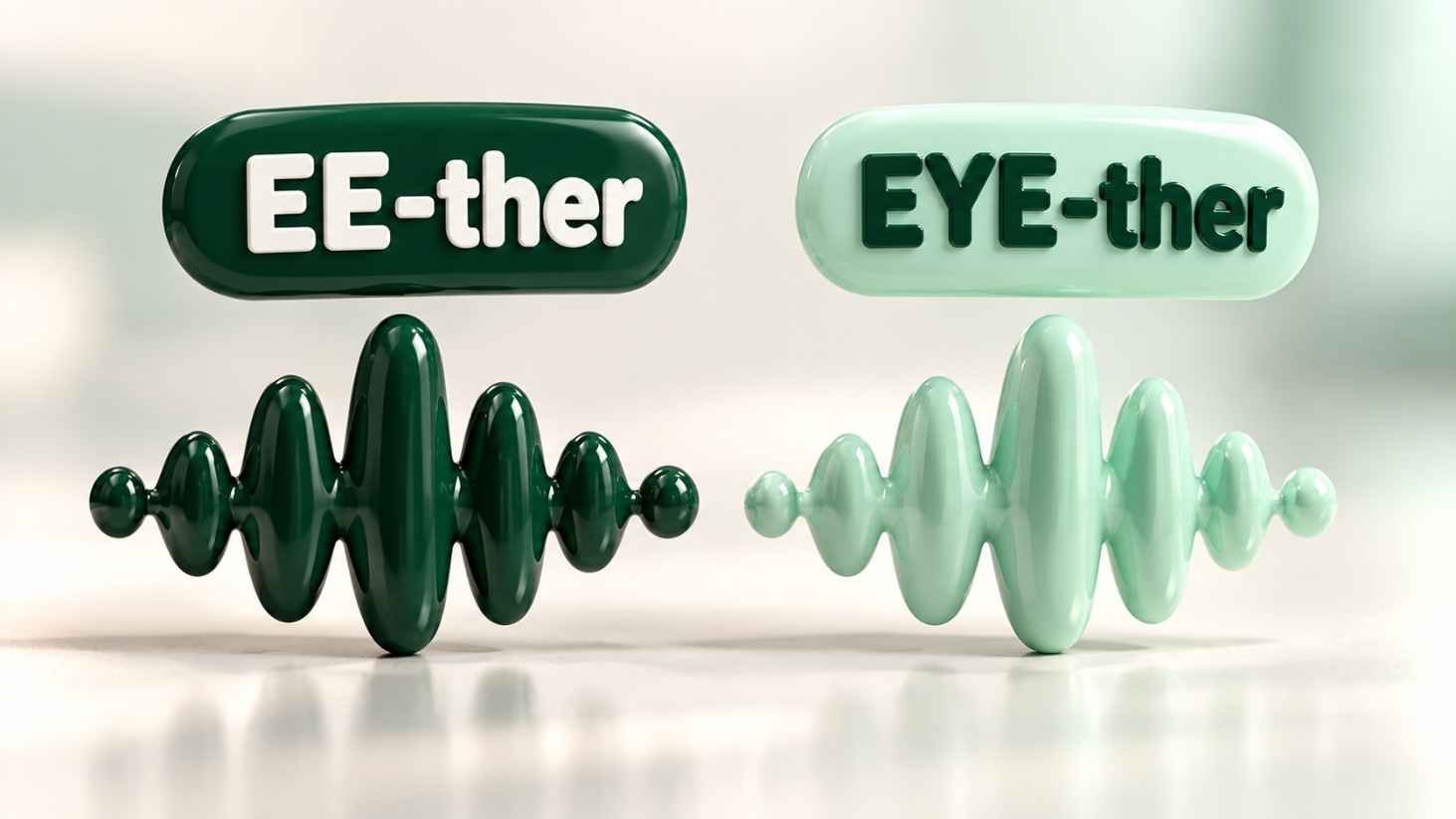
Neither word takes a hyphen, so that part is easy. Pronunciation is where things get messy, because English allows two accepted ways to say either, and one of them lands almost exactly on how people say ether.
| Word | Pronunciation 1 | Pronunciation 2 |
| Either | EE-ther | EYE-ther |
| Ether | EE-ther | (no second form) |
- EE-ther and EYE-ther are both correct for either
- Ether only has one standard pronunciation: EE-ther
- British speakers lean toward EYE-ther more often, though both are heard
- American speakers switch between the two without much pattern
- Context, not sound, is what actually tells you which word is meant
Spacing, punctuation, and typing traps
Neither word breaks into two words, and neither needs a hyphen. Most mistakes here come from speed-typing or autocorrect quietly swapping one spelling for the other since both are technically valid English words.
- Never write “eather,” since it isn’t a recognized spelling of either
- Never add a space, as in “eith er” or “eth er”
- Watch autocorrect, which won’t flag “ether” as wrong even if you meant “either”
- Reread sentences with either/ether out loud before sending anything important
- Use find-and-replace carefully in long documents, since both words are valid
Real usage and tone: when ether is natural and when either wins
Ether feels natural in a lab report, a crypto app, or an old poem. Either feels natural almost everywhere else: emails, texts, meeting notes, casual chats. If you’re writing about daily choices, either is nearly always the safer bet.
- Workplace emails: “Either time works for the call” (choice, so either)
- Science writing: “The sample dissolved in ether” (chemical, so ether)
- Crypto news: “Ether jumped 4% this week” (currency, so ether)
- Casual texts: “I don’t mind either” (agreement, so either)
- Old literature: “Lost somewhere in the ether” (poetic sense, so ether)
Why Do People Mix Up Ether and Either So Often?
Mostly pronunciation. When “either” is said as EE-ther, it sounds identical to “ether,” and spell-check won’t catch the swap because both are real words.
- Fast speech blurs the difference between the two
- Autocorrect assumes you meant the word it recognizes fastest
- Limited exposure to the written form of ether leads to guessing
- Similar letter patterns make a quick skim unreliable
- Both being valid dictionary words means no red squiggly line warns you
Try your own sentence
Before moving to fixed examples, test yourself with a blank.
“The lab tech poured _____ into the flask before the experiment started.”
That’s ether, since it’s a chemical context. Now try: “You can sit in _____ chair, it doesn’t matter to me.” That’s either, since it’s a choice between two seats.
- Read the sentence once without filling the blank
- Ask if a choice is being made
- Ask if science, medicine, or crypto is the topic instead
- Pick either for choices, ether for substances or currency
- Recheck if the sentence still makes sense with your pick
Examples you can copy: workplace, school, and casual (many wrong→right pairs)

Here are real wrong-to-right swaps you can paste straight into your own writing when double-checking.
| Wrong | Right |
| Ether answer works for me | Either answer works for me |
| I’ll take ether one | I’ll take either one |
| She studied ether at the meeting | She studied either option at the meeting |
| Ether side of the room | Either side of the room |
| The scientist studied either | The scientist studied ether |
- Workplace: “Either candidate can start Monday” (not ether candidate)
- School: “Either essay topic is acceptable” (not ether essay topic)
- Casual: “I don’t really care either way” (not ether way)
- Science class: “Ether was once used in surgery” (not either was used)
- Group chats: “Either pizza place is fine” (not ether pizza place)
Example in chat:
Friend 1: either pizza place is fine with me
Friend 2: cool, and don’t say “ether” unless you mean the chemical lol
Rewrite help: quick diagnostics and copy/paste fixes
If you’re editing a document and suspect a swap happened, run this quick check before publishing anything.
- Search the document for every instance of “ether” and “either”
- Read the sentence around each hit, not just the word itself
- Ask whether a choice is being described
- Swap the word if the sentence describes chemistry, medicine, or crypto instead
- Save a version before making bulk find-and-replace edits
What’s a Fast Way to Catch This Mistake in Long Documents?
Search for both spellings separately, then read only the sentence around each hit rather than scanning the whole page. This catches nearly every accidental swap in minutes.
Memory trick and fast checklist

The letter i in either can stand for “I have a choice.” No such letter shows up in ether, and that’s a useful anchor when you’re typing fast and need a shortcut.
- Choice on the table? Use either
- Chemistry, medicine, or crypto? Use ether
- Negative agreement, like “I don’t either”? Use either
- “Either…or” structure? Always either, never ether
- Still unsure? Reread the sentence for a decision being made
Similar mistakes and quick guards
Ether and either aren’t the only pair that trips people up. A few related word pairs cause the exact same kind of confusion, usually because they sound alike but mean completely different things.
- Eather: not a real word, always a misspelling of either
- Ither: also not standard English, another misspelling
- Neither vs either: neither pairs with negative statements, either pairs with positive or negative
- Homophone pairs in general benefit from the same fix: read the full sentence, not just the word
If slang or informal spelling swaps interest you, this breakdown of homey or homie covers a different kind of everyday spelling confusion.
FAQ
Can ether and either ever be used interchangeably?
No. They mean completely different things. Either signals a choice, while ether names a chemical, an old anesthetic, or a cryptocurrency.
Why didn’t spellcheck flag my error?
Both ether and either are valid dictionary words, so spellcheck has no reason to flag either one, even when you meant the other.
How should I edit a long document to catch these swaps fast?
Search for both spellings, read the surrounding sentence for each result, and decide whether the context calls for either or ether.
Is ether ever used outside of science?
Yes. Ether shows up in older poetry, in the phrase “in the ether,” and today most commonly as the cryptocurrency tied to Ethereum.
What’s a one-line rule I can memorize?
Choice equals either. Chemistry, medicine, or crypto equals ether.
Is “eather” ever correct?
No. “Eather” isn’t a standard spelling of anything; it’s always meant to be either.
Does British English change which word to use?
No. British and American English both use either for choices and ether for the chemical or currency; only pronunciation varies, not spelling.
Conclusion
Once you focus on the meaning of Ether vs either instead of spelling, its easy to sort out. Use either when you are talking about choices, alternatives, or grammatical agreement, and use ether when the context involves chemistry, historical medicine, or cryptocurrency. Reread your sentence, ask what it’s actually describing, and the correct word becomes obvious. Next time you catch yourself typing either or ether, pause for one second and check which job the word is doing in that sentence. That single habit is enough to stop this mistake for good.

Daniel Parker is an English language writer sharing clear grammar lessons, practical tips, and helpful examples for learners.










2 thoughts on “Ether vs Either Meaning: The Real Difference Explained”